Technip Energies to deliver three electric marine arms for Northern Lights phase 2

Technip Energies strengthens its role in the Northern Lights project in Norway by supplying electric marine equipment for the transfer of liquefied CO2 at the Øygarden terminal.

Share:

Comprehensive energy news coverage, updated nonstop

Annual subscription

8.25$/month*

*billed annually at 99$/year for the first year then 149,00$/year ​

Unlimited access • Archives included • Professional invoice

OTHER ACCESS OPTIONS

Monthly subscription

Unlimited access • Archives included

5.2$/month*
then 14.90$ per month thereafter

FREE ACCOUNT

3 articles offered per month

FREE

*Prices are excluding VAT, which may vary depending on your location or professional status

Since 2021: 35,000 articles • 150+ analyses per week

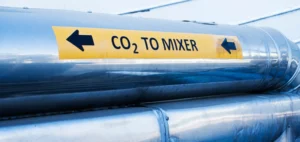
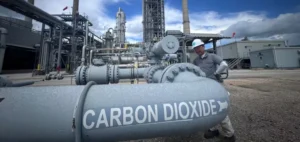
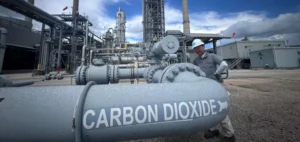
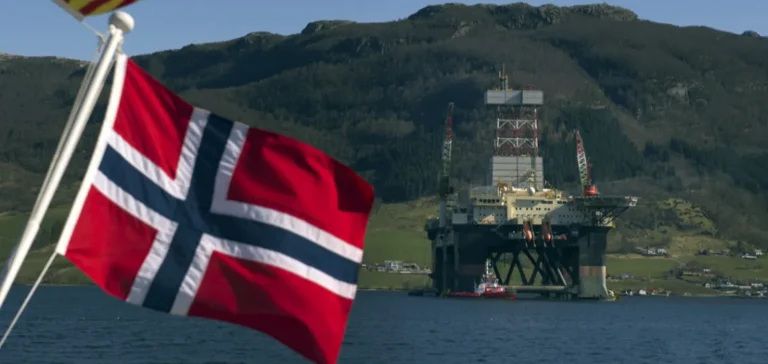
Technip Energies has secured a contract to supply three fully electric marine loading arms as part of the second phase of the Northern Lights project, located on Norway’s west coast. The contract covers the installation of transfer systems on a new jetty at the Øygarden terminal, which will handle liquefied carbon dioxide (CO2).

This order follows the first phase of the project, during which Technip Energies delivered the world’s first marine arms for liquefied CO2, now operational since summer 2025. The new arms feature a fully electric design, a first in this type of infrastructure, eliminating the need for traditional hydraulic systems.

A cross-border project supporting carbon storage

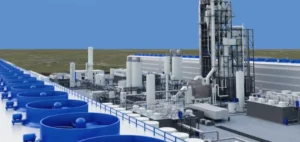
Northern Lights, a joint venture between Equinor ASA, Shell plc and TotalEnergies SE, is the world’s first cross-border CO2 transport and storage infrastructure. It receives CO2 from industrial sites across Europe, stores it temporarily at the quay, and then transports it offshore for geological storage beneath the seabed.

The second phase of the project aims to increase the terminal’s annual handling capacity to more than 5 million tonnes of CO2 by 2028. The electric marine arms supplied by Technip Energies have been technically validated for their performance and compliance with the safety and operability requirements of this expansion.

Strengthened position in the CCS market

The equipment will be provided by Technip Energies Loading Systems, a specialised entity of the group for maritime loading solutions. This contract further consolidates the company’s position in the carbon capture and storage (CCS) sector, where it has already proven its ability to deliver operational solutions.

The new order has been recorded in the third quarter 2025 order book under the Technology, Products and Services segment. It aligns with the ongoing development of CO2 storage infrastructure in Europe, driven by increasing logistical and maritime capacity.

Charles Cessot, Senior Vice President T.EN X – Consulting & Systems, noted that the contract reflects the renewed trust of Northern Lights’ operators and highlights Technip Energies’ ability to provide tailored solutions for the specific needs of the liquefied carbon market.


The Canadian start-up has secured financing to complete a C$13.6mn project aimed at converting captured CO₂ and natural gas into high-value carbon nanofibres.
CO₂ removal techniques are moving from lab-scale to national and corporate strategies, but their development remains constrained without a clear legal framework and targeted incentives on the carbon market.
Norway plans up to $740mn to fund verified emission reductions, supporting Senegal’s entry into cooperation frameworks under the Paris Agreement.
An NGO identified 531 participants linked to carbon capture and storage technologies at COP30, illustrating the growing strategic interest of industry players in this technical lever within climate negotiations.
Driven by rising demand from China and India, the global carbon neutrality market is expected to grow by 7.3 % annually through 2035, supported by sustained investment in capture technologies.
Japan plans to increase its carbon capture, utilisation and storage capacity thirtyfold by 2035, but reliance on cross-border infrastructure may delay the government’s targets.
PETRONAS secures Malaysia’s first CCS permit and strengthens its upstream presence in Suriname, aligning an integrated strategy between CO₂ capture and low-cost offshore exploration.
The Peruvian government announces a 179 million tonne emissions target by 2035, integrating carbon market tools and international transfers to reach its climate goal.
The Paris Agreement Crediting Mechanism formalizes a landfill-methane methodology, imposes an investment-based additionality test, and governs issuance of traceable units via a central registry, with host-country authorizations and corresponding adjustments required.
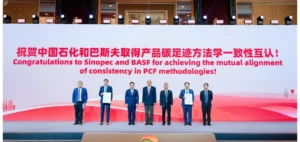
Sinopec and BASF have reached a mutual recognition agreement on their carbon accounting methods, certified as compliant with both Chinese and international standards, amid growing industrial standardisation efforts.
NorthX Climate Tech strengthens its portfolio by investing in four carbon dioxide removal companies, reinforcing Canada’s position in a rapidly expanding global market.
With dense industrial activity and unique geological potential, Texas is attracting massive investment in carbon capture and storage, reinforced by new federal tax incentives.
GE Vernova and YTL PowerSeraya will assess the feasibility of capturing 90% of CO₂ emissions at a planned 600-megawatt gas-fired power plant in Singapore.
The carbon removal technology sector is expanding rapidly, backed by venture capital and industrial projects, yet high costs remain a significant barrier to scaling.
A Wood Mackenzie study reveals that the EU’s carbon storage capacity will fall more than 40% short of the 2030 targets set under the Net Zero Industry Act.
A bilateral framework governs authorization, transfer and accounting of carbon units from conservation projects, with stricter methodologies and enhanced traceability, likely to affect creditable volumes, prices and contracts. —
Carbon Direct and JPMorganChase have released a guide to help voluntary carbon market stakeholders develop biodiversity-focused projects while meeting carbon reduction criteria.
Japan and Malaysia have signed a preliminary cooperation protocol aiming to establish a regulatory foundation for cross-border carbon dioxide transport as part of future carbon capture and storage projects.
Green Plains has commissioned a carbon capture system in York, Nebraska, marking the first step in an industrial programme integrating CO₂ geological storage across multiple sites.
The price of nature-based carbon credits dropped to $13.30/mtCO2e in October as a 94% surge in September issuances far outpaced corporate demand.

All the latest energy news, all the time

Annual subscription

8.25$/month*

*billed annually at 99$/year for the first year then 149,00$/year ​

Unlimited access - Archives included - Pro invoice

Monthly subscription

Unlimited access • Archives included

5.2$/month*
then 14.90$ per month thereafter

*Prices shown are exclusive of VAT, which may vary according to your location or professional status.

Since 2021: 30,000 articles - +150 analyses/week.