Sub-Saharan Africa LNG exports expected to triple by 2034
Liquefied natural gas exports in sub-Saharan Africa will reach 98 bcm by 2034, driven by Nigeria, Mozambique, and the entry of new regional producers.
| Sectors | Gas, LNG |
|---|---|
| Themes | Markets & Finance, Sector Analysis |
| Companies | TotalEnergies, BP, Kosmos Energy, BW Energy |
| Countries | Mauritania, Mozambique, Senegal, Tanzania |
Liquefied natural gas (LNG) exports in sub-Saharan Africa are projected to grow by 174.5% between 2024 and 2034, increasing from 35.7 to 98 billion cubic metres, according to a Fitch Solutions report published in late August. This expansion will be mainly driven by rising output in Nigeria and Mozambique, as well as the entry of new producers such as Mauritania and Senegal.
Momentum driven by Nigeria and Mozambique
Nigeria will remain the region’s leading exporter in the coming years, supported by Nigeria LNG Limited’s Train 7 project, which is 80% complete and expected to boost export capacity by 35%. Nigerian LNG exports are forecast to reach 26.5 billion cubic metres in 2026, representing a 32.5% year-on-year increase.
In Mozambique, prospects are improving with the return of international financing, notably the $4.7bn support from the US Export-Import Bank for the Mozambique LNG project led by TotalEnergies. The country plans to increase its natural gas production from 9.1 billion cubic metres in 2025 to 62.7 billion by 2034, with exports peaking at 48.4 billion cubic metres in the same year.
New entrants reshaping the regional gas map
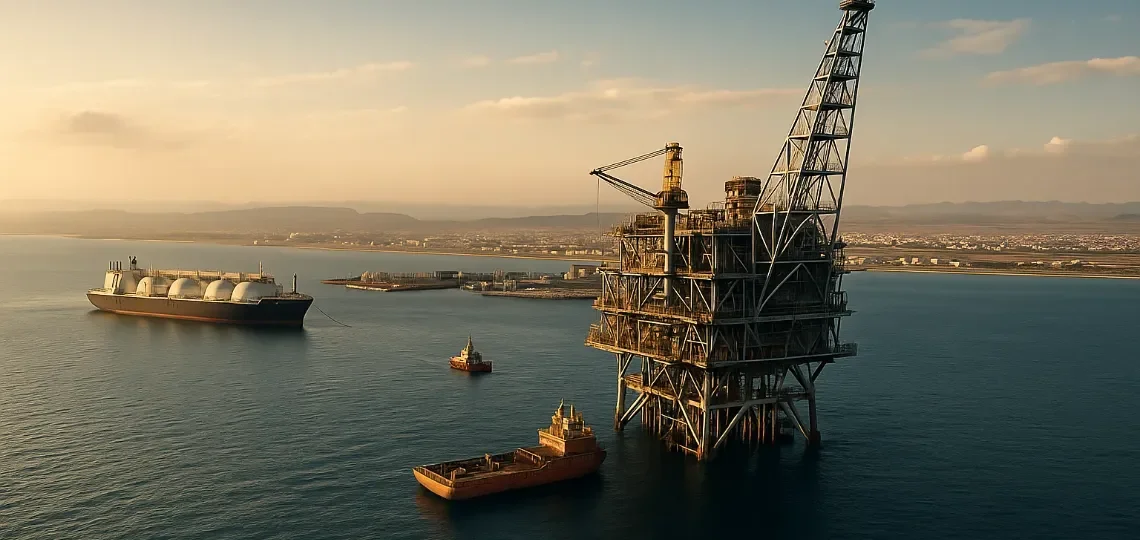
Mauritania and Senegal joined the market in 2025 via the offshore Greater Tortue Ahmeyim field, operated by BP, Kosmos Energy, PETROSEN and SMH. The site delivered its first 174,000 m³ cargo in April 2025. Output is expected at 2.3 to 2.4 million tonnes per year, with up to 25% reserved for domestic markets by 2027.
Other countries such as Congo, Gabon, Angola, and Equatorial Guinea are also set to increase their export volumes, supported by the development of offshore floating LNG terminals. Combined exports from these producers are expected to grow from 30.9 billion cubic metres in 2024 to 44.5 billion in 2034.
Projects facing delays in Tanzania and Namibia
While some projects are advancing, others remain uncertain. In Tanzania, the $42bn Lindi LNG project has yet to begin construction. It is backed by Equinor, Shell, and ExxonMobil, which are still finalising the necessary fiscal and regulatory frameworks.
In Namibia, the Venus and Graff-1X fields show strong gas potential but require significant investment in gas capture infrastructure. The Kudu project, led by BW Energy, targets initial LNG production by 2026, though large-scale exports remain limited in the short term.