South America strengthens its role in global oil supply through 2030

Brazil, Guyana, Suriname and Argentina are expected to provide a growing share of non-OPEC+ oil supply, backed by massive offshore investments and continued exploration momentum.

Share:

Comprehensive energy news coverage, updated nonstop

Annual subscription

8.25$/month*

*billed annually at 99$/year for the first year then 149,00$/year ​

Unlimited access • Archives included • Professional invoice

OTHER ACCESS OPTIONS

Monthly subscription

Unlimited access • Archives included

5.2$/month*
then 14.90$ per month thereafter

FREE ACCOUNT

3 articles offered per month

FREE

*Prices are excluding VAT, which may vary depending on your location or professional status

Since 2021: 35,000 articles • 150+ analyses per week

South American oil production is set to grow steadily through 2030, driven by offshore projects in Brazil, Guyana and Suriname, along with developments in Argentina’s Vaca Muerta shale. This trend aligns with a still-strong global oil demand, with consumption projected to reach 107 million barrels per day in the early 2030s. Forecasts indicate it will remain above 100 million barrels per day through the 2040s.

Offshore projects as a key driver

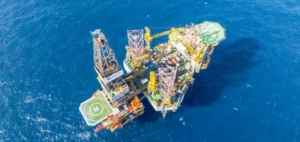
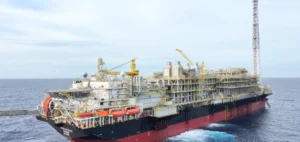
Since 2020, more than 65% of South America’s conventional oil production comes or will come from offshore fields, supported by floating production, storage and offloading (FPSO) units. In Brazil and Guyana, operators have reinforced their presence in deepwater with several units already operational. In Guyana, ExxonMobil is currently running four FPSOs. However, new discoveries have slowed, with only 420 million barrels found this year—the lowest since 2017.

Strong growth in non-OPEC+ volumes

Nearly 60% of conventional under-development or discovered oil volumes—about 5.9 million barrels per day—are expected to come from non-OPEC+ producers by 2030. South America is projected to add more than 560,000 barrels per day this year, ahead of North America. By 2026, the region could surpass 750,000 additional daily barrels, maintaining its strategic position alongside the non-OPEC+ Middle East.

Massive investment through 2030

Cumulative capital expenditure (capex) for conventional oil projects in South America between 2020 and 2030 is expected to reach $197 billion, mostly concentrated in offshore developments. Suriname’s $10.5 billion GranMorgu field is set to begin production in 2028. Last year, upstream investment in the region surpassed $46 billion, the highest since 2015, and is forecast to grow by 10% this year.

Emerging players and new exploration zones

In addition to major producers, Trinidad and Tobago and Peru are attracting new interest. ExxonMobil has signed a new production-sharing contract in Trinidad and Tobago, targeting ultra-deepwater areas that remain largely unexplored. The strategy mirrors the one used in Guyana’s Stabroek Block, which yielded over 13 billion recoverable barrels. In Peru, Chevron, Anadarko (Occidental Petroleum) and Westlawn are jointly exploring three offshore blocks in the Mar de Grau, where a commercial discovery could generate up to 150,000 barrels per day at peak production.

Bourbon has signed an agreement with ExxonMobil for the charter of next-generation Crewboats on Angola’s Block 15, strengthening a strategic cooperation that began over 15 years ago.
Faced with tighter legal frameworks and reinforced sanctions, grey fleet operators are turning to 15-year-old VLCCs and scrapping older vessels to secure oil routes to Asia.
Reconnaissance Energy Africa completed drilling at the Kavango West 1X onshore well in Namibia, where 64 metres of net hydrocarbon pay were detected in the Otavi carbonate section.
The Adura joint venture merges Shell and Equinor’s UK offshore assets, becoming the leading independent oil and gas producer in the mature North Sea basin.
A Delaware court approved the sale of PDV Holding shares to Elliott’s Amber Energy for $5.9bn, a deal still awaiting a U.S. Treasury licence through OFAC.
A new $100mn fund has been launched to support Nigerian oil and gas service companies, as part of a national target to reach 70% local content by 2027.
Western measures targeting Rosneft and Lukoil deeply reorganise oil trade, triggering a discreet yet massive shift of Russian export routes to Asia without causing global supply disruption.
The Nigerian Upstream Petroleum Regulatory Commission opens bidding for 50 exploration blocks across strategic zones to revitalise upstream investment.
La Nigerian Upstream Petroleum Regulatory Commission ouvre la compétition pour 50 blocs d’exploration, répartis sur plusieurs zones stratégiques, afin de relancer les investissements dans l’amont pétrolier.
Serbia's only refinery, operated by NIS, has suspended production due to a shortage of crude oil, a direct consequence of US sanctions imposed on its majority Russian shareholder.
Crude prices increased, driven by rising tensions between the United States and Venezuela and drone attacks targeting Russian oil infrastructure in the Black Sea.
Amid persistent financial losses, Tullow Oil restructures its governance and accelerates efforts to reduce over $1.8 billion in debt while refocusing operations on Ghana.
The Iraqi government is inviting US oil companies to bid for control of the giant West Qurna 2 field, previously operated by Russian group Lukoil, now under US sanctions.
Two tankers under the Gambian flag were attacked in the Black Sea near Turkish shores, prompting a firm response from President Recep Tayyip Erdogan on growing risks to regional energy transport.
The British producer continues to downsize its North Sea operations, citing an uncompetitive tax regime and a strategic shift towards jurisdictions offering greater regulatory stability.
Dangote Refinery says it can fully meet Nigeria’s petrol demand from December, while requesting regulatory, fiscal and logistical support to ensure delivery.
BP reactivated the Olympic pipeline, critical to fuel supply in the U.S. Northwest, after a leak that led to a complete shutdown and emergency declarations in Oregon and Washington state.
President Donald Trump confirmed direct contact with Nicolas Maduro as tensions escalate, with Caracas denouncing a planned US operation targeting its oil resources.
Zenith Energy claims Tunisian authorities carried out the unauthorised sale of stored crude oil, escalating a longstanding commercial dispute over its Robbana and El Bibane concessions.
TotalEnergies restructures its stake in offshore licences PPL 2000 and PPL 2001 by bringing in Chevron at 40%, while retaining operatorship, as part of a broader refocus of its deepwater portfolio in Nigeria.

All the latest energy news, all the time

Annual subscription

8.25$/month*

*billed annually at 99$/year for the first year then 149,00$/year ​

Unlimited access - Archives included - Pro invoice

Monthly subscription

Unlimited access • Archives included

5.2$/month*
then 14.90$ per month thereafter

*Prices shown are exclusive of VAT, which may vary according to your location or professional status.

Since 2021: 30,000 articles - +150 analyses/week.