Shell and Equinor finalise the creation of Adura, largest independent North Sea producer

The Adura joint venture merges Shell and Equinor’s UK offshore assets, becoming the leading independent oil and gas producer in the mature North Sea basin.

Share:

Comprehensive energy news coverage, updated nonstop

Annual subscription

8.25€/month*

*billed annually at 99€/year for the first year then 149,00€/year ​

Unlimited access • Archives included • Professional invoice

OTHER ACCESS OPTIONS

Monthly subscription

Unlimited access • Archives included

5.2€/month*
then 14.90€ per month thereafter

FREE ACCOUNT

3 articles offered per month

FREE

*Prices are excluding VAT, which may vary depending on your location or professional status

Since 2021: 35,000 articles • 150+ analyses per week

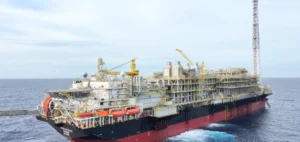
Shell U.K. Limited and Equinor UK Limited have completed the merger of their offshore oil and gas operations in the United Kingdom into a new joint venture named Adura. The company, equally owned by both groups, is now the largest independent producer operating in the UK North Sea.

A consolidated and strategically positioned asset portfolio

Adura inherits twelve oil and gas fields either in production or under development, including Mariner, Rosebank, Buzzard, Shearwater, Penguins, Gannet, Nelson, Pierce, Jackdaw, Victory, Clair and Schiehallion. It also holds several exploration licences. By consolidating these assets, the company aims to optimise costs and improve operational management in a historically strategic but technically complex zone.

The company is headquartered in Aberdeen. Adura retains operational teams from both Shell and Equinor, ensuring continuity of expertise. According to the two groups, this combination of capabilities would strengthen operational competitiveness in this mature basin.

An experienced leadership to drive the transition

Neil McCulloch, appointed Chief Executive Officer of Adura, has more than 30 years of experience in the energy sector. He stated that the company is built on “a commitment to safety, a long-term vision for the North Sea and the combined expertise of Shell and Equinor”. This direction appears to aim at stabilising production in a changing regulatory and economic environment.

Shell and Equinor each retain a 50% stake in Adura while relying on joint governance to enhance long-term asset value. The formation of this joint venture is part of a broader strategy to streamline exploration and production portfolios and respond to the UK’s energy needs.

Repositioning in response to market dynamics

In a context of mounting margin pressures and regulatory uncertainty in the UK, the creation of Adura marks an organisational response to offshore market realities. The consolidation of both majors’ assets under an independent entity reflects a structural adaptation to preserve the profitability of existing operations.

Philippe Mathieu, Executive Vice President of Equinor, stated that the new company would have “the scale and operational flexibility needed to succeed”. This approach seeks to extend the economic viability of mature fields while maintaining a strategic position in the UK energy market.

Global crude oil production is expected to rise by 0.8 million barrels per day in 2026, with Brazil, Guyana and Argentina contributing 50% of the projected increase.
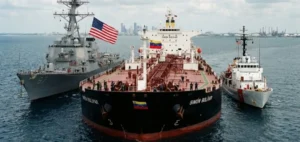
Interceptions of ships linked to Venezuelan oil are increasing, pushing shipowners to suspend operations as PDVSA struggles to recover from a cyberattack that disrupted its logistical systems.
Harbour Energy acquires US offshore operator LLOG for $3.2bn, adding 271 million barrels in reserves and establishing a fifth operational hub in the Gulf of Mexico.
The agreement signed with Afreximbank marks a strategic shift for Heirs Energies, aiming to scale up its exploration and production operations on Nigeria's OML 17 oil block.
Oritsemeyiwa Eyesan’s appointment as head of Nigeria’s oil regulator marks a strategic shift as the country targets $10bn in upstream investment through regulatory reform and transparent licensing.
Baghdad states that all international companies operating in Kurdistan’s oil fields must transfer their production to state marketer SOMO, under the agreement signed with Erbil in September.
Chinese oil group CNOOC continues its expansion strategy with a new production start-up in the Pearl River Basin, marking its ninth offshore launch in 2025.
A train carrying over 1,200 tonnes of gasoline produced in Azerbaijan entered Armenia on December 19, marking the first commercial operation since recent conflicts, with concrete implications for regional transit.
Subsea 7 has secured a new extension of its frame agreement with Equinor for subsea inspection, maintenance and repair services through 2027, deploying the Seven Viking vessel on the Norwegian Continental Shelf.
Caracas says Iran has offered reinforced cooperation after the interception of two ships carrying Venezuelan crude, amid escalating tensions with the United States.
US authorities intercepted a second oil tanker carrying Venezuelan crude, escalating pressure on Caracas amid accusations of trafficking and tensions over sanctioned oil exports.
California Resources Corporation completed an all-stock asset transfer with Berry Corporation, strengthening its oil portfolio in California and adding strategic exposure in the Uinta Basin.
The Ugandan government aims to authorise its national oil company to borrow $2 billion from Vitol to fund strategic projects, combining investments in oil infrastructure with support for national logistics needs.
British company BP appoints Meg O'Neill as CEO to lead its strategic refocus on fossil fuels, following the abandonment of its climate ambitions and the early departure of Murray Auchincloss.
The Venezuelan national oil company has confirmed the continuity of its crude exports, as the United States enforces a maritime blockade targeting sanctioned vessels operating around the country.
Baker Hughes will supply advanced artificial lift systems to Kuwait Oil Company to enhance production through integrated digital technologies.
The United States has implemented a full blockade on sanctioned tankers linked to Venezuela, escalating restrictions on the South American country's oil flows.
Deliveries of energy petroleum products fell by 4.5% in November, driven down by a sharp decline in diesel, while jet fuel continues its growth beyond pre-pandemic levels.
ReconAfrica is finalising preparations to test the Kavango West 1X well in Namibia, while expanding its portfolio in Angola and Gabon to strengthen its presence in sub-Saharan Africa.
Shell has reopened a divestment process for its 37.5% stake in Germany's PCK Schwedt refinery, reviving negotiations disrupted by the Russia-Ukraine conflict and Western sanctions.

All the latest energy news, all the time

Annual subscription

8.25€/month*

*billed annually at 99€/year for the first year then 149,00€/year ​

Unlimited access - Archives included - Pro invoice

Monthly subscription

Unlimited access • Archives included

5.2€/month*
then 14.90€ per month thereafter

*Prices shown are exclusive of VAT, which may vary according to your location or professional status.

Since 2021: 30,000 articles - +150 analyses/week.