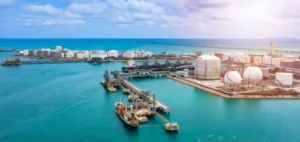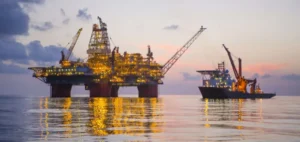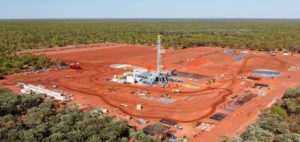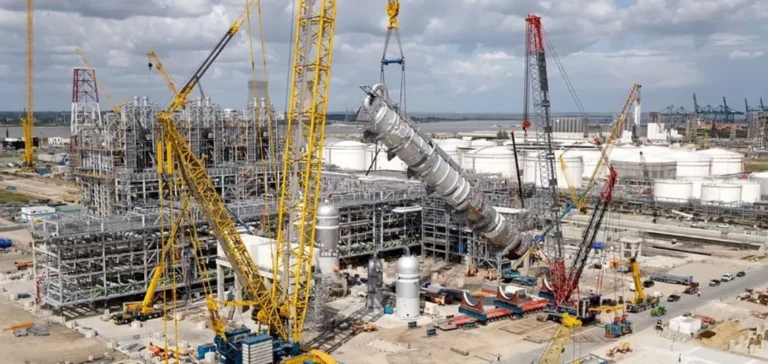

Saudi Aramco has commissioned the first phase of the unconventional Jafurah gas field, with an initial production capacity of 450 million cubic feet per day (MMcf/d). This launch marks the beginning of a long-term expansion programme targeting 2 billion cubic feet per day (Bcf/d) by 2030. The project is part of a broader shift in Saudi Arabia’s energy strategy, with over $100bn in planned investments combining technical infrastructure and structured financial mechanisms.
A leaseback investment model
Financing relies on an $11bn lease and leaseback agreement with a consortium led by Global Infrastructure Partners (GIP) and BlackRock. This arrangement provides Saudi Aramco with immediate liquidity while maintaining operational control of the assets. The structure includes the Jafurah Midstream Gas Company (JMGC), a joint venture 51% owned by Aramco and 49% by the consortium, with a 20-year lease covering the gas processing plant and the NGL fractionation unit at Riyas.
This model reduces Aramco’s direct capital exposure while securing long-term stable revenues for investors. It reflects a growing trend in the energy sector, where midstream infrastructure is treated as a revenue-generating asset class attractive to specialised funds.
Economic leverage under OPEC+ limits
Each Bcf/d of gas injected into the power grid replaces between 180,000 and 200,000 barrels per day of crude used in thermal power plants. This substitution optimises export revenues without breaching OPEC+ production quotas, while improving Aramco’s operational balance.
The volumes freed could reach 500,000 barrels per day at full capacity, with over 300,000 barrels directly linked to Jafurah. This structural reallocation of domestic crude enhances the value of the Kingdom’s energy portfolio.
Value chain pressures and tight deadlines
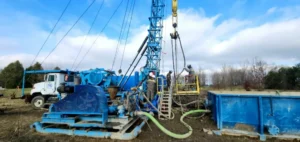
The rapid build-out of Jafurah is placing significant pressure on the regional supply chain. Oilfield service companies specialising in horizontal drilling, hydraulic fracturing, water treatment and electrical integration are facing sustained demand through 2028. This is driving up rig day-rates, equipment lease costs and the price of critical components such as compression systems.
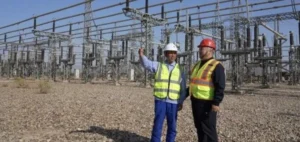
Saudi Aramco has already awarded more than $25bn in contracts for phases 1 and 2, covering compression, processing trains, pipelines and substations. The project timeline anticipates a phased ramp-up to 1 Bcf/d and then 2 Bcf/d, depending on infrastructure performance and the capacity of the national Master Gas System.
Revenue outlook and industrial diversification
Beyond crude substitution, Jafurah enables Saudi Aramco to secure a stable feedstock supply for petrochemical operations. In steady-state, the project targets over 400 MMcf/d of ethane and approximately 630,000 barrels per day of condensates and natural gas liquids (NGL), intended for industrial complexes and cogeneration facilities.
In the medium term, these streams could also support upcoming blue hydrogen and low-carbon ammonia projects, particularly in industrial hubs such as Jazan. This direction enhances Saudi Arabia’s competitiveness in the transition molecules segment, without altering its official oil production capacity.