Rig count drops in the United States despite record production
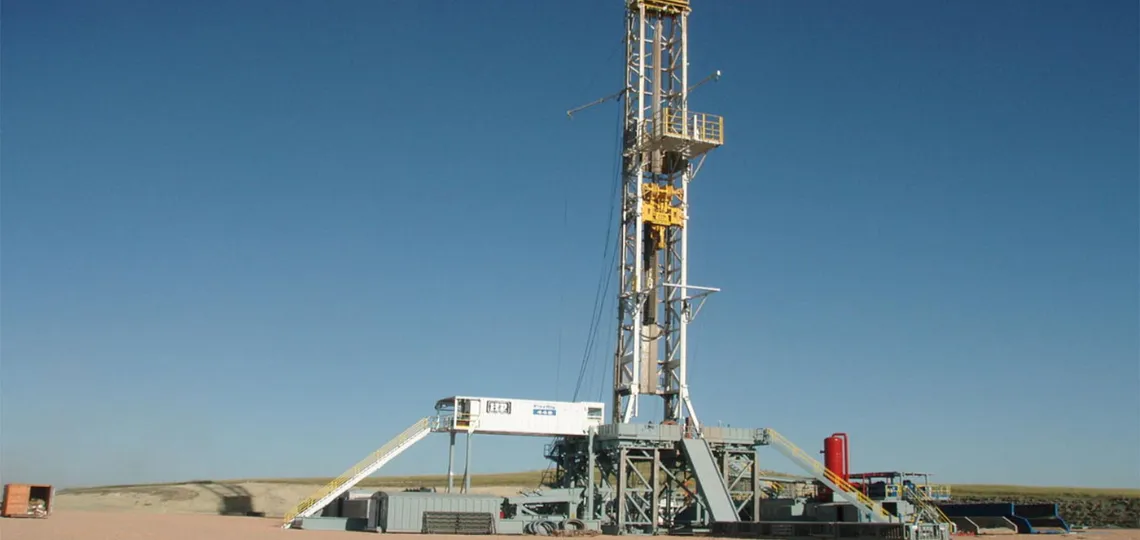
The number of active drilling rigs in the continental United States continues to decline while oil and natural gas production reaches historic levels, driven by operational efficiency gains.
| Sectors | Oil, Gas, Exploration & Production, Gas Exploration & Production |
|---|---|
| Themes | Markets & Finance, Sector Analysis |
The number of active oil and gas drilling rigs in the United States has been steadily declining since the end of 2022, reaching 517 rigs in October 2025 from a recent peak of 750 in December 2022. This decrease is attributed to falling crude oil and natural gas prices and significant improvements in drilling efficiency.
Between December 2022 and October 2025, the number of oil-directed rigs dropped by 33% to 397 units, while gas-directed rigs fell by 23% to 120 units. In September 2024, gas-directed rigs hit a low of 96 amid historically low prices. Both segments have stabilised since then.
Production increases despite reduced activity
Despite the drop in rig counts, production in the Lower 48 states reached record highs. In July 2025, crude oil production hit 11.4 million barrels per day, while natural gas output peaked at 117.2 billion cubic feet per day in August. Operators are focusing on the most profitable plays, extending horizontal well lengths and optimising completion methods to maintain economic viability.
Permian Basin and Appalachia lead output growth
The Permian Basin remains the leading crude oil producing region in the United States. Since December 2022, the rig count there has declined by 29%, while production has increased by 18%, equivalent to a gain of 1 million barrels per day. This reflects operators’ ability to maximise yields from targeted sites.
In natural gas, Appalachia continues to lead. The number of rigs in the region also fell by 29%, but production rose by 10%, or 3.3 billion cubic feet per day, following stagnation in 2024 during a period of weak prices.
2026 outlook: slower oil, recovering gas
Projections for 2026 anticipate a slight decline in crude oil production in the Lower 48 by 0.1 million barrels per day, a 1% decrease. In contrast, natural gas production is expected to increase by 0.4 billion cubic feet per day, representing a rise of less than 1%.
This outlook is supported by contrasting price forecasts. The average price for West Texas Intermediate (WTI) crude oil is expected to reach $51 per barrel in 2026, 21% below the 2025 average. Meanwhile, the Henry Hub natural gas price is forecast to rise to $4.02 per million British thermal units, 16% higher than the 2025 average.
Shifting balance between oil and gas
In this context, analysts expect that rising output from gas-directed drilling will offset the decline in gas production as a by-product of oil-directed drilling. Operators’ strategic adjustments to market changes may redefine short-term investment balances between oil and gas segments.