Renova avance sur un projet éolien terrestre de 280MW à Higashidori avec une nouvelle méthodologie EIE

Renova a soumis une méthodologie d’évaluation environnementale pour un projet éolien terrestre de 280MW à Higashidori, renforçant son positionnement sur les technologies renouvelables au Japon.

Share:

Comprehensive energy news coverage, updated nonstop

Annual subscription

8.25$/month*

*billed annually at 99$/year for the first year then 149,00$/year ​

Unlimited access • Archives included • Professional invoice

OTHER ACCESS OPTIONS

Monthly subscription

Unlimited access • Archives included

5.2$/month*
then 14.90$ per month thereafter

FREE ACCOUNT

3 articles offered per month

FREE

*Prices are excluding VAT, which may vary depending on your location or professional status

Since 2021: 35,000 articles • 150+ analyses per week

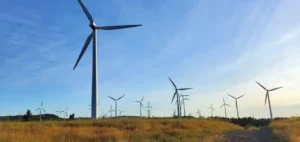
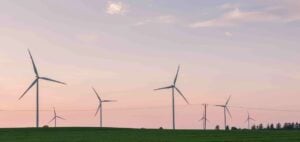
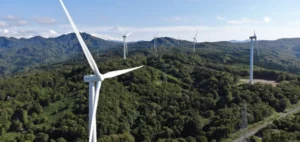
Renova a déposé auprès du ministère de l’Économie, du Commerce et de l’Industrie (METI) du Japon et des autorités locales sa méthodologie d’évaluation de l’impact environnemental pour un projet éolien terrestre d’une capacité maximale de 280MW dans le village de Higashidori, situé dans la préfecture d’Aomori. Le document prévoit l’installation de 32 à 51 turbines, chacune d’une puissance comprise entre 4,2MW et 8MW, sur un site d’environ 2 367 hectares.

La société prévoit de lancer la construction en mars 2029, pour un achèvement estimé en janvier 2034 et une mise en service commerciale dès août 2034, après une courte phase d’essais. Le processus d’évaluation environnementale avait été engagé en avril 2024 pour une version initiale du projet, dont la capacité devait se situer entre 168MW et 240MW.

Une région propice à l’énergie éolienne terrestre

Située sur la péninsule de Shimokita, la zone de Higashidori bénéficie de conditions de vent constantes favorisant le développement de l’éolien. Plusieurs parcs sont déjà opérationnels dans la région, notamment la centrale de Futamata (51MW) et le parc Eurus Noheji (50MW). D’autres projets de grande ampleur, comme celui de Cosmo Eco Power pouvant atteindre 200MW ou le parc Odanosawa III de Eurus Energy Holdings prévu jusqu’à 162MW, poursuivent actuellement leurs démarches d’évaluation environnementale.

Une dynamique d’innovation dans le portefeuille de Renova

Historiquement orientée vers le solaire et la biomasse, Renova élargit son champ d’action en intégrant de nouvelles technologies de production d’électricité. L’entreprise détient une participation dans le parc éolien Abukuma de 147MW à Fukushima, aux côtés de plusieurs partenaires industriels, et conduit le développement du projet Reihoku-Amakusa de 54,6MW à Kumamoto, son premier projet mené en chef de file.

Cap sur 400MW d’ici 2030

Renova développe également plusieurs projets éoliens terrestres dans d’autres régions du Japon, dont Embetsu-Shosambetsu (jusqu’à 288MW) et Yurihonjo-Iwaki (105,6MW). Ces projets s’inscrivent dans un plan global visant à porter la capacité éolienne terrestre installée et en construction à 400MW d’ici à l’exercice fiscal 2030. Cette progression illustre la stratégie du groupe consistant à renforcer sa présence dans le secteur des énergies renouvelables par une approche intégrant innovation technique et diversification de son portefeuille.

Swedish developer OX2 acquires three onshore wind projects totalling 235 MW in Romania, pushing its portfolio beyond 1.1 GW in a rapidly growing market.
Danish group Vestas is expanding its blade plant in Poland and creating more than 300 jobs to supply turbines to Germany, the leading onshore wind market in Europe.
The UK government has approved the development consent for the 480 MW Morecambe offshore wind farm, a project led by Copenhagen Infrastructure Partners and scheduled to enter construction in 2027.
Infinity Power has started work on its 200 MW wind project in Ras Ghareb, strengthening its position in the African market with technical support from China's POWERCHINA Huadong.
A partnership between the European Investment Bank and Crédit Agricole CIB aims to generate up to €8 billion in wind energy investments across the European Union through a bank guarantee mechanism.
With a €600mn ($652mn) contribution, the European Investment Bank becomes the main lender of the BC-Wind offshore wind project developed by Ocean Winds off the Polish coast.
Cadeler has taken delivery of its tenth wind turbine installation vessel, Wind Mover, delivered ahead of schedule and immediately deployed in Europe, strengthening its capabilities amid rising industrial demand.
Levanta Renewables partners with Triconti Windkraft Group to develop an onshore wind farm in Quezon province, scheduled to begin operations in 2028.
BW Ideol Projects Company acquires a minority stake in the Méditerranée Grand Large project, strengthening its partnership with EDF power solutions and Maple Power in the Mediterranean floating offshore wind sector.
Octopus Energy joins a global initiative to accelerate renewable energy deployment in Africa, committing $450mn through its Power Africa programme to supply electricity to more than one million people.
Australian energy provider Snowy Hydro has secured long-term agreements with Aula Energy and TagEnergy, adding 120 MW of wind power and 105 MW of battery storage to its national portfolio.
The He Dreiht offshore wind farm delivers its first MWh as the German auction model stalls, offering EnBW and its institutional investors a strategic showcase.
The Irish government has provisionally awarded development rights for the Tonn Nua offshore site to the Ørsted-ESB joint venture under a 20-year contract supporting a 900 MW project.
Nordex Group will supply six turbines to upgrade a 34.2 MW wind farm in Caparroso, financed by the European Union under the NextGenerationEU plan.
The Spanish group continues its asset rotation strategy by transferring its French onshore wind and solar portfolio to Technique Solaire, reinforcing its focus on offshore and regulated networks.
Japanese group Eurus Energy has completed the environmental assessment for its 60.2MW repowering project in Wakkanai, with commissioning targeted for April 2029.
BayWa r.e. has reached a strategic milestone with the concept certification of its BayFloat floating substructure, validated by DNV according to current floating offshore wind standards.
A full-scale testing programme will begin in January to assess a blade reinforcement technology developed by Bladena, as ageing offshore wind fleets raise durability challenges.
Africa's first wind project led by a Chinese company, the De Aar plant generates 770 million kWh annually and focuses on developing local talent.
SPIE Wind Connect has been selected by DEME Offshore to carry out all connection and high-voltage cable testing work for the 3.6 GW Dogger Bank offshore wind project off the UK coast.

All the latest energy news, all the time

Annual subscription

8.25$/month*

*billed annually at 99$/year for the first year then 149,00$/year ​

Unlimited access - Archives included - Pro invoice

Monthly subscription

Unlimited access • Archives included

5.2$/month*
then 14.90$ per month thereafter

*Prices shown are exclusive of VAT, which may vary according to your location or professional status.

Since 2021: 30,000 articles - +150 analyses/week.