PermRock Royalty Trust distributes $539,693 following decline in oil sales

PermRock Royalty Trust announces a monthly distribution of $539,693 to unit holders, impacted by reduced oil volumes and prices in April, partly offset by increased natural gas sales.

Share:

Comprehensive energy news coverage, updated nonstop

Annual subscription

8.25$/month*

*billed annually at 99$/year for the first year then 149,00$/year ​

Unlimited access • Archives included • Professional invoice

OTHER ACCESS OPTIONS

Monthly subscription

Unlimited access • Archives included

5.2$/month*
then 14.90$ per month thereafter

FREE ACCOUNT

3 articles offered per month

FREE

*Prices are excluding VAT, which may vary depending on your location or professional status

Since 2021: 35,000 articles • 150+ analyses per week

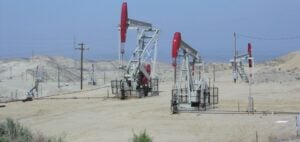
PermRock Royalty Trust confirmed the payment of a monthly cash distribution of $539,693 ($0.044361 per unit) to holders of units as of June 30, 2025, payable on July 15, according to a statement published on June 20. This distribution is primarily based on April 2025 production and pertains to the Trust’s underlying oil and gas assets. It represents a decrease from the previous month, principally due to a drop in both volumes and average selling price of oil. However, natural gas results showed a slight improvement.

Decline in oil revenues

In April, oil sales volumes underlying the Trust stood at 21,171 barrels, or 706 barrels per day, compared to 22,232 barrels (717 barrels per day) in the previous month. The average received price for oil also declined, dropping from $66.92 per barrel to $61.82. Consequently, oil revenues totalled $1.31mn, reflecting a decrease of $180,000 compared to the prior period.

Natural gas showed a notable increase in sold volumes, reaching 35,024 thousand cubic feet (Mcf), equivalent to an average daily output of 1,167 Mcf. This marked a significant rise compared to the previously recorded 24,848 Mcf. Despite this increase in volume, the average natural gas price fell to $2.61 per Mcf, down from $3.19 the previous month.

Reduction in operating expenses

Total direct operating expenses, including marketing, lease operating expenses and workover expenses, amounted to $320,000, declining by $280,000 compared to the previous distribution period. Severance and ad valorem taxes included in the net profit calculations amounted to $130,000 for the current month.

Meanwhile, capital expenditures reached $20,000, marking a slight increase of $10,000 compared to the previous month. These changes in costs directly influenced net profit calculations and consequently the monthly distribution amount.

Overall impact on distributions

The combined decrease in oil prices and volumes remains the primary factor behind the reduction in investor distributions. Conversely, the rise in natural gas sales volume partially offsets the negative impacts on the Trust’s total revenues.

Investors will thus receive this adjusted distribution on July 15, serving as a relevant indicator of recent economic performance of PermRock Royalty Trust’s oil and gas assets.


Greek shipowner Imperial Petroleum has secured $60mn via a private placement with institutional investors to strengthen liquidity for general corporate purposes.
Ecopetrol plans between $5.57bn and $6.84bn in investments for 2026, aiming to maintain production, optimise infrastructure and ensure profitability despite a moderate crude oil market.
Faced with oversupply risks and Russian sanctions, OPEC+ stabilises volumes while preparing a structural redistribution of quotas by 2027, intensifying tensions between producers with unequal capacities.
The United Kingdom is replacing its exceptional tax with a permanent price mechanism, maintaining one of the world’s highest fiscal pressures and reshaping the North Sea’s investment attractiveness for oil and gas operators.
Pakistan confirms its exit from domestic fuel oil with over 1.4 Mt exported in 2025, transforming its refineries into export platforms as Asia faces a structural surplus of high- and low-sulphur fuel oil.
Turkish company Aksa Enerji has signed a 20-year contract with Sonabel for the commissioning of a thermal power plant in Ouagadougou, aiming to strengthen Burkina Faso’s energy supply by the end of 2026.
The Caspian Pipeline Consortium resumed loadings in Novorossiisk after a Ukrainian attack, but geopolitical tensions persist over Kazakh oil flows through this strategic Black Sea corridor.
Hungary increases oil product exports to Serbia to offset the imminent shutdown of the NIS refinery, threatened by US sanctions over its Russian majority ownership.
Faced with falling oil production, Pemex is expanding local refining through Olmeca, aiming to reduce fuel imports and optimise its industrial capacity under fiscal pressure.
Brazil’s state oil company will reduce its capital spending by 2%, hit by falling crude prices, marking a strategic shift under Lula’s presidency.
TotalEnergies has finalised the sale of its 12.5% stake in Nigeria’s offshore Bonga oilfield for $510mn, boosting Shell and Eni’s positions in the strategic deepwater production site.
Serbia is preparing a budget law amendment to enable the takeover of NIS, a refinery under US sanctions and owned by Russian groups, to avoid an imminent energy shutdown.
Nigeria’s Dangote refinery selects US-based Honeywell to supply technology that will double its crude processing capacity and expand its petrochemical output.
Iraq secures production by bypassing US sanctions through local payments, energy-for-energy swaps, and targeted suspension of financial flows to Lukoil to protect West Qurna-2 exports.
Restarting Olympic Pipeline’s 16-inch line does not restore full supply to Oregon and Seattle-Tacoma airport, both still exposed to logistical risks and regional price tensions.
Faced with tightened sanctions from the United States and European Union, Indian refiners are drastically reducing their purchases of Russian crude from December, according to industry sources.
Serbia’s only refinery, operated by NIS, may be forced to halt production this week, weakened by US sanctions targeting its Russian shareholders.
Glencore's attributable production in Cameroon dropped by 31% over nine months, adding pressure on public revenues as Yaoundé revises its oil and budget forecasts amid field maturity and targeted investment shifts.
The profitability of speculative positioning strategies on Brent is declining, while contrarian approaches targeting extreme sentiment levels are proving more effective, marking a significant regime shift in oil trading.
Alaska is set to record its highest oil production increase in 40 years, driven by two key projects that extend the operational life of the TAPS pipeline and reinforce the United States' strategic presence in the Arctic.

All the latest energy news, all the time

Annual subscription

8.25$/month*

*billed annually at 99$/year for the first year then 149,00$/year ​

Unlimited access - Archives included - Pro invoice

Monthly subscription

Unlimited access • Archives included

5.2$/month*
then 14.90$ per month thereafter

*Prices shown are exclusive of VAT, which may vary according to your location or professional status.

Since 2021: 30,000 articles - +150 analyses/week.