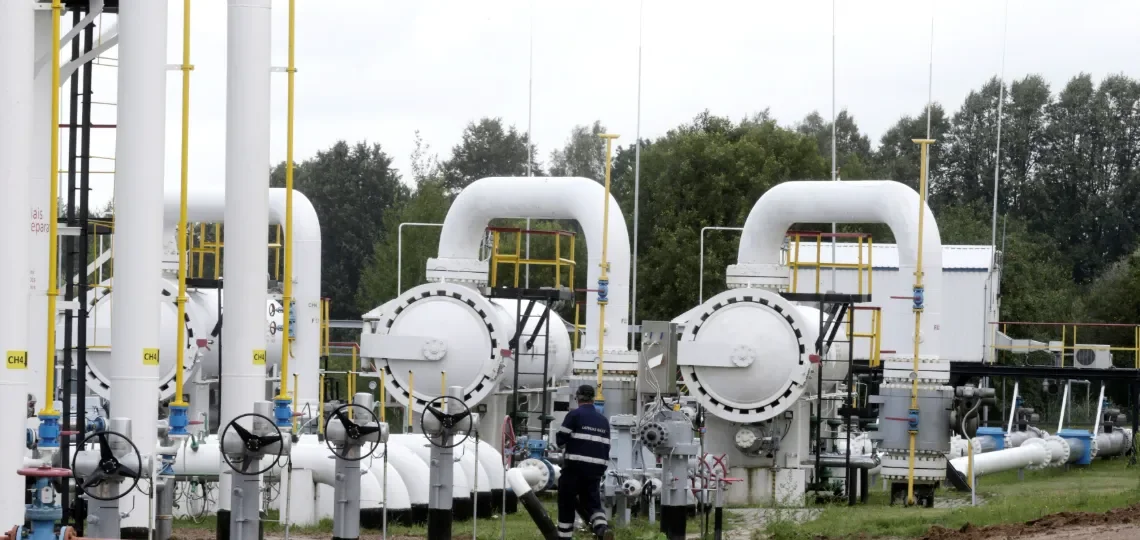
Osaka Gas Co., Japan’s second-largest city gas supplier, began commercial operations of Unit 1 at its new natural gas-fired power plant in Himeji, western Japan, on January 1. The unit, with a capacity of 622.6 megawatts, is the first half of a 1.25-gigawatt facility designed to strengthen the company’s electricity generation capacity.

Combined-cycle technology for enhanced efficiency
The plant uses a gas turbine combined-cycle system that improves energy efficiency by recovering exhaust heat to power a secondary steam turbine. The second unit, of equal capacity, is scheduled to come online in May. Once both units are operational, Osaka Gas’s domestic thermal generation capacity will increase to 3.2 gigawatts, up from approximately 2 gigawatts.
The launch comes amid a growing demand for electricity, particularly driven by the expansion of data centres required to support the rise of artificial intelligence. The choice of natural gas aligns with a strategy to meet evolving grid needs while ensuring energy reliability.
Natural gas supported by national energy planning
Japan’s latest Strategic Energy Plan, approved in February last year, identifies natural gas as a practical energy source to support the country’s energy transition. It is considered a stable pillar of the energy mix, even beyond the target of carbon neutrality set for 2050.
In this context, Japan has conducted auctions over the past two years to allocate new gas-fired capacity as a replacement for outdated coal plants. A total of 7 gigawatts of capacity has been awarded during this period, according to data from the Organization for Cross-regional Coordination of Transmission Operators, Japan (OCCTO).
Growth forecast for LNG-fired capacity
The OCCTO projects continued growth in liquefied natural gas (LNG)-fired capacity, with installed capacity expected to reach 85.75 gigawatts by 2034, up from 79.98 gigawatts in 2024. This increase reflects a strategy of energy diversification in the context of industrial and digital transition.
With the Himeji plant, Osaka Gas strengthens its role in thermal power generation while responding to structural changes in Japan’s electricity market.