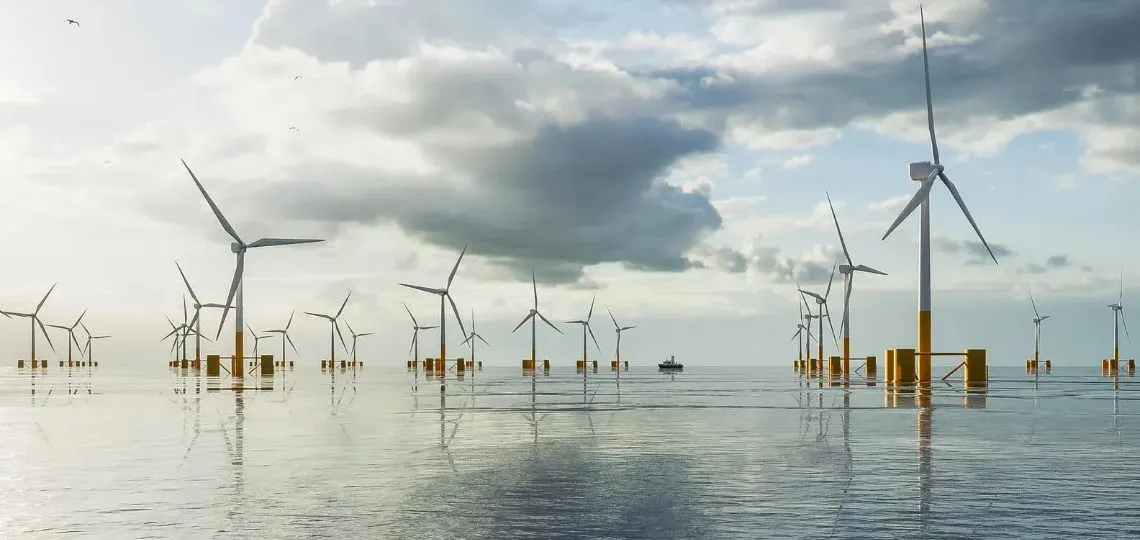
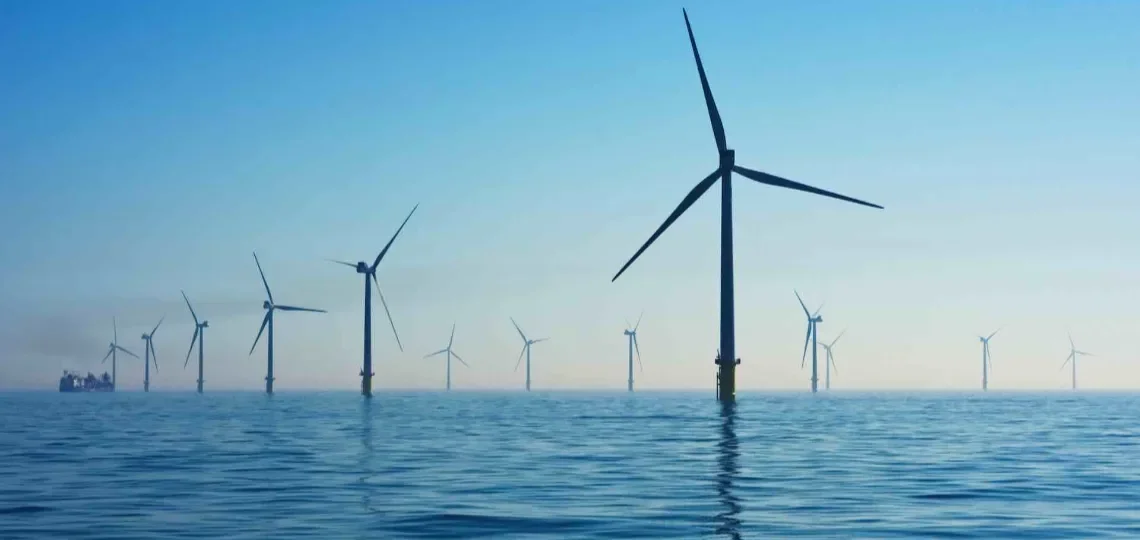
Norway has officially awarded two areas of the Utsira Nord project to the two applicant consortia, Equinor–Vårgrønn and EDF–Deep Wind Offshore. This decision marks a major administrative milestone in the development of Norwegian floating wind, with commissioning targeted from 2034. It grants a right to carry out technical and environmental studies, without guaranteeing public financial support at this stage.
Competition postponed to the subsidy phase
The current allocation acts as a pre-qualification, allowing both groups to carry out environmental impact assessments and submit a licence application. Only after this phase will the Norwegian government organise an auction where the project requesting the lowest level of support will be selected. The mechanism deviates from a traditional Contract for Difference model in favour of a reverse auction logic focused on the amount of state aid.
The procedure is governed by national offshore energy legislation, with assessments led by the Norwegian Water Resources and Energy Directorate (NVE) for sustainability, and Enova for techno-economic evaluation. The EFTA Surveillance Authority (ESA) has approved the Utsira Nord state aid framework within the European Economic Area (EEA).
Bankability and risk control at the heart of the process
Projects must demonstrate advanced maturity with probabilistic estimates of costs and output, as well as a credible cost reduction trajectory from 2034 to 2040. Requirements also include strategies to mitigate procurement and commodity risks. Sustainability criteria, including recyclability and carbon footprint, are integrated into the scoring system.
The public support cap set at NOK35bn ($3.22bn), indexed to 2025 value, limits budgetary leeway and pushes stakeholders to optimise early in the process. The tender structure, based on realism and uncertainty mitigation rather than production volume, steers projects towards bankability over maximum yield.
A strong signal to the industrial supply chain and power grid
Contractual requirements for suppliers, port logistics and installation force consortia to secure their supply chains early. This creates immediate impacts on offshore service markets, well before any Final Investment Decision. Developers must protect margins through integrated Engineering, Procurement and Construction (EPC) models and reinforced insurance coverage.
In addition, grid connection in the south-western region represents a structural constraint. Grid operator Statnett has identified growing pressure on transmission capacity, linked to a projected increase in electricity consumption from 40 to 120 TWh in the long term. The Utsira Nord project is thus positioned as a strategic additional generation lever.
Consortia in position and key decisions ahead
The Equinor-led consortium, in partnership with Vårgrønn – a joint venture between Eni Plenitude and HitecVision – strengthens its presence in the national floating offshore segment. EDF, through its participation in the Norwegian vehicle Harald Hårfagre AS, secures its first position on the Norwegian continental shelf but must adapt to a highly structured regulatory framework.
Upcoming milestones include the submission of licence applications, definition of the state aid agreement, and technological choices for floating platforms. Failure by either consortium to meet these steps could jeopardise the government’s planned competitive subsidy mechanism.