Nord Stream: EU Strategic Infrastructure Defense Discussed in Prague

The protection of the EU's critical infrastructure after the sabotage of the Nord Stream gas pipelines will be discussed next week.

Share:

Comprehensive energy news coverage, updated nonstop

Annual subscription

8.25$/month*

*billed annually at 99$/year for the first year then 149,00$/year ​

Unlimited access • Archives included • Professional invoice

OTHER ACCESS OPTIONS

Monthly subscription

Unlimited access • Archives included

5.2$/month*
then 14.90$ per month thereafter

FREE ACCOUNT

3 articles offered per month

FREE

*Prices are excluding VAT, which may vary depending on your location or professional status

Since 2021: 35,000 articles • 150+ analyses per week

The protection of the EU’s critical infrastructure after the sabotage of the Nord Stream gas pipelines in the Baltic Sea will be discussed next week at the informal summit of EU leaders in Prague, European Council President Charles Michel announced on Saturday.

“Sabotage of #Nordstream pipelines is a threat to the EU,” he tweeted after receiving Danish Prime Minister Mette Frederiksen. “We are determined to secure our critical infrastructure. Leaders will address this issue at the upcoming summit in Prague,” he announced.

Mrs. Frederiksen also met with NATO Secretary General Jens Stoltenberg during her visit to Brussels.

Underwater explosions equivalent to “hundreds of kilograms” of TNT are at the origin of the leaks discovered on the Nord Stream 1 and 2 gas pipelines in international waters off the Danish island of Bornholm, and “all available information indicates that these explosions are the consequence of a deliberate act”, said Sweden and Denmark in an official report submitted to the United Nations.

The Secretary General of NATO assured Friday that the allies will defend their strategic infrastructure and participate in the ongoing investigation to “determine who is behind these attacks.

EU leaders will meet Thursday in Prague with their counterparts from 17 countries of “greater Europe” to address the challenges posed by the Russian-led war in Ukraine and launch the European Political Community project. This meeting will be followed on Friday by an informal summit of the 27.
The United States strengthens its energy presence in the Eastern Mediterranean by consolidating a gas corridor through Greece to Central Europe, to the detriment of Russian flows and Chinese logistical influence over the Port of Piraeus.
Paris and Beijing agree to create a bilateral climate task force focused on nuclear technologies, renewable energy and maritime sectors, amid escalating trade tensions between China and the European Union.
Ankara plans to invest in US gas production to secure LNG supply and become a key supplier to Southern Europe, according to the Turkish Energy Minister.
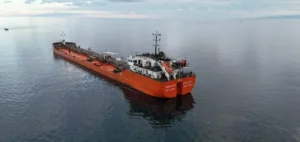
Three Russian tankers targeted off the Turkish coast have reignited Ankara’s concerns about oil and gas supply security in the Black Sea and the vulnerability of its subsea infrastructure.
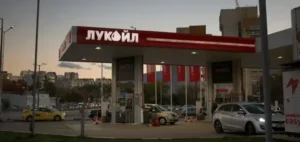
Bucharest authorises an exceptional takeover of Lukoil’s local assets to avoid a supply shock while complying with international sanctions. Three buyers are already in advanced talks.
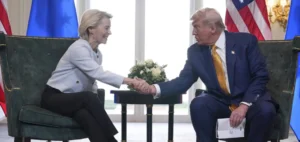
European governments want to add review and safeguard mechanisms to the trade deal with Washington to prevent a potential surge of US imports from disrupting their industrial base.
The Khor Mor gas field, operated by Pearl Petroleum, was hit by an armed drone, halting production and causing power outages affecting 80% of Kurdistan’s electricity capacity.
Global South Utilities is investing $1 billion in new solar, wind and storage projects to strengthen Yemen's energy capacity and expand its regional influence.
British International Investment and FirstRand partner to finance the decarbonisation of African companies through a facility focused on supporting high-emission sectors.
Budapest moves to secure Serbian oil supply, threatened by Croatia’s suspension of crude flows following US sanctions on the Russian-controlled NIS refinery.
Moscow says it wants to increase oil and liquefied natural gas exports to Beijing, while consolidating bilateral cooperation amid US sanctions targeting Russian producers.
The European Investment Bank is mobilising €2bn in financing backed by the European Commission for energy projects in Africa, with a strategic objective rooted in the European Union’s energy diplomacy.
Russia faces a structural decline in energy revenues as strengthened sanctions against Rosneft and Lukoil disrupt trade flows and deepen the federal budget deficit.
Washington imposes new sanctions targeting vessels, shipowners and intermediaries in Asia, increasing the regulatory risk of Iranian oil trade and redefining maritime compliance in the region.
OFAC’s licence for Paks II circumvents sanctions on Rosatom in exchange for US technological involvement, reshaping the balance of interests between Moscow, Budapest and Washington.
Finland, Estonia, Hungary and Czechia are multiplying bilateral initiatives in Africa to capture strategic energy and mining projects under the European Global Gateway programme.
The Brazilian president calls for a voluntary and non-binding energy transition during COP30 in Belém, avoiding direct confrontation with oil-producing countries.
The region attracted only a small share of global capital allocated to renewables in 2024, despite high energy needs and ambitious development goals, according to a report published in November.
The United States approves South Korea’s development of civilian uranium enrichment capabilities and supports a nuclear-powered submarine project, expanding a strategic partnership already linked to a major trade agreement.
The EU member states agree to prioritise a loan mechanism backed by immobilised Russian assets to finance aid to Ukraine, reducing national budgetary impact while ensuring enhanced funding capacity.

All the latest energy news, all the time

Annual subscription

8.25$/month*

*billed annually at 99$/year for the first year then 149,00$/year ​

Unlimited access - Archives included - Pro invoice

Monthly subscription

Unlimited access • Archives included

5.2$/month*
then 14.90$ per month thereafter

*Prices shown are exclusive of VAT, which may vary according to your location or professional status.

Since 2021: 30,000 articles - +150 analyses/week.