New Caledonian nickel in turmoil

The future of New Caledonia's nickel industry depends on solving the island's energy equation, in the face of high costs and threatened competitiveness. The transition to green energy and photovoltaic energy storage are at the heart of discussions to save this strategic industry.

Share:

Comprehensive energy news coverage, updated nonstop

Annual subscription

8.25£/month*

*billed annually at 99£/year for the first year then 149,00£/year ​

Unlimited access • Archives included • Professional invoice

OTHER ACCESS OPTIONS

Monthly subscription

Unlimited access • Archives included

5.2£/month*
then 14.90£ per month thereafter

FREE ACCOUNT

3 articles offered per month

FREE

*Prices are excluding VAT, which may vary depending on your location or professional status

Since 2021: 35,000 articles • 150+ analyses per week

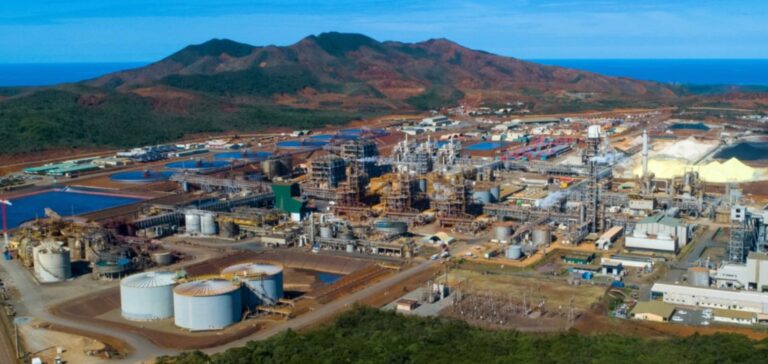
The future of New Caledonia’s nickel industry, and the survival of its three ailing metallurgical plants, depends above all on how the island’s energy equation is resolved, according to participants at meetings held in Paris this week.

The Energy Future of New Caledonian Nickel: A Survival Issue in the Face of Soaring Prices

At a time when the price of strategic raw materials such as nickel is soaring on world markets, New Caledonia’s three nickel refining plants are weighed down and their survival threatened by their production costs and lack of competitiveness, according to an official report published in August. All players in the industry, including elected representatives from both the independence and loyalist parties, industrialists and government bodies, met this week to try to “create a common vision” and a “new model” for the nickel industry, according to government sources, with the aim of avoiding an industrial crash.

“The main issue for the future of the New Caledonian nickel industry is energy,” a member of the cabinet of the Minister for Energy Transition, Agnès Pannier-Runacher, who attended the meetings, told AFP. We need to reduce the exorbitant energy bills of our factories.

“It’s a matter of survival,” adds an industry source.

The extraction and refining of nickel, the island’s main resource, consumes “75 to 80% of the electricity consumed in the territory”. And the energy costs of the three plants “can be twice as high as those of their Indonesian competitors”, says the report by the Conseil général de l’économie and the Inspection générale des finances.

Harnessing Extraordinary Potential: New Caledonia’s Quest for Green Energy

However, the “rock”, as the archipelago is known, has no infrastructure enabling it to produce low-cost energy. With the exception of the Yaté dam, which accounts for less than 10% of its total consumption, electricity is mainly dependent on coal or imported oil. Part of the discussions focused on how to develop new autonomous sources of electricity, but also on the need to produce green electricity to help the industry decarbonize and meet European climate targets, a government source summarized.

“The meetings moved things forward on both subjects. Decarbonization wasn’t necessarily a priority for everyone just a few weeks ago,” notes a participant who does not wish to be identified.

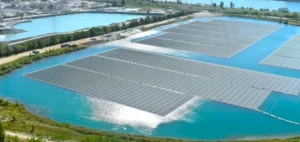
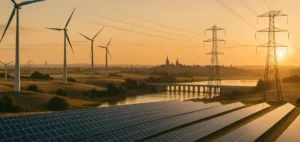
Ultimately, according to the plan under discussion, New Caledonia could increase its renewable energy production to 70% “by betting on its extraordinary sunshine potential and its land potential”, while retaining 30% of its energy from thermal power plants fuelled by imported gas, he added. But for the three plants to become profitable, an investment of 4 billion euros would be needed to create two pumped-storage power stations (STEP), according to the Caledonian grid operator Enercal.

Energy Storage: A Crucial Investment for New Caledonia’s Nickel Industry

These dam-like infrastructures are designed to store photovoltaic energy – which is intermittent – so that it can be used when needed. One would be built in the north of the island to supply the KNS Koniambo plant, owned 51% by a public shareholder and 49% by the Glencore trading group. The second would go south, into the Tontouta valley, to supply the Société Le Nickel (SLN) plant in Nouméa, whose majority shareholder is the Eramet group, and the Prony Resources (PRNC) plant at the southern tip of the island, in which the Trafigura trading group holds a 19% stake.

Before signing a cheque, the French government will have this scheme and the amount of the bill assessed by the Commission de Régulation de l’Energie (CRE) in the coming months, says the Energy Transition cabinet. Only the Prony Resources plant produces class 1 nickel, suitable for batteries. She signed a high-profile contract with Tesla.

The other two plants, which produce class 2 nickel for stainless steel, also require investment to enter the battery market, estimated at 250 million euros for the northern plant and 20 million euros for the SLN plant, according to the office of Industry Minister Roland Lescure. A further meeting of the nickel working group is scheduled to take place “before the end of the year”.

Why does it matter?

In financial terms, the future of the nickel industry in New Caledonia is closely linked to the resolution of its energy problems. The massive investment required to develop sustainable, profitable energy infrastructures represents a considerable challenge for the island and its industrial partners. The nickel sector is crucial to New Caledonia’s economy, and its future competitiveness could impact not only local jobs but also international commodity markets. From the point of view of European climate objectives, the transition to cleaner energy is a step in the right direction, but it requires substantial investment. The future of this industry is therefore a subject to be watched closely by observers of business, finance and the energy market.
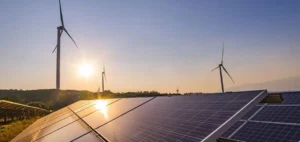
The Australian government plans to introduce a free solar electricity offer in several regions starting in July 2026, to optimize the management of the electricity grid during peak production periods.
India is implementing new reforms to effectively integrate renewable energy into the national grid, with a focus on storage projects and improved contracting.
China added a record 264 GW of wind and solar capacity in the first half of 2025, but the introduction of a new competitive pricing mechanism for future projects may put pressure on prices and affect developer profitability.
The government confirmed that the majority sale of Exaion by EDF to Mara will be subject to the foreign investment control procedure, with a response expected by the end of December.
A week before COP30, Brazil announces an unprecedented drop in greenhouse gas emissions, driven mainly by reduced deforestation, with uneven sectorial dynamics, amid controversial offshore oil exploration.
The Catabola electrification project, delivered by Mitrelli, marks the first connection to the national grid for several communities in Bié Province.
The Algerian government plans a full upgrade of the SCADA system, managed by Sonelgaz, to improve control and supervision of the national electricity grid starting in 2026.
Facing annual losses estimated at up to $66mn, SEEG is intensifying field inspections and preparing the rollout of smart meters to combat illegal connections.
The British government confirms its ambition to decarbonise the power sector by 2030, despite political criticism and concerns over consumer energy costs.
Enedis plans a €250mn ($264mn) investment to strengthen Marseille’s electricity grid by 2030, including the full removal of paper-insulated cables and support for the port’s electrification.
Energy ministers coordinate investment and traceability to curb China’s dominance in mineral refining and stabilize supply chains vital to electronics, defense, and energy under a common G7 framework.
Electricity demand, amplified by the rise of artificial intelligence, exceeds forecasts and makes the 2050 net-zero target unattainable, according to new projections by consulting firm Wood Mackenzie.
Norway's sovereign wealth fund generated a €88 billion profit in the third quarter, largely driven by equity market performances in commodities, telecommunications, and finance.
The German regulator is preparing a reform favourable to grid operators, aiming to adjust returns and efficiency rules from 2028 for gas pipelines and 2029 for electricity networks.
Bill Gates urges governments and investors to prioritise adaptation to warming effects, advocating for increased funding in health and development across vulnerable countries.
The Malaysian government plans to increase public investment in natural gas and solar energy to reduce coal dependency while ensuring energy cost stability for households and businesses.
The study by Özlem Onaran and Cem Oyvat highlights structural limits in public climate finance, underscoring the need for closer alignment with social and economic goals to strengthen the efficiency and resilience of public spending.
Oil major ExxonMobil is challenging two California laws requiring disclosure of greenhouse gas emissions and climate risks, arguing that the mandates violate freedom of speech.
The European Court of Human Rights ruled that Norway’s deferral of a climate impact assessment did not breach procedural safeguards under the Convention, upholding the country’s 2016 oil licensing decisions.
Singapore strengthens its energy strategy through public investments in nuclear, regional electricity interconnections and gas infrastructure to secure its long-term supply.

All the latest energy news, all the time

Annual subscription

8.25£/month*

*billed annually at 99£/year for the first year then 149,00£/year ​

Unlimited access - Archives included - Pro invoice

Monthly subscription

Unlimited access • Archives included

5.2£/month*
then 14.90£ per month thereafter

*Prices shown are exclusive of VAT, which may vary according to your location or professional status.

Since 2021: 30,000 articles - +150 analyses/week.