Neoen launches the second phase of Western Downs Battery with AGL in Australia

Neoen begins construction of the second unit of Western Downs Battery following a 200 MW virtual battery contract signed with AGL Energy, aimed at boosting the flexibility of the Queensland electricity grid.

Share:

Comprehensive energy news coverage, updated nonstop

Annual subscription

8.25$/month*

*billed annually at 99$/year for the first year then 149,00$/year ​

Unlimited access • Archives included • Professional invoice

OTHER ACCESS OPTIONS

Monthly subscription

Unlimited access • Archives included

5.2$/month*
then 14.90$ per month thereafter

FREE ACCOUNT

3 articles offered per month

FREE

*Prices are excluding VAT, which may vary depending on your location or professional status

Since 2021: 35,000 articles • 150+ analyses per week

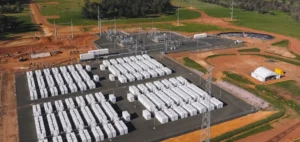
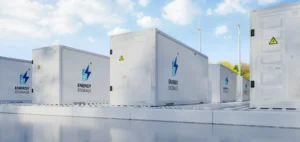
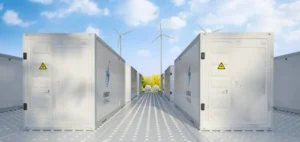
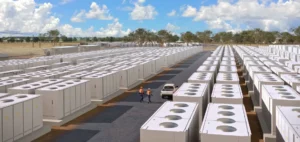
Neoen begins construction of the second phase of the Western Downs Battery, an energy storage project located in the state of Queensland.
This development follows a ten-year, 200 MW / 400 MWh virtual battery agreement with AGL Energy, a major player in the Australian electricity market.
This virtual battery will enable AGL to manage its energy needs more efficiently without the need to build additional physical infrastructure.
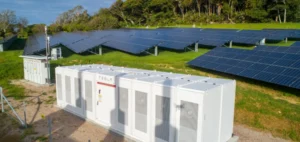
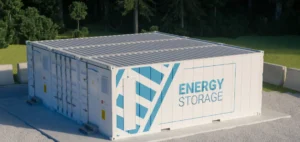
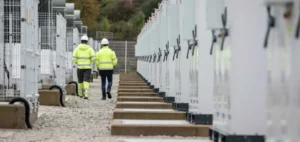
The Western Downs Battery, comprising two units of 270 MW / 540 MWh each, uses Tesla Megapacks 2 XL, while CIMIC subsidiary UGL is responsible for the ancillary equipment.
The project builds on the existing facilities of the Western Downs Green Power Hub, which includes a 460 MWp solar power plant in operation.
This strategy optimizes investments and facilitates the integration of renewable energies into the grid.

Greater flexibility for the National Electricity Market

Thanks to the virtual battery solution, AGL can charge or discharge up to 200 MW of storage capacity according to grid demand.
The system is based on a software interface developed by Neoen, enabling fine-tuned management of the stored energy.
AGL, which manages a large production fleet on the National Electricity Market (NEM), sees this agreement as an opportunity to increase its operational flexibility without increasing its infrastructure costs. The physical battery, with grid-forming inverters, is designed to stabilize the Queensland grid.
These inverters, capable of generating their own voltage and frequency setpoints, help to regulate frequency and compensate for the intermittency of renewable sources.
They play an essential role in modernizing the electricity grid by adapting to dynamic market needs.

Reinforcing storage capacity in Australia

The development of the Western Downs Battery brings Neoen’s total energy storage capacity in Australia to almost 2 GW, spread over several projects such as the Victorian Big Battery and Hornsdale Power Reserve.
This strategic storage network helps to meet fluctuations in demand while increasing the resilience of the power system.
As part of this project, the integration of grid-forming technology optimizes grid stabilization costs and enhances energy security.
These additional capacities make it possible to better manage consumption peaks, especially during periods of high demand, without the need for new generation plants.

Outlook for the Australian energy market

This project comes at a time when Australia is seeking to meet its energy transition targets, by increasing the share of renewable energies.
The Queensland government is targeting 80% renewable energy by 2035, and infrastructure such as Western Downs Battery is central to achieving this goal.
Advanced storage capacity, coupled with grid regulation capabilities, is crucial to ensuring a stable and reliable supply.
With this expansion, Neoen and AGL Energy are showing how industry players are adapting to market demands by developing flexible, innovative energy storage solutions.
By leveraging partnerships and cutting-edge technologies, they are playing a decisive role in the evolution of Australia’s energy sector.
The group has won a strategic project with operator Amprion to deploy five 50 MW batteries to ease pressure on the German power grid and optimise electricity transmission.
Vena Energy has begun construction of a 408 MWh battery energy storage system in Tailem Bend, marking a new phase in the deployment of its infrastructure in Australia.
The explosion of battery storage applications in Germany is causing grid congestion and pushing Berlin to revise its regulatory framework to prevent market saturation.
The collapse in storage costs positions batteries as a key lever for dispatchable solar, but dependence on Chinese suppliers creates growing tension between competitiveness and supply chain security.
JA Solar has launched a microgrid combining 5.2 MW of solar and 2.61 MWh of storage at an industrial site in Sicily, marking its first application of the "PV+Storage+X" model in Italy.
Sinexcel has installed a 2MW/8MWh energy storage system in Matsusaka, marking a breakthrough in a regulated market after five years of technical partnerships and gradual deployment in Japan.
Inlyte Energy has successfully completed factory validation testing of its first full-scale iron-sodium battery, witnessed by Southern Company, paving the way for a pilot installation in the United States in early 2026.
Neoen begins construction of a new 305 MW stage in Australia, raising its total battery storage capacity in the country to 2 GW, and signs two additional virtual battery contracts with ENGIE.
ENGIE has awarded NHOA Energy the contract for a 320 MWh battery energy storage system in Drogenbos, marking a new step in their industrial partnership in Belgium.
Stardust Power has completed an independent review of its lithium refinery project in Muskogee, confirming technical feasibility and compliance with industry standards for its initial production phase.
California-based battery manufacturer South 8 Technologies has secured $11mn to boost production of its LiGas cells, targeting military and space applications under extreme conditions.
Samsung SDI will supply LFP cells for energy storage systems in the United States starting in 2027, under a multi-year deal valued at $1.53bn.
Bitzero Holdings launches a new 70 MW expansion phase in Namsskogan, Norway, targeting a total capacity of 110 MW and an upgrade of its high-performance computing capabilities.
Remixpoint and Nippon Chikudenchi have formalised a partnership to develop seven 2MW/8MWh BESS facilities by October 2026 through a newly established joint venture.
UK-based Ray Systems has selected Beam Global to supply tailored battery systems for its new autonomous underwater drones, aiming to extend mission duration without compromising stealth or manoeuvrability.
Sungrow has started construction on a 200 MW/400 MWh battery storage system for ENGIE, aimed at strengthening grid stability in a state heavily reliant on renewable energy.
Blue Current secures over $80mn in funding led by Amazon to industrialise its silicon solid-state batteries for large-scale mobility and stationary applications.
AGL has begun construction of a 500 MW battery storage system in Tomago, a project valued at AUD800mn ($530.8mn), in the Hunter region, with commissioning expected in 2027.
Real estate group JALCO Holdings diversifies its activities by investing in a 2 MW/8.1 MWh battery energy storage system developed by Taoke Energy in Narita, Chiba Prefecture.
BKW is conducting feasibility studies on four sites to assess the profitability and development conditions for large-scale battery storage installations in Switzerland.

All the latest energy news, all the time

Annual subscription

8.25$/month*

*billed annually at 99$/year for the first year then 149,00$/year ​

Unlimited access - Archives included - Pro invoice

Monthly subscription

Unlimited access • Archives included

5.2$/month*
then 14.90$ per month thereafter

*Prices shown are exclusive of VAT, which may vary according to your location or professional status.

Since 2021: 30,000 articles - +150 analyses/week.