Nel ASA has announced the final investment decision for the industrialisation of its Next Generation Pressurised Alkaline platform at its Herøya site in Norway. The project marks the culmination of a seven-year technology development programme. The first production line will target a capacity of 1 gigawatt (GW), supported by a European Union grant of up to EUR135mn ($146mn), covering up to 60% of eligible capital expenditure and operational costs.
A modular platform designed for large-scale production
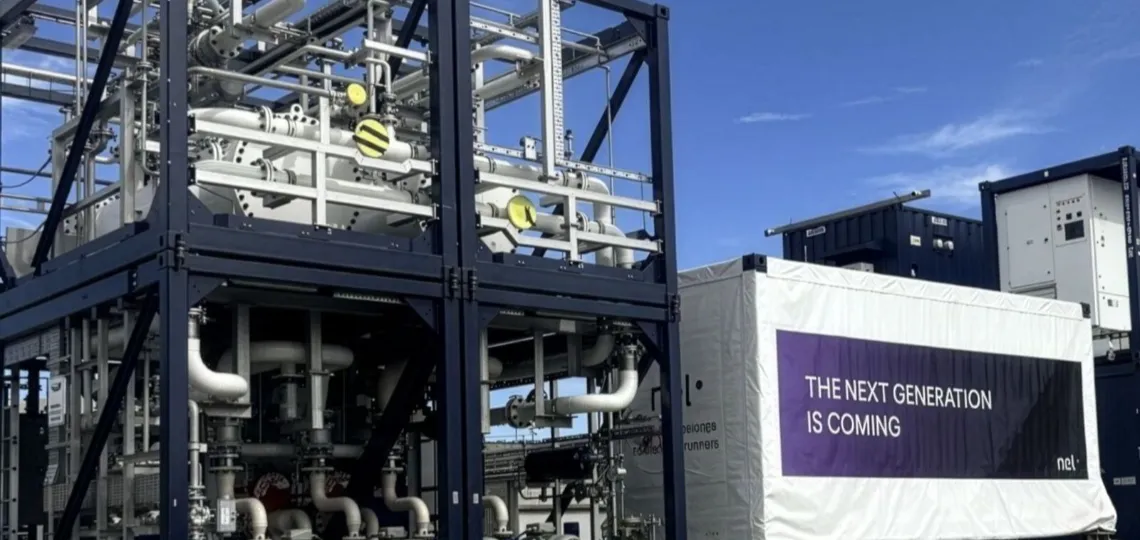
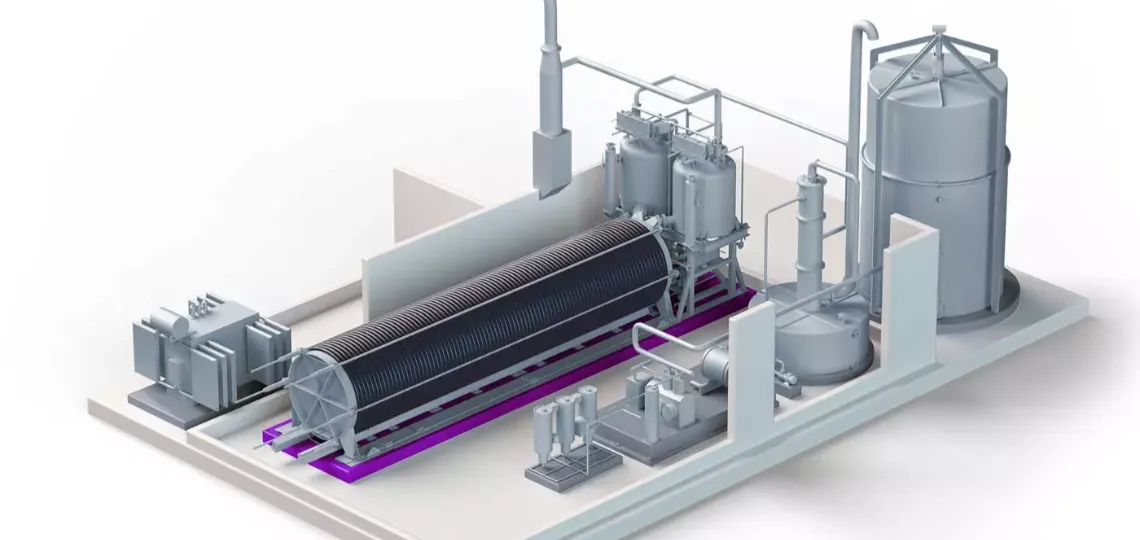
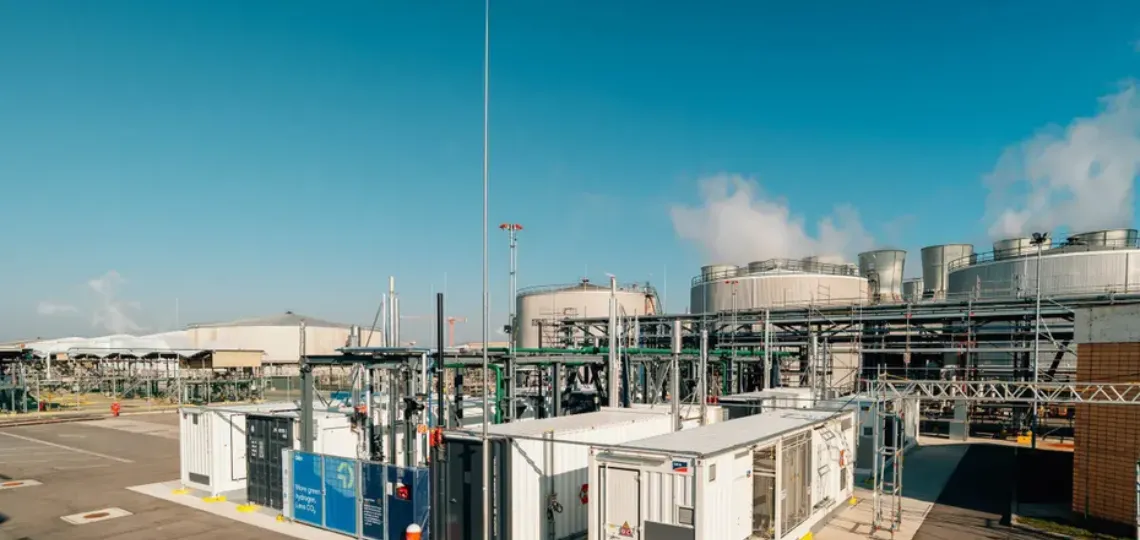
The new technology is based on a prefabricated modular design, shipped in standard container units. Each module is factory-tested before delivery, streamlining engineering, logistics and installation. This design is intended for outdoor operation, reducing costs related to building construction and enabling faster deployment.
The full-scale prototype has been successfully tested at the Herøya industrial site, validating, according to the company, an energy efficiency exceeding current standards. Commercial launch is scheduled for the first half of 2026, with scaled deliveries expected in 2027.
Optimising hydrogen production costs
Nel reports a significant reduction in the levelised cost of hydrogen (LCOH), which it says could enable previously unviable projects that relied heavily on subsidies. President and Chief Executive Officer Håkon Volldal stated that the new solution could “unlock business cases that were previously not viable”.
Initial investment for the 1 GW phase is estimated at around NOK300mn ($27mn), excluding grants. A first EU disbursement of over EUR10mn ($10.8mn) is expected following this investment decision. The total capital expenditure is expected to be incurred across 2026 and 2027.
Reassessment of existing production lines
As part of the industrialisation of the new technology, Nel is currently reviewing the book value of two 500 megawatt (MW) atmospheric alkaline production lines, which are currently idle at the same site. The company has not disclosed whether these assets will be reactivated, decommissioned or sold.
The pressurised alkaline platform is part of a broader objective to reach an annual total production capacity of 4 GW. It is backed by the European Union Innovation Fund, one of the continent’s largest financing instruments for low-carbon technologies.