Major US companies increase their presence at COP30 despite Washington

Sixty Fortune 100 companies are attending COP30, illustrating a growing disconnect between federal US policy and corporate strategies facing international climate regulations.

Share:

Comprehensive energy news coverage, updated nonstop

Annual subscription

8.25$/month*

*billed annually at 99$/year for the first year then 149,00$/year ​

Unlimited access • Archives included • Professional invoice

OTHER ACCESS OPTIONS

Monthly subscription

Unlimited access • Archives included

5.2$/month*
then 14.90$ per month thereafter

FREE ACCOUNT

3 articles offered per month

FREE

*Prices are excluding VAT, which may vary depending on your location or professional status

Since 2021: 35,000 articles • 150+ analyses per week

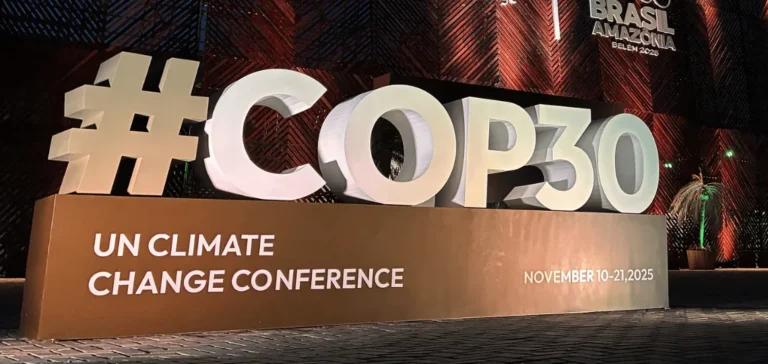
Despite the withdrawal of the US federal government from the Paris Agreement and UN climate finance mechanisms, the participation of major American companies at COP30 has risen significantly. Nearly sixty Fortune 100 company representatives are attending the summit in Belém, up from fifty at the previous edition. This increase reflects a strategic response to extra-American regulatory pressures, particularly from Europe and Asia, which are seen as long-term commercial risks.

Strategic decoupling between Washington and large corporations

The federal government exited the Paris Agreement in January 2025 and withdrew from several multilateral programmes, such as the Loss and Damage Fund and the Just Energy Transition Partnerships. This policy stance has created a regulatory vacuum that companies are now addressing by participating directly in international climate negotiations.

The goal of the attending companies is not driven by corporate social responsibility motives but rather by integrated risk management. Obligations linked to the Carbon Border Adjustment Mechanism (CBAM), the European Corporate Sustainability Reporting Directive (CSRD), and rising climate-related litigation are pushing companies to align with emerging standards.

Sectoral impacts across technology, energy and agri-food

Microsoft and Google aim to secure decarbonised power supply for their data centres while also developing tools for climate risk modelling. The federal pullback has created a commercial opening for their climate intelligence platforms, which are increasingly adopted by private sector players.

Among oil majors, ExxonMobil and Occidental are investing in carbon capture and storage technologies to address regulatory pressure while maintaining fossil fuel output. These strategies are designed to protect carbon-exposed assets from future carbon taxation or climate litigation.

Finance adapting to extraterritorial rules

Major banks such as Citigroup are attending COP30 to anticipate regulatory trends from Europe and Asia, including climate stress testing frameworks and green taxonomies. Their European subsidiaries will be subject to CSRD requirements, regardless of the Securities and Exchange Commission (SEC) climate rules, which have been partially suspended.

The financial sector is working to harmonise its disclosures and incorporate the most demanding transition scenarios to meet the expectations of global institutional investors and non-US regulators.

Towards multipolar climate governance

The presence of American non-state actors—companies, governors, and universities—is coordinated by coalitions such as America Is All In and the We Mean Business Coalition. These groups are filling the leadership void left by federal institutions and enabling alignment with the strictest international regulations.

The European Union, Japan and South Korea are enforcing increasingly detailed rules on product carbon content and non-financial reporting, effectively transforming COP30 into a global standards alignment forum rather than a purely diplomatic round.

Impacts on trade and climate geopolitics

The CBAM acts as a de facto carbon price on high-emission US imports, while CSRD imposes detailed disclosure obligations on non-EU firms above certain revenue thresholds. These frameworks influence investment decisions, supply chain locations and transfer pricing strategies.

Simultaneously, the US retreat has created a vacuum in climate science governance, filled by private data firms such as Planet Labs and GHGSat. These actors are seeking recognition of their methodologies within international mechanisms, particularly carbon markets.

Companies seek regulatory certainty

The shared strategy among US companies at COP30 is to align with the most stringent international standards to avoid regulatory fragmentation and reduce litigation risk. This approach reflects an expectation that global climate frameworks will persist beyond current US political cycles.

The strong corporate presence in Belém highlights how the energy transition is increasingly framed as a global compliance issue, where market access depends on proactive alignment with emerging climate rules.


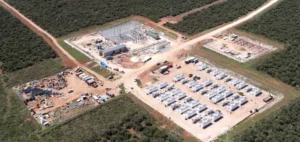
Singapore’s Sembcorp Industries has entered the Australian energy market with the acquisition of Alinta Energy in a deal valued at AU$6.5bn ($4.3bn), including debt.
Potentia Energy has secured $553mn in financing to optimise its operational renewable assets and support the delivery of six new projects totalling over 600 MW of capacity across Australia.
Drax plans to convert its 1,000-acre site in Yorkshire into a data centre by 2027, repurposing former coal infrastructure and existing grid connections.
EDF has inaugurated a synchronous compensator in Guadeloupe to enhance the stability of an isolated power grid, an unprecedented initiative aiming to reduce dependence on thermal plants and the risk of prolonged outages.
NGE and the Agence Régionale Énergie Climat Occitanie form a partnership to develop a heating and cooling network designed to support economic activity in the Magna Porta zone, with locally integrated production solutions.
GEODIS and EDF have signed a strategic partnership to cut emissions from logistics and energy flows, with projects planned in France and abroad.
The American oil group now plans to invest $20 billion in low-emission technologies by 2030, down from the $30 billion initially announced one year earlier.
BHP sells a minority stake in its Western Australia Iron Ore power network to Global Infrastructure Partners for $2 billion, retaining strategic control while securing long-term funding for its mining expansion.
More than $80bn in overseas cleantech investments in one year reveal China’s strategy to export solar and battery overcapacity while bypassing Western trade barriers by establishing industrial operations across the Global South.
Exxaro increases its energy portfolio in South Africa with new wind and solar assets to secure power supply for operations and expand its role in independent generation.
Plenitude acquires full ownership of ACEA Energia for up to €587mn, adding 1.4 million customers to its portfolio and reaching its European commercial target ahead of schedule.
ABB invests in UK-based start-up OctaiPipe to strengthen its smart energy-saving solutions for data centre infrastructure.
Enbridge has announced a 3% increase in its annual dividend for 2026 and expects steady revenue growth, with up to CAD20.8bn ($15.2bn) in EBITDA and CAD10bn ($7.3bn) in capital investment.
Axess Group has signed a memorandum of understanding with ARO Drilling to deliver asset integrity management services across its fleet, integrating digital technologies to optimise operations.
South African state utility Eskom expects a second consecutive year of profit, supported by tariff increases, lower debt levels and improved operations.
Equans Process Solutions brings together its expertise to support highly technical industrial sectors with an integrated offer covering the entire project lifecycle in France and abroad.
Zenith Energy centres its strategy on a $572.65mn ICSID claim against Tunisia, an Italian solar portfolio and uranium permits, amid financial strain and reliance on capital markets.
Ivanhoe Mines expects a 67% increase in electricity consumption at its copper mine in DRC, supported by new hydroelectric, solar and imported supply sources.
Q ENERGY France and the Association of Rural Mayors of France have entered a strategic partnership to develop local electrification and support France's energy sovereignty through rural territories.
ACWA Power, Badeel and SAPCO have secured $8.2bn in financing to develop seven solar and wind power plants with a combined capacity of 15 GW in Saudi Arabia, under the national programme overseen by the Ministry of Energy.

All the latest energy news, all the time

Annual subscription

8.25$/month*

*billed annually at 99$/year for the first year then 149,00$/year ​

Unlimited access - Archives included - Pro invoice

Monthly subscription

Unlimited access • Archives included

5.2$/month*
then 14.90$ per month thereafter

*Prices shown are exclusive of VAT, which may vary according to your location or professional status.

Since 2021: 30,000 articles - +150 analyses/week.