Libya: NOC prepares to award 20 oil blocks amid rising operational and political risks

Libya’s state oil firm NOC plans to launch a licensing round for 20 blocks in early 2026, amid mounting legal, political and financial uncertainties for international investors.

Share:

Comprehensive energy news coverage, updated nonstop

Annual subscription

8.25$/month*

*billed annually at 99$/year for the first year then 149,00$/year ​

Unlimited access • Archives included • Professional invoice

OTHER ACCESS OPTIONS

Monthly subscription

Unlimited access • Archives included

5.2$/month*
then 14.90$ per month thereafter

FREE ACCOUNT

3 articles offered per month

FREE

*Prices are excluding VAT, which may vary depending on your location or professional status

Since 2021: 35,000 articles • 150+ analyses per week

The National Oil Corporation (NOC) is set to award around 20 onshore and offshore oil blocks as part of its first exploration round since 2008. Thirty-seven companies have been prequalified, including several international majors. The move comes as Libya’s oil output stands at 1.4 million barrels per day (Mb/d), with a government target of reaching 1.6 Mb/d by 2026. At the same time, gas exports to Italy have fallen to their lowest level in over a decade, leaving the Greenstream pipeline underutilised.

Two governments, one recognised exporter

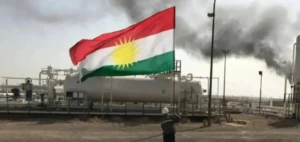
The country remains divided between the UN-backed Government of National Unity (GNU) in Tripoli and a rival executive in Benghazi supported by Khalifa Haftar, who controls key eastern oil fields and ports. Despite this, NOC retains exclusive international recognition as Libya’s sole legal oil exporter.

In May 2025, eastern authorities threatened to declare force majeure on several terminals, highlighting the vulnerability of Libya’s crude flows to political manoeuvring. The UN Security Council renewed its sanctions regime in 2025, keeping Libya’s oil exports under close international scrutiny.

A legal framework under compliance pressure

Libya’s upstream oil sector is classified as “strategic industry”, requiring foreign companies to operate through joint ventures regulated by NOC. New production sharing contracts (PSCs) are expected to include enhanced anti-corruption and transparency clauses after recent fuel-smuggling scandals led to an estimated $6.7bn in losses in 2024 alone.

International operators must comply with sanctions frameworks from the United Nations, European Union and United States. The US Office of Foreign Assets Control (OFAC) has already targeted oil-smuggling networks operating in Libya, raising the bar for corporate due diligence.

Unused capacity versus saturated global supply

Libya holds proven reserves of approximately 48 billion barrels. With much of its infrastructure already in place, the country could raise output to 2 Mb/d with an estimated $3–4bn in capital expenditure. However, the International Energy Agency (IEA) projects rising non-OPEC+ supply, potentially dampening the market impact of any additional Libyan output.

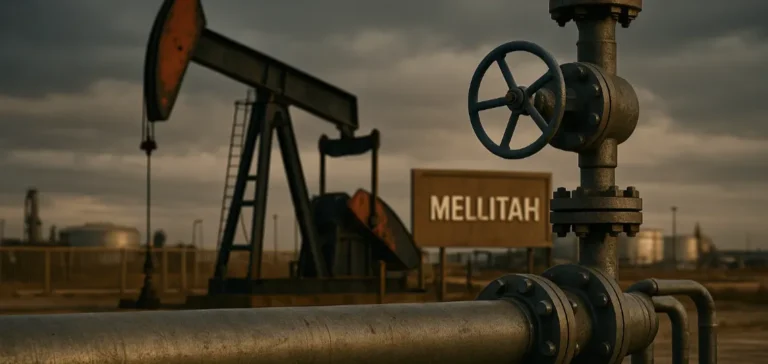
Gas flows to Italy through Greenstream have hit a 13-year low. Eni, which controls about 80% of Libya’s gas production, is structurally positioned to rapidly monetise new discoveries. Shallow offshore blocks near Mellitah are considered particularly valuable.

Diverse bidders in a fragmented landscape

Among the 37 prequalified companies are BP, TotalEnergies, Chevron, Shell, ExxonMobil and national oil companies such as Sonatrach, QatarEnergy and CNODC. The broad bidder base could reduce political dependency and increase competition. Meanwhile, entities such as Arkenu, linked to Saddam Haftar, have exported at least 7.6 million barrels outside NOC’s official channels.

The blocks on offer are primarily located in the Sirte Basin, onshore desert zones and shallow offshore areas with existing terminal access. While this lowers infrastructure costs, it increases exposure to port blockades.

Governance and image risks for operators

Firms will need to include contractual safeguards against production halts. Terminal blockades have previously cut national output to near zero. Libyan institutions have launched internal audits, but their enforcement remains uncertain.

Fuel-smuggling operations involving political and security actors from both sides of the conflict continue to raise red flags. Operators will need to prove their hydrocarbons do not pass through illicit channels, or risk reputational damage and legal exposure.

Commercial and geopolitical implications

Short-term market reaction to the licensing round announcement has been minimal, given typical development timelines of 5–7 years. If successful, the round could add 0.3–0.5 Mb/d by 2030, reinforcing Libya’s role as a marginal supplier of medium-sour crude in the Mediterranean.

On the gas side, higher volumes to Italy would marginally reduce Rome’s LNG reliance, though Libya remains a minor supplier at EU level. For Libya, signature bonuses and local content requirements provide near-term foreign exchange inflows and job creation.

International oil majors see competitive development costs and infrastructure tie-back opportunities. However, they must manage exposure to unstable governance, ESG risks and potential sanctions.

L’arrêt de la raffinerie de Pancevo, frappée par des sanctions américaines contre ses actionnaires russes, menace les recettes fiscales, l’emploi et la stabilité énergétique de la Serbie.
Oil prices climbed, driven by Ukrainian strikes on Russian infrastructure and the lack of diplomatic progress between Moscow and Washington over the Ukraine conflict.
Chevron has announced a capital expenditure range of $18 to $19 billion for 2026, focusing on upstream operations in the United States and high-potential international offshore projects.
Brazil, Guyana, Suriname and Argentina are expected to provide a growing share of non-OPEC+ oil supply, backed by massive offshore investments and continued exploration momentum.
The revocation of US licences limits European companies’ operations in Venezuela, triggering a collapse in crude oil imports and a reconfiguration of bilateral energy flows.
Bourbon has signed an agreement with ExxonMobil for the charter of next-generation Crewboats on Angola’s Block 15, strengthening a strategic cooperation that began over 15 years ago.
Faced with tighter legal frameworks and reinforced sanctions, grey fleet operators are turning to 15-year-old VLCCs and scrapping older vessels to secure oil routes to Asia.
Reconnaissance Energy Africa completed drilling at the Kavango West 1X onshore well in Namibia, where 64 metres of net hydrocarbon pay were detected in the Otavi carbonate section.
CNOOC Limited has started production at the Weizhou 11-4 oilfield adjustment project and its satellite fields, targeting 16,900 barrels per day by 2026.
The Adura joint venture merges Shell and Equinor’s UK offshore assets, becoming the leading independent oil and gas producer in the mature North Sea basin.
A new $100mn fund has been launched to support Nigerian oil and gas service companies, as part of a national target to reach 70% local content by 2027.
Western measures targeting Rosneft and Lukoil deeply reorganise oil trade, triggering a discreet yet massive shift of Russian export routes to Asia without causing global supply disruption.
The Nigerian Upstream Petroleum Regulatory Commission opens bidding for 50 exploration blocks across strategic zones to revitalise upstream investment.
La Nigerian Upstream Petroleum Regulatory Commission ouvre la compétition pour 50 blocs d’exploration, répartis sur plusieurs zones stratégiques, afin de relancer les investissements dans l’amont pétrolier.
Serbia's only refinery, operated by NIS, has suspended production due to a shortage of crude oil, a direct consequence of US sanctions imposed on its majority Russian shareholder.
Crude prices increased, driven by rising tensions between the United States and Venezuela and drone attacks targeting Russian oil infrastructure in the Black Sea.
Amid persistent financial losses, Tullow Oil restructures its governance and accelerates efforts to reduce over $1.8 billion in debt while refocusing operations on Ghana.
The Iraqi government is inviting US oil companies to bid for control of the giant West Qurna 2 field, previously operated by Russian group Lukoil, now under US sanctions.
Two tankers under the Gambian flag were attacked in the Black Sea near Turkish shores, prompting a firm response from President Recep Tayyip Erdogan on growing risks to regional energy transport.
The British producer continues to downsize its North Sea operations, citing an uncompetitive tax regime and a strategic shift towards jurisdictions offering greater regulatory stability.

All the latest energy news, all the time

Annual subscription

8.25$/month*

*billed annually at 99$/year for the first year then 149,00$/year ​

Unlimited access - Archives included - Pro invoice

Monthly subscription

Unlimited access • Archives included

5.2$/month*
then 14.90$ per month thereafter

*Prices shown are exclusive of VAT, which may vary according to your location or professional status.

Since 2021: 30,000 articles - +150 analyses/week.