La Serbie anticipe un choc économique après la mise à l’arrêt de sa raffinerie

L’arrêt de la raffinerie de Pancevo, frappée par des sanctions américaines contre ses actionnaires russes, menace les recettes fiscales, l’emploi et la stabilité énergétique de la Serbie.

Share:

Comprehensive energy news coverage, updated nonstop

Annual subscription

8.25$/month*

*billed annually at 99$/year for the first year then 149,00$/year ​

Unlimited access • Archives included • Professional invoice

OTHER ACCESS OPTIONS

Monthly subscription

Unlimited access • Archives included

5.2$/month*
then 14.90$ per month thereafter

FREE ACCOUNT

3 articles offered per month

FREE

*Prices are excluding VAT, which may vary depending on your location or professional status

Since 2021: 35,000 articles • 150+ analyses per week

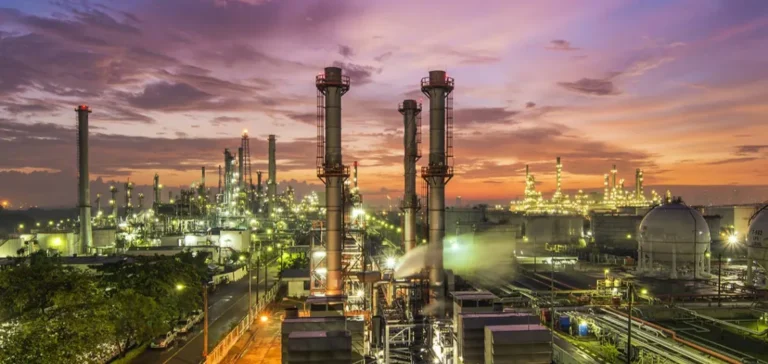
La mise à l’arrêt de la raffinerie de Pancevo, la seule du pays, met en péril l’approvisionnement énergétique de la Serbie, tout en exposant son économie à de fortes turbulences. Exploitée par Naftna Industrija Srbije (NIS), l’entreprise pétrolière détenue majoritairement par des actionnaires russes, l’installation ne traite plus de brut depuis le 9 octobre en raison de sanctions imposées par les États-Unis. Washington conditionne la levée de ces mesures à un retrait total des groupes russes Gazprom Neft et Intelligence, qui détiennent environ 56% du capital de NIS.

La raffinerie couvre habituellement 80% de la demande nationale en carburants. Son arrêt oblige Belgrade à accroître massivement ses importations de produits pétroliers raffinés, ce qui accroît la pression sur le budget de l’État. Selon le rapport annuel de l’entreprise, NIS et ses filiales ont contribué en 2024 à hauteur de plus de €2bn ($2.16bn) aux finances publiques, soit près de 12% du budget national.

Le système financier national exposé à des sanctions secondaires

Au-delà des enjeux énergétiques, le maintien des opérations financières de NIS soulève la menace de sanctions secondaires. Si la Banque nationale de Serbie continue d’autoriser l’entreprise à effectuer des transactions, Washington pourrait inscrire l’institution sur une liste noire, ce qui impliquerait un isolement des marchés internationaux, un gel des actifs étrangers et une interruption des flux financiers.

Aleksandar Vucic, président de la République de Serbie, a déclaré que NIS serait autorisée à poursuivre ses transactions jusqu’à la fin de la semaine en cours, principalement pour le paiement des salaires et fournisseurs. Toutefois, aucune solution structurelle n’a été annoncée concernant l’avenir de l’entreprise dans ce contexte de blocage des actionnaires russes.

Menace directe sur l’emploi et les stations-services

NIS emploie environ 13 500 personnes en Serbie et exploite près de 20% des quelque 1 500 stations-service du pays. Un arrêt prolongé de la raffinerie pourrait entraîner des licenciements et perturber la distribution nationale. L’État a déjà inscrit une enveloppe de €1.4bn ($1.51bn) dans son budget 2026 pour racheter les parts russes si les négociations échouent, après avoir vendu ces mêmes parts en 2008 pour €400mn ($432mn).

Une suspension partielle des sanctions américaines contre Lukoil, annoncée récemment, a toutefois apporté un répit partiel au secteur. Elle permet à ses 112 stations-service situées en dehors de Russie, dont celles de Serbie, de fonctionner jusqu’au 29 avril 2026.

Approvisionnement en gaz sécurisé à court terme

Dans le même temps, la Serbie a sécurisé ses besoins en gaz naturel, qui couvrent plus de 92% de la consommation nationale, via un accord de court terme à signer prochainement avec Moscou. L’actuel contrat expirant en fin d’année, cette annonce vise à rassurer sur la continuité de l’approvisionnement durant l’hiver.

Face à l’impasse, Belgrade a fixé une échéance à la mi-janvier pour une éventuelle cession des parts russes de NIS. Des investisseurs hongrois et émiratis auraient manifesté leur intérêt, selon le président Vucic.

Chevron has announced a capital expenditure range of $18 to $19 billion for 2026, focusing on upstream operations in the United States and high-potential international offshore projects.
ExxonMobil is shutting down its oldest ethylene steam cracker in Singapore, reducing local capacity to invest in its integrated Huizhou complex in China, amid regional overcapacity and rising operational costs.
Brazil, Guyana, Suriname and Argentina are expected to provide a growing share of non-OPEC+ oil supply, backed by massive offshore investments and continued exploration momentum.
Bourbon has signed an agreement with ExxonMobil for the charter of next-generation Crewboats on Angola’s Block 15, strengthening a strategic cooperation that began over 15 years ago.
Reconnaissance Energy Africa completed drilling at the Kavango West 1X onshore well in Namibia, where 64 metres of net hydrocarbon pay were detected in the Otavi carbonate section.
CNOOC Limited has started production at the Weizhou 11-4 oilfield adjustment project and its satellite fields, targeting 16,900 barrels per day by 2026.
The Adura joint venture merges Shell and Equinor’s UK offshore assets, becoming the leading independent oil and gas producer in the mature North Sea basin.
A Delaware court approved the sale of PDV Holding shares to Elliott’s Amber Energy for $5.9bn, a deal still awaiting a U.S. Treasury licence through OFAC.
A new $100mn fund has been launched to support Nigerian oil and gas service companies, as part of a national target to reach 70% local content by 2027.
Western measures targeting Rosneft and Lukoil deeply reorganise oil trade, triggering a discreet yet massive shift of Russian export routes to Asia without causing global supply disruption.
La Nigerian Upstream Petroleum Regulatory Commission ouvre la compétition pour 50 blocs d’exploration, répartis sur plusieurs zones stratégiques, afin de relancer les investissements dans l’amont pétrolier.
The Nigerian Upstream Petroleum Regulatory Commission opens bidding for 50 exploration blocks across strategic zones to revitalise upstream investment.
Serbia's only refinery, operated by NIS, has suspended production due to a shortage of crude oil, a direct consequence of US sanctions imposed on its majority Russian shareholder.
Crude prices increased, driven by rising tensions between the United States and Venezuela and drone attacks targeting Russian oil infrastructure in the Black Sea.
The commercial court of Évry has ordered the judicial liquidation of Global Bioenergies, a French start-up in sustainable aviation fuel, after both takeover bids were rejected due to insufficient guarantees for employees and assets.
Amid persistent financial losses, Tullow Oil restructures its governance and accelerates efforts to reduce over $1.8 billion in debt while refocusing operations on Ghana.
Parliament approved the removal of a proposed tax increase on Superethanol-E85, ensuring a continued favourable tax regime for motorists and the agricultural sector until 2026.
The Iraqi government is inviting US oil companies to bid for control of the giant West Qurna 2 field, previously operated by Russian group Lukoil, now under US sanctions.
Two tankers under the Gambian flag were attacked in the Black Sea near Turkish shores, prompting a firm response from President Recep Tayyip Erdogan on growing risks to regional energy transport.
The British producer continues to downsize its North Sea operations, citing an uncompetitive tax regime and a strategic shift towards jurisdictions offering greater regulatory stability.

All the latest energy news, all the time

Annual subscription

8.25$/month*

*billed annually at 99$/year for the first year then 149,00$/year ​

Unlimited access - Archives included - Pro invoice

Monthly subscription

Unlimited access • Archives included

5.2$/month*
then 14.90$ per month thereafter

*Prices shown are exclusive of VAT, which may vary according to your location or professional status.

Since 2021: 30,000 articles - +150 analyses/week.