JA Solar and Trinasolar Lead a Global Solar Market in Crisis

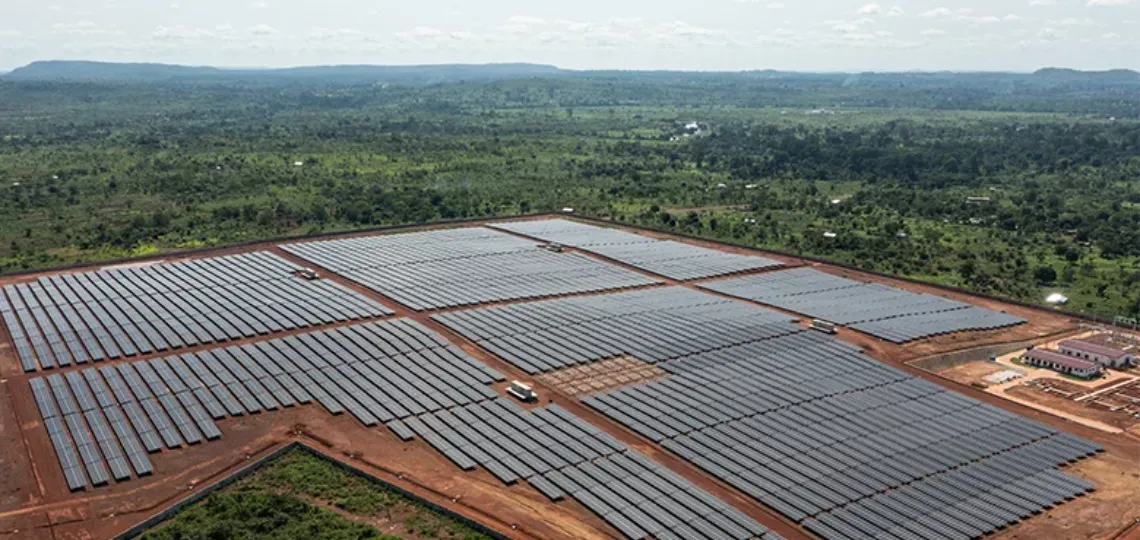
JA Solar and Trinasolar top Wood Mackenzie’s latest semiannual ranking despite a sector-wide net loss of $2.2 billion. Industrial leaders are strengthening their grip on global photovoltaic module supply through rigorous financial discipline.
Share:

Comprehensive energy news coverage, updated nonstop

Annual subscription

8.25$/month*

*billed annually at 99$/year for the first year then 149,00$/year ​

Unlimited access • Archives included • Professional invoice

OTHER ACCESS OPTIONS

Monthly subscription

Unlimited access • Archives included

5.2$/month*
then 14.90$ per month thereafter

FREE ACCOUNT

3 articles offered per month

FREE

*Prices are excluding VAT, which may vary depending on your location or professional status

Since 2021: 35,000 articles • 150+ analyses per week

The photovoltaic component manufacturing sector is undergoing a period of major financial turbulence. According to the latest Wood Mackenzie (Wood Mackenzie) report published on December 17, 2025, JA Solar (JA Solar) and Trinasolar (Trinasolar) now hold the top global positions with scores of 91.7 and 91.6 respectively. This performance comes amid a crisis in which the world’s ten leading manufacturers recorded a collective net loss of $2.2 billion in the first half of 2025. This situation stems from a sharp decline in module selling prices, directly impacting the operating margins of the largest Chinese industrial players.
Supply concentration and operational excellence

The dominance of market leaders is reflected in a growing concentration of market share. The top ten companies in the sector shipped a total volume of 224 gigawatts (GW) of modules, accounting for 75% of global deliveries in the first half of the year. While the average global factory utilization rate stands at only 43%, the top ten maintain an average rate of 70%. Companies such as Adani Solar (Adani Solar) and DMEGC Solar (DMEGC Solar) stand out by maintaining 100% utilization rates, signaling operational resilience in the face of widespread overcapacity.

The analysis also introduces the new Grade A (Grade A) classification, designed to assess the bankability and reliability of suppliers based on strict performance criteria. Thirty manufacturers across nine countries achieved this distinction in the first half of 2025, providing project developers with a risk management tool. Unlike their Chinese counterparts, non-Chinese manufacturers in the ranking remained profitable by focusing on premium markets protected by trade barriers. This financial divergence underscores the strategic importance of geographically diversifying production capacity to circumvent tariff-related tensions.

Technological shifts and consolidation outlook

The industry is set to undergo a phase of deep structural consolidation between 2026 and 2027. Vertical integration, enabling control of the value chain from silicon ingot to finished module, is becoming the new competitive standard. Several leaders are currently expanding their infrastructure into the Middle East and North Africa (Middle East and North Africa, MENA) region to secure resilient supply chains. This strategy aims to stabilize revenues in an economic environment marked by persistent volatility in photovoltaic component prices.

The next technological leap will be driven by tunnel oxide passivated contact cells (Tunnel Oxide Passivated Contact, TOPCon 4.0). This technology is expected to push module efficiency beyond 25%, accelerating the phase-out of previous-generation production lines. According to Wood Mackenzie forecasts, manufacturers able to sustain strategic investments despite the current crisis will be best positioned to capture the next growth cycle. The ability to finance these technical advances will determine the survival of second-tier players in a saturated market.

AMEA Power has completed the commercial commissioning of a 120 MWp solar project in Kairouan, marking a national first in Tunisia for a renewable energy installation of this scale.
The Gerus plant becomes the first solar installation in Namibia to sell electricity directly on the Southern African Power Pool regional market.
Japanese conglomerate Tokyu teams up with Global Infrastructure Management and Clean Energy Connect to build 800 low-voltage solar plants totalling 70MWDC, under an off-site power purchase agreement for its facilities.
T1 Energy has begun construction of a solar cell facility in Milam County, Texas, representing an investment of up to $425mn, aimed at strengthening U.S. industrial autonomy in the photovoltaic supply chain.
Pivot Energy has secured $225mn in funding from three banking partners to support a portfolio of 60 community solar power plants across nine US states.
Voltalia has started building a 43-megawatt hybrid plant in Sainte-Anne, combining solar, battery storage and bioenergy to meet growing electricity demand in western French Guiana.
Masdar’s exit ends ReNew Energy's privatisation attempt, despite offer rising to $8.15 per share.
California surpassed 52.3% of electricity from renewables and large hydro in 2024, marking a major energy milestone while increasing pressure on storage, permitting and curtailed production.
European Energy France has secured two wins in tenders issued by the French Energy Regulatory Commission for its agrivoltaic parks in Saint-Voir, with a combined capacity of 14.3 MWp and commissioning expected by late 2027.
TotalEnergies will supply Google with 1TWh of renewable electricity from a 20MW solar plant in Malaysia under a 21-year power purchase agreement.
Enviromena secured approval for its Fillongley solar farm after a local council’s refusal was overturned, despite conflicts of interest tied to public funds used to oppose the project.
According to Wood Mackenzie, the global solar inverter market will face two consecutive years of contraction after record shipments in 2024, driven by regulatory tensions in China, Europe and the United States.
The UK government has assigned a GBP135mn ($180mn) budget for solar energy in its seventh CfD auction round, aiming to support up to 4 GW of installed capacity.
SEG Solar launches a strategic industrial project in Indonesia with 3GW capacity to support the supply chain of its photovoltaic modules for the US market.
Vietnam's Boviet Solar has launched two industrial sites in North Carolina to produce solar cells and modules, with over 1,300 jobs created and a total investment of $400mn.
Acciona Energía sells 49% of its U.S. solar portfolio and all of two Mexican wind farms in a $1bn deal, reinforcing its asset rotation strategy.
Maxeon Solar Technologies has launched a new legal action against Aiko Solar and its European distributors over alleged infringement of a key back contact photovoltaic technology patent.
Vena Group has finalised a landmark foreign currency financing for its Opus solar project in the Philippines, marking a major milestone for cross-border investments in energy.
Voltalia strengthens its presence in Italy with four solar projects awarded under the FERX tender, securing stable revenues over two decades for a total capacity of 68 megawatts.
French developer Akuo has completed three crowdfunding campaigns to support its solar power plants in Côte-d’Or, raising a total of €5.15mn ($5.57mn) exclusively from local stakeholders.

All the latest energy news, all the time

Annual subscription

8.25$/month*

*billed annually at 99$/year for the first year then 149,00$/year ​

Unlimited access - Archives included - Pro invoice

Monthly subscription

Unlimited access • Archives included

5.2$/month*
then 14.90$ per month thereafter

*Prices shown are exclusive of VAT, which may vary according to your location or professional status.

Since 2021: 30,000 articles - +150 analyses/week.