Israel seals a €30 billion gas contract with Egypt

An agreement announced on December 17, 2025 provides for twenty years of deliveries through 2040. The package amounts to 112 billion new Israeli shekels (Israeli shekels) (NIS), with flows intended to support Egyptian gas supply and Israeli public revenues.

Share:

Comprehensive energy news coverage, updated nonstop

Annual subscription

8.25$/month*

*billed annually at 99$/year for the first year then 149,00$/year ​

Unlimited access • Archives included • Professional invoice

OTHER ACCESS OPTIONS

Monthly subscription

Unlimited access • Archives included

5.2$/month*
then 14.90$ per month thereafter

FREE ACCOUNT

3 articles offered per month

FREE

*Prices are excluding VAT, which may vary depending on your location or professional status

Since 2021: 35,000 articles • 150+ analyses per week

The Israeli government has approved a natural gas export agreement with Egypt with an announced value of 112 billion new Israeli shekels (Israeli shekels) (NIS), or approximately €30 billion. The stated duration is twenty years, with deliveries planned through 2040. The additional volumes mentioned amount to 130 billion cubic meters (milliards de mètres cubes) (BCM). Associated public revenues are estimated at around 58 billion NIS, through royalties, corporate income tax and a windfall profits levy linked to the fiscal framework known as Sheshinski.
An amendment reshaping export volumes

The agreement is presented as an amendment to a framework signed in 2019, with an increase in deliveries to Egypt over the 2025–2040 period. To support these volumes, the Leviathan field consortium is expected to raise announced annual production capacity from 12 BCM to 14 BCM per year via a third subsea pipeline, and then up to 21 BCM per year by 2029. The cited investments include an expansion package estimated at $2.4 billion, as well as a broader effort valued at more than 16 billion NIS. The consortium’s structure is indicated as centered on Chevron, NewMed Energy and Ratio Energies, with respective stakes communicated in documents associated with Leviathan.

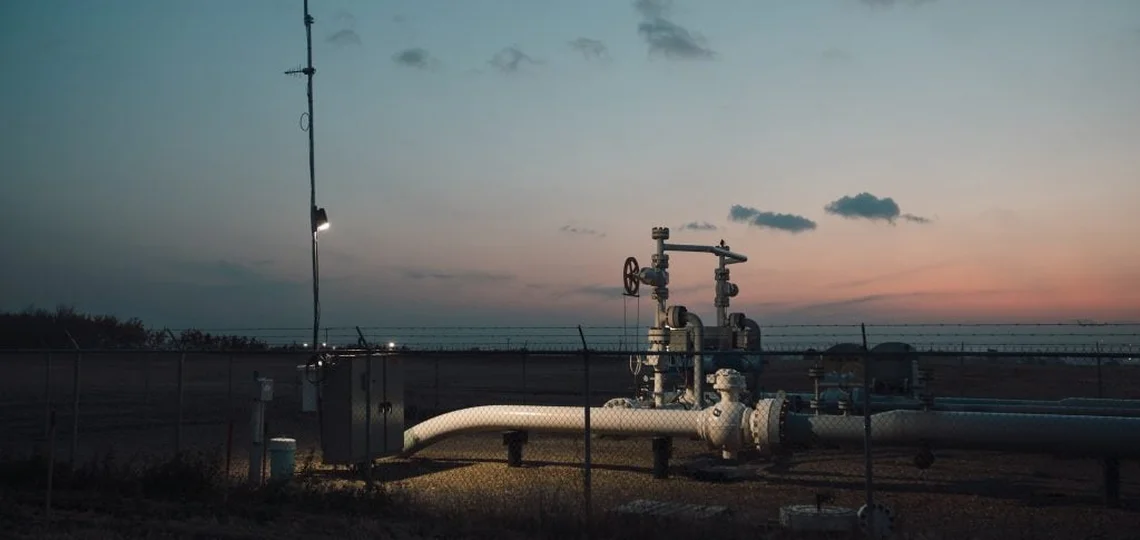
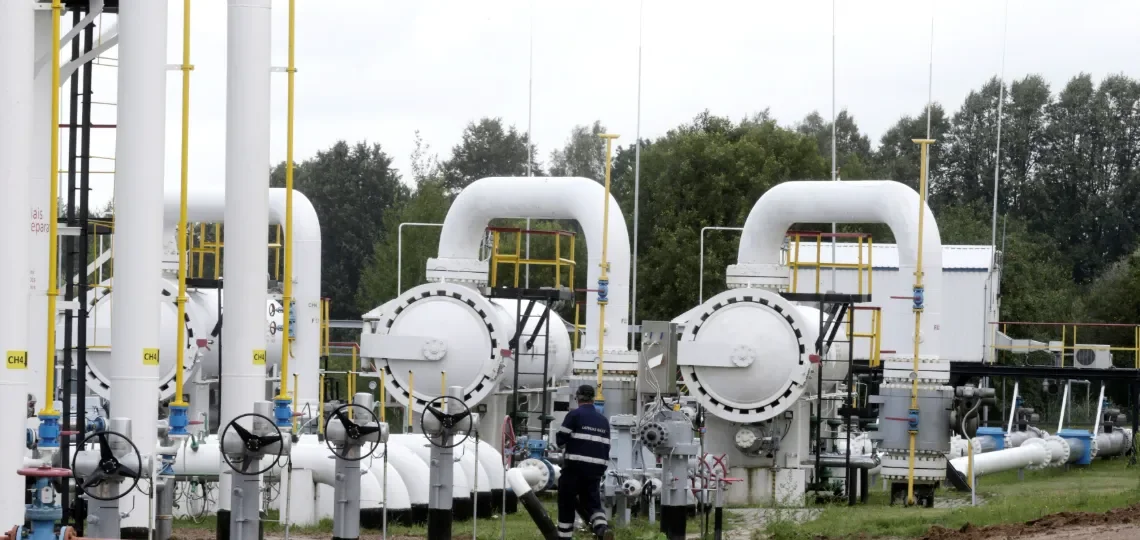
The transport architecture also relies on a 65-kilometer onshore project, the Nitzana pipeline, linking the Ramat Beka area to the Nitzana border crossing point. The asset is associated with Israel Natural Gas Lines (the Israeli national gas pipeline company) (INGL) and presented as a complement to flows transiting through the EMG system, East Mediterranean Gas (East Mediterranean Gas pipeline) (EMG), between Ashkelon and El-Arish. The capacity of the Nitzana segment is indicated at 6 BCM per year to Egypt, on a timeline mentioned around 2028–2029. Investment milestones are tied to a final investment decision (final investment decision) (FID) expected for the Leviathan expansion and to the associated transportation contracts.

Egypt: balancing domestic consumption and LNG exports

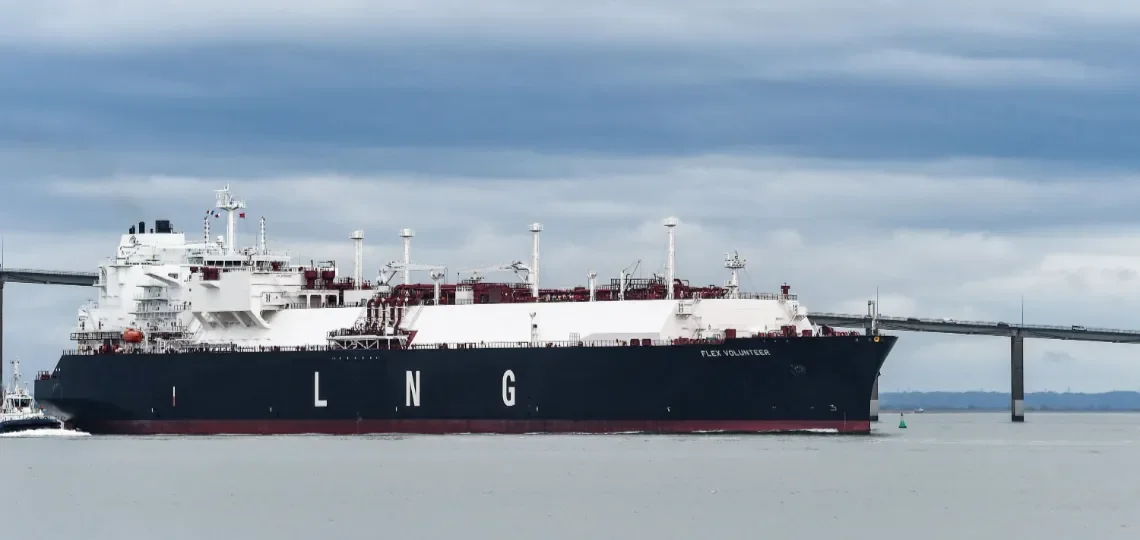
Cairo is described as seeking to stabilize its supply after Egypt shifted from a net exporter to an importer, in a context of rising domestic demand. Output from the Zohr field, operated by Eni, is reported to be down by around 40%, with technical constraints cited. The cost differential mentioned contrasts pipeline gas imported from Israel with spot market purchases of liquefied natural gas (liquefied natural gas) (LNG), at around $7.75 versus $13.50 per million British thermal units (million d’unités thermiques britanniques) (MMBtu). The industrial scheme includes the liquefaction sites of Idku and Damietta, used to transform part of the molecules delivered into LNG for export, notably to Europe, while relying on floating storage and regasification units (unités flottantes de stockage et de regazéification) (FSRU) to cover seasonal peaks.

The political dimension of the agreement is presented as linked to exchanges on security parameters and to the framework of the 1979 peace treaty, amid persistent regional tensions. Competing initiatives are also mentioned, notably an offer of long-term LNG contracts by Qatar during the delay period, prior to the final validation of the Israeli-Egyptian scheme. The role of the United States is cited as a factor of diplomatic pressure, with a stated interest in Egypt’s economic stability and in protecting investments linked to Chevron in the Eastern Mediterranean (Méditerranée orientale). In Israel, the internal debate focuses on the balance between exports and domestic availability, with announced mechanisms prioritizing the local market and capping supply conditions. The projected public revenue trajectory — NIS 500 million per year in the initial years, rising to up to NIS 6 billion per year from 2033 — places the pace of execution, infrastructure and volume arbitrage at the center of operational decisions by the stakeholders involved.

U.S.-based Sawgrass LNG & Power celebrates eight consecutive years of LNG exports to The Bahamas, reinforcing its position in regional energy trade.
Kinder Morgan restored the EPNG pipeline capacity at Lordsburg on December 13, ending a constraint that had driven Waha prices negative. The move highlights the Permian’s fragile balance, operating near the limits of its gas evacuation infrastructure.
ENGIE activates key projects in Belgium, including an 875 MW gas-fired plant in Flémalle and a battery storage system in Vilvoorde, to strengthen electricity supply security and grid flexibility.
Hungary has signed a contract with US company Chevron to import 400mn m³ of LNG per year, while maintaining a structural dependence on Russian gas through a long-term agreement with Gazprom.
Chevron Australia awards Subsea7 a major contract for subsea installation on the Gorgon Stage 3 project, with offshore operations scheduled for 2028 at 1,350 metres depth.
Ovintiv has entered into an agreement with Pembina Pipeline Corporation to secure 0.5 million tonnes per annum of LNG liquefaction capacity over 12 years, strengthening its export outlook to Asian markets.
TotalEnergies has completed the sale of a minority stake in a Malaysian offshore gas block to PTTEP, while retaining its operator role and a majority share.
The European Union will apply its methane emissions rules more flexibly to secure liquefied natural gas supplies from 2027.
Venezuela has ended all energy cooperation with Trinidad and Tobago after the seizure of an oil tanker carrying crude by the United States, accusing the archipelago of participating in the military operation in the Caribbean.
National Fuel has secured $350mn in a private placement of common stock with accredited investors to support the acquisition of CenterPoint’s regulated gas business in Ohio.
GTT appoints François Michel as CEO starting January 5, separating governance roles after strong revenue and profit growth in 2024.
The United States is requesting a derogation from EU methane rules, citing the Union’s energy security needs and the technical limits of its liquefied natural gas export model.
Falcon Oil & Gas and its partner Tamboran have completed stimulation of the SS2-1H horizontal well in the Beetaloo Sub-basin, a key step ahead of initial production tests expected in early 2026.
Gasunie Netherlands and Gasunie Germany have selected six industrial suppliers under a European tender to supply pipelines for future natural gas, hydrogen and CO₂ networks.
The ban on Russian liquefied natural gas requires a legal re-evaluation of LNG contracts, where force majeure, change-in-law and logistical restrictions are now major sources of disputes and contractual repricing.
The US House adopts a reform that weakens state veto power over gas pipeline projects by strengthening the federal role of FERC and accelerating environmental permitting.
Morocco plans to commission its first liquefied natural gas terminal in Nador by 2027, built around a floating unit designed to strengthen national import capacity.
An explosion on December 10 on the Escravos–Lagos pipeline forced NNPC to suspend operations, disrupting a crucial network supplying gas to power stations in southwestern Nigeria.
At an international forum, Turkmenistan hosted several regional leaders to discuss commercial cooperation, with a strong focus on gas and alternative export corridors.
The Australian government has launched the opening of five offshore gas exploration blocks in the Otway Basin, highlighting a clear priority for southeast supply security amid risks of shortages by 2028, despite an ambitious official climate policy.

All the latest energy news, all the time

Annual subscription

8.25$/month*

*billed annually at 99$/year for the first year then 149,00$/year ​

Unlimited access - Archives included - Pro invoice

Monthly subscription

Unlimited access • Archives included

5.2$/month*
then 14.90$ per month thereafter

*Prices shown are exclusive of VAT, which may vary according to your location or professional status.

Since 2021: 30,000 articles - +150 analyses/week.