Innergex makes a tax equity investment in the Boswell Springs Wind Farm

The Canadian company Innergex has announced a tax equity investment for its Boswell Springs wind farm, as part of its expansion into the U.S. renewable energy sector. This move aims to optimize tax returns while strengthening its asset portfolio.

Share:

Comprehensive energy news coverage, updated nonstop

Annual subscription

8.25€/month*

*billed annually at 99€/year for the first year then 149,00€/year ​

Unlimited access • Archives included • Professional invoice

OTHER ACCESS OPTIONS

Monthly subscription

Unlimited access • Archives included

5.2€/month*
then 14.90€ per month thereafter

FREE ACCOUNT

3 articles offered per month

FREE

*Prices are excluding VAT, which may vary depending on your location or professional status

Since 2021: 35,000 articles • 150+ analyses per week

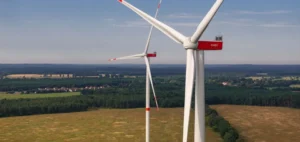
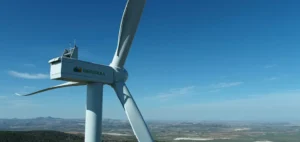
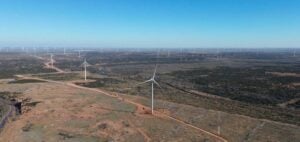
Innergex, a major player in the renewable energy sector, recently unveiled a tax equity investment for its Boswell Springs wind farm project. Located in the United States, this wind farm represents a strategic initiative to maximize the company’s tax optimization while enhancing its position in the U.S. market.

Tax equity allows Innergex to structure its investments in a way that reduces tax liabilities while increasing returns on its renewable energy projects. This operation is particularly advantageous in the current context of high demand for renewable energy in the United States, where the energy transition remains a core concern. By reducing its tax costs, the company can free up more capital for other large-scale projects.

The financial returns from this type of tax strategy also allow Innergex to maintain a positive cash flow, essential for supporting the expansion of its portfolio. The Boswell Springs wind farm, which is part of the company’s ongoing projects, is therefore positioned as a key element in consolidating its long-term growth objectives in the renewable energy sector.

A tax investment model serving profitability

Tax equity is a common strategy among large investors in the renewable energy sector. It redistributes the tax benefits from tax credits or incentives, thereby increasing the profitability of projects while meeting the profitability requirements of investors. Innergex, with its investments in wind and solar farms, continues to demonstrate the effectiveness of this model in generating attractive returns in an increasingly competitive market.

This model is particularly relevant for companies like Innergex, which seek to diversify their portfolios while optimizing their financial structure. Thanks to these strategic investments, the company is able to capitalize on tax advantages while pursuing its growth ambitions.

The central role of renewable energy in Innergex’s strategy

Founded in Quebec, Innergex is one of the leaders in the renewable energy sector, with a particular focus on wind and solar power. The Boswell Springs wind farm is part of its diversification and growth strategy in the United States, a key market for the company. The commitment to such projects demonstrates the strength of its long-term strategy, which focuses on profitability and reducing the carbon footprint of global energy systems.

The tax equity investment is a reflection of the company’s ability to navigate a complex environment, maximizing opportunities while minimizing tax and financial risks. These decisions allow Innergex to reinforce its commitment to projects that, while profitable, contribute to the expansion of renewable energy on the international market.
Norway's energy regulator has rejected an application to build a wind farm in the northern Finnmark region due to potential environmental impacts and threats to Indigenous Sami culture.
Danish Ørsted has signed an agreement with Apollo to sell a 50% stake in its Hornsea 3 offshore wind farm in the UK, in a strategic transaction valued at approximately DKK 39 billion ($5.43bn).
Eneco takes over Prowind’s wind project development business in the Netherlands, adding 260 MW to its portfolio. Prowind refocuses on the German market, where demand is growing rapidly.
The Chinese wind turbine manufacturer and Saudi operator sign a seven-year framework agreement to deploy local production lines and enhance technological cooperation in several strategic markets.
Iberdrola has installed the high-voltage direct current converter station for its East Anglia THREE wind farm, marking a key milestone in a €5 billion project.
Driven by solid operational performance, Nordex has raised its 2025 EBITDA margin forecast to 7.5–8.5%, up from the previous 5–7%, following a significant improvement in preliminary third-quarter results.
Neoen’s Goyder South Wind Farm reaches full generation capacity, strengthening the French group’s presence in Australia’s energy market with 412 MW connected to the grid.
The Australian government has granted environmental approval for the 108 MW Waddi Wind Farm, a Tilt Renewables project with construction costs exceeding $400mn.
The 180 MW Nimbus wind project enters its final phase of construction in Arkansas, with commercial operation scheduled for early 2026.
Faced with market uncertainty in Europe, Siemens Gamesa pauses a planned industrial investment in Esbjerg, highlighting structural difficulties in the offshore wind sector.
Institutional deadlock in France delays tenders and weakens the offshore wind sector, triggering job cuts and major industrial withdrawals from the market.
The Lithuanian energy group has signed a EUR 318 million financing agreement for its 314 MW wind project, the largest in the Baltic states.
German group BayWa r.e. has tasked Enercoop Bretagne with implementing a citizen investment scheme for its planned wind farm in Plouisy, aiming for shared governance and stronger local involvement.
US wind capacity fell in Q2, but developers anticipate a sharp increase by late 2025, with 46 GW of new capacity forecast by 2029 and a peak in 2027.
Engie has signed a renewable electricity supply contract with Apple covering 173 MW of installed capacity in Italy, with commissioning scheduled between 2026 and 2027.
Renova a soumis une méthodologie d’évaluation environnementale pour un projet éolien terrestre de 280MW à Higashidori, renforçant son positionnement sur les technologies renouvelables au Japon.
The joint venture between BP and JERA ends its offshore wind ambitions in the United States, citing an unfavourable economic and regulatory environment for continuing the development of the Beacon Wind project.
With a 300 MW partnership signed with Nadara, Q ENERGY exceeds 1 GW of wind repowering projects in France, reinforcing its position in a market driven by public investment dynamics.
The acquisition of Cosmic Group by FairWind consolidates its position in Australia and marks a strategic expansion into New Zealand and Japan.
Danish manufacturer Vestas has paused construction of its planned facility in Poland, originally set for 2026, citing weaker-than-expected European offshore wind demand.

All the latest energy news, all the time

Annual subscription

8.25€/month*

*billed annually at 99€/year for the first year then 149,00€/year ​

Unlimited access - Archives included - Pro invoice

Monthly subscription

Unlimited access • Archives included

5.2€/month*
then 14.90€ per month thereafter

*Prices shown are exclusive of VAT, which may vary according to your location or professional status.

Since 2021: 30,000 articles - +150 analyses/week.