Indonesia, Viet Nam and the Philippines integrate storage to secure solar PPAs

Solar with batteries becomes a bankability lever in three key ASEAN markets, where the focus shifts from cost reduction to the monetisation of energy flexibility.

Share:

Comprehensive energy news coverage, updated nonstop

Annual subscription

8.25$/month*

*billed annually at 99$/year for the first year then 149,00$/year ​

Unlimited access • Archives included • Professional invoice

OTHER ACCESS OPTIONS

Monthly subscription

Unlimited access • Archives included

5.2$/month*
then 14.90$ per month thereafter

FREE ACCOUNT

3 articles offered per month

FREE

*Prices are excluding VAT, which may vary depending on your location or professional status

Since 2021: 35,000 articles • 150+ analyses per week

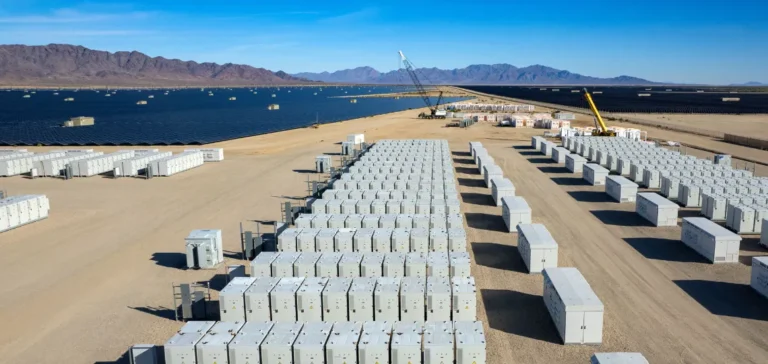
Solar projects integrating storage in Indonesia, Viet Nam and the Philippines are now reaching internal rate of return levels comparable to those sought by major infrastructure investors. In several cases, particularly in Indonesia, power purchase agreements (PPAs) structured with a storage component offer internal rate of return (IRR) levels reaching up to 23%, compared to a regional average of 12 to 15%.

Regulatory reforms reshape investment signals

This development follows reforms aimed at making PPAs longer, more stable and better tailored to private developers. In Indonesia, the latest guidelines from the Ministry of Energy and Mineral Resources allow PPA durations of up to 30 years, introduce a foreign exchange risk-sharing mechanism, and clarify developers’ rights to monetise renewable energy certificates. In Viet Nam, the launch of the Direct Power Purchase Agreement (DPPA) mechanism allows direct sales between producers and large consumers, reducing dependence on the state utility EVN.

In the Philippines, authorities have lifted restrictions on foreign ownership of renewable assets and published an operational framework for storage. This framework includes the technical roles of batteries, their remuneration via ancillary services, and their integration into tenders, consolidating the position of hybrid projects within the national energy roadmap.

Storage becomes a strategic asset in constrained grids

The role of storage is also evolving in these markets. It is now valued not only for its capacity to optimise solar generation but also as a system stability tool in coal-reliant contexts such as Indonesia and the Philippines. Ember notes that in these inflexible systems, batteries help reduce reliance on peak thermal plants, enabling a reduction in fossil fuel subsidies.

Storage also addresses grid congestion and curtailments — forced production reductions — that affect solar projects in Viet Nam. This ability to smooth production peaks and provide more predictable electricity is becoming a key factor in securing contracts.

Economic balances highly sensitive to tariff parameters

Profitability analyses using financial models such as the System Advisor Model show strong IRR sensitivity to tariff parameters. A 10% increase in PPA tariffs can lead to a disproportionate rise in IRR, given the stability of costs and production over time. Conversely, aggressive tariff reductions in future tenders could make storage-integrated projects unbankable, despite the continued decline in solar module costs.

Capital costs remain high in these markets, and field-observed capital expenditures — 10 to 30% above global benchmarks — amplify this sensitivity. Battery price declines remain dependent on lithium market volatility and logistical constraints, making cost projections cautious.

Strategic competition over value chains

These dynamics take place amid growing competition between Western and Chinese capital. Most solar modules are imported from China, whose exports rose by over 70% in 2025, according to Ember. In response, governments are seeking to attract institutional finance from the United States, European Union, Japan and South Korea through more predictable PPAs and credit-enhanced mechanisms tied to environmental, social and governance (ESG) standards.

Compliance pressure is also intensifying, particularly with Western sanctions targeting operators linked to Russia or Iran. Infrastructure projects will need to demonstrate supply chain traceability and the absence of links with entities listed by the Office of Foreign Assets Control (OFAC) or the European Union, influencing the choice of partners and suppliers.

Regional integration prospects and developers’ arbitrage

The increasing integration of storage is also linked to the development of the ASEAN Power Grid, a regional electricity interconnection project. Storage plays a role as a local stabilisation tool facilitating cross-border flows. The three countries under study could eventually become “clean power” export platforms for neighbouring countries lacking renewable resources.

For developers and independent power producers (IPPs), decision-making is increasingly between “merchant” models without long-term contracts and regulated PPAs that include a flexibility premium. Electro-intensive industries, particularly in manufacturing and data centres, are the primary buyers of such power, as they seek green electricity that is both reliable and compliant with international decarbonisation standards.
The Australian government opens Tender 8 to secure 16 GWh of storage, for the first time including aggregated portfolios of 5 to 30 MW within the National Electricity Market.
With a strategic investment in a 200 MWh facility, European Energy strengthens its industrial position in Denmark and energises the Nordic battery storage market.
The Spanish renewable energy producer significantly increased its investments and revenue while achieving more than half of its asset rotation target for the 2025–2027 period.
Chinese manufacturer EVE Energy has signed a three-year memorandum of understanding with Sweden’s Vimab BESS AB to supply batteries and energy storage solutions in Northern Europe.
Huawei's full-lifecycle battery safety rating system has been officially validated by a national technical committee, marking a key milestone for large-scale energy storage deployment.
AMPYR Australia and InCommodities have signed a 15-year partnership for the Bulabul BESS project, marking the Danish trader’s first long-term commitment in the Australian energy storage market.
Tokyo Gas and Okaya & Co. will begin construction in December 2025 of a 25 MW/75 MWh battery energy storage system in Hokkaido, with commercial operations expected in 2028 or later.
US-based CETY has been awarded a $10mn contract to build a battery energy storage system in New York State, marking the first in a series of planned installations across the region.
French energy group Engie wins its second-largest global battery storage project with a capacity of 280 MW, awarded by a state-owned company in Gujarat, India.
Nostromo’s IceBrick system becomes the first behind-the-meter thermal storage device to participate in California’s wholesale energy market, in partnership with Olivine, marking a milestone for commercial buildings.
Pacific Green has received approval from the Victorian government for its second energy storage park in Australia, a 1GW project to be developed over 36 months in Portland’s industrial zone.
TagEnergy launches a 150 MW storage project at the Golden Plains wind farm site, strengthening its investment strategy in Australia's energy infrastructure.
CATL, Sun Village and Marubeni Power Retail have signed an agreement to develop 2.4GWh of grid-scale storage capacity in Japan, without a defined schedule, leveraging investment, construction and commercial management synergies.
Northland Power has acquired two energy storage projects in Poland from Greenvolt Power Group, consolidating a strategic partnership in a transitioning market.
The global battery energy storage systems market anticipates 28.8% annual growth through 2033, supported by industrial electrification, government incentives and grid modernisation efforts.
Group1 and Michigan Potash & Salt Company have signed an agreement to create a domestic potassium-based battery supply chain, relying on local mining and production free from critical metals.
A battery storage project developed in Shiga Prefecture marks a new step for the Japanese industry, with the official commissioning of a 4MWh facility aimed at the primary balancing market.
Nine battery storage projects totalling 18MW will be built by au Renewable Energy across the Chubu, Kansai and Kyushu regions, with commissioning scheduled through March 2027.
ACEnergy’s Central BESS project has been approved with a $3.6mn benefit-sharing plan for local and Indigenous communities.
Operator Fullmark Energy has finalised a $46mn investment tax credit transfer linked to its 125MW Redwood storage portfolio in Southern California, strengthening its ability to pursue further growth in the sector.

All the latest energy news, all the time

Annual subscription

8.25$/month*

*billed annually at 99$/year for the first year then 149,00$/year ​

Unlimited access - Archives included - Pro invoice

Monthly subscription

Unlimited access • Archives included

5.2$/month*
then 14.90$ per month thereafter

*Prices shown are exclusive of VAT, which may vary according to your location or professional status.

Since 2021: 30,000 articles - +150 analyses/week.