
India’s installed nuclear power generation capacity is expected to reach 21,880 megawatts (MW) by fiscal year 2031-32, up from the current 8,780 MW, according to an official government statement submitted to Parliament. The increase will mainly result from the phased commissioning of Pressurised Heavy Water Reactors (PHWRs), which are currently under construction or in the preparatory stages.
Projects under way and future acceleration
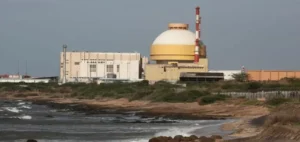
Three 700 MW PHWR units are currently under construction: RAPS-8 in Rawatbhata, Rajasthan, and the first two units of the GHAVP project in Gorakhpur, Haryana. These facilities are expected to raise nuclear capacity to 9,480 MW by the end of fiscal year 2025-26. The government forecasts a further rise to 13,480 MW by 2029-30 before reaching the final target of 21,880 MW.
Ten additional PHWR units of 700 MW each are in the pre-development stage, distributed across sites in Kaiga, Karnataka; Chutka, Madhya Pradesh; Gorakhpur, Haryana; and Mahi Banswara, Rajasthan. This strategy reflects a geographic diversification of nuclear infrastructure aimed at meeting growing electricity demand across the country.
BARC invests in small modular reactors
The Bhabha Atomic Research Centre (BARC) is developing several Small Modular Reactor (SMR) technologies. Three designs are under development: the 200 MWe Bharat Small Modular Reactor (BSMR-200), a 55 MWe SMR-55, and a 5 MW thermal high-temperature gas-cooled reactor intended for hydrogen production.
The government stated that these SMR technologies could be deployed in a variety of settings, including to supply power to energy-intensive industries such as aluminium, steel, and metals. They could also be used to repurpose retired fossil fuel power plants or supply energy to remote or off-grid locations.
Hydrogen integrated into nuclear strategy
According to documents submitted to Parliament, hydrogen produced from high-temperature gas-cooled reactors could be used in transport or industrial processes, further expanding the scope of SMR applications within India’s energy landscape.
These initiatives are part of India’s Nuclear Energy Mission, which aims to reach 100 gigawatts (GW) of nuclear capacity by 2047, marking the centenary of the country’s independence.