In Qatar, Shell’s Boss worries about the “industrial” Risks of the Energy Crisis

Europe is facing "industrial" and "political" risks due to the energy crisis, warned the boss of the giant Shell.

Share:

Comprehensive energy news coverage, updated nonstop

Annual subscription

8.25€/month*

*billed annually at 99€/year for the first year then 149,00€/year ​

Unlimited access • Archives included • Professional invoice

OTHER ACCESS OPTIONS

Monthly subscription

Unlimited access • Archives included

5.2€/month*
then 14.90€ per month thereafter

FREE ACCOUNT

3 articles offered per month

FREE

*Prices are excluding VAT, which may vary depending on your location or professional status

Since 2021: 35,000 articles • 150+ analyses per week

Europe faces “industrial” and “political” risks due to the energy crisis, the head of British energy giant Shell warned Sunday as he signed a new natural gas project in Qatar.

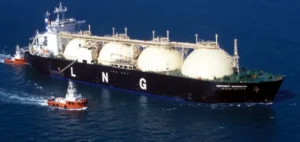
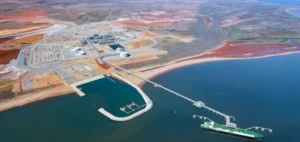
Shell has taken a 9.375% stake in the North Field South project, which is expected to help boost the Gulf country’s liquefied natural gas (LNG) production in the coming years.

At the signing ceremony in Doha, its CEO, Ben van Beurden, warned of the impact of the energy crisis, fueled by the war in Ukraine, on the European industrial sector.

The old continent has reduced its consumption “quite effectively, quite significantly” to cope with the loss of 120 million tons of Russian gas per year, he said.

Europe is looking for short-term alternatives, but the solution is not just to find new supplies, said Ben van Beurden, who will leave his post at the end of the year.

“A lot of people talk about turning down the thermostat or not turning on the air conditioning, but there’s also the question of why not cut back on fertilizer or certain petrochemicals. And this rationalization, if it goes on for a long time, becomes permanent.”

“You can say it’s inevitable and in some ways it leads to renewal,” Van Beurden continued. “But to do this on this scale, so abruptly in a time of economic challenges, will put quite a bit of pressure on European economies and perhaps also on the political system in Europe,” he warned.

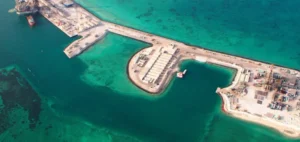
Shell became on Sunday the second foreign partner of Qatar Energy, alongside the French TotalEnergies, chosen to develop the North Field South, a project to extend the North Field, which represents about 10% of the known natural gas reserves in the world.

It has taken a 9.375% stake, identical to that of the French group, the total share of foreign companies in the project having been set at 25%.

In July, Shell was chosen as the fifth and final partner (along with TotalEnergies, ExxonMobil, ConocoPhillips and Eni) for the North Field East, an initial development project for the gas field that extends under the sea into Iranian territory, where the Islamic Republic’s efforts to exploit it are hampered by international sanctions.

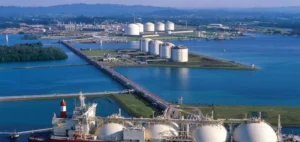
Qatar is already one of the world’s leading producers of liquefied natural gas (LNG), along with the United States and Australia, and wants to increase its production by more than 60% by 2027, when the North Field South project is due to come on stream.
Abu Dhabi’s national oil company has secured a landmark structured financing to accelerate the development of the Hail and Ghasha gas project, while maintaining strategic control over its infrastructure.
U.S.-based Sawgrass LNG & Power celebrates eight consecutive years of LNG exports to The Bahamas, reinforcing its position in regional energy trade.
Kinder Morgan restored the EPNG pipeline capacity at Lordsburg on December 13, ending a constraint that had driven Waha prices negative. The move highlights the Permian’s fragile balance, operating near the limits of its gas evacuation infrastructure.
ENGIE activates key projects in Belgium, including an 875 MW gas-fired plant in Flémalle and a battery storage system in Vilvoorde, to strengthen electricity supply security and grid flexibility.
Hungary has signed a contract with US company Chevron to import 400mn m³ of LNG per year, while maintaining a structural dependence on Russian gas through a long-term agreement with Gazprom.
Chevron Australia awards Subsea7 a major contract for subsea installation on the Gorgon Stage 3 project, with offshore operations scheduled for 2028 at 1,350 metres depth.
Ovintiv has entered into an agreement with Pembina Pipeline Corporation to secure 0.5 million tonnes per annum of LNG liquefaction capacity over 12 years, strengthening its export outlook to Asian markets.
TotalEnergies has completed the sale of a minority stake in a Malaysian offshore gas block to PTTEP, while retaining its operator role and a majority share.
The European Union will apply its methane emissions rules more flexibly to secure liquefied natural gas supplies from 2027.
Venezuela has ended all energy cooperation with Trinidad and Tobago after the seizure of an oil tanker carrying crude by the United States, accusing the archipelago of participating in the military operation in the Caribbean.
National Fuel has secured $350mn in a private placement of common stock with accredited investors to support the acquisition of CenterPoint’s regulated gas business in Ohio.
GTT appoints François Michel as CEO starting January 5, separating governance roles after strong revenue and profit growth in 2024.
The United States is requesting a derogation from EU methane rules, citing the Union’s energy security needs and the technical limits of its liquefied natural gas export model.
Falcon Oil & Gas and its partner Tamboran have completed stimulation of the SS2-1H horizontal well in the Beetaloo Sub-basin, a key step ahead of initial production tests expected in early 2026.
Gasunie Netherlands and Gasunie Germany have selected six industrial suppliers under a European tender to supply pipelines for future natural gas, hydrogen and CO₂ networks.
The ban on Russian liquefied natural gas requires a legal re-evaluation of LNG contracts, where force majeure, change-in-law and logistical restrictions are now major sources of disputes and contractual repricing.
The US House adopts a reform that weakens state veto power over gas pipeline projects by strengthening the federal role of FERC and accelerating environmental permitting.
Morocco plans to commission its first liquefied natural gas terminal in Nador by 2027, built around a floating unit designed to strengthen national import capacity.
An explosion on December 10 on the Escravos–Lagos pipeline forced NNPC to suspend operations, disrupting a crucial network supplying gas to power stations in southwestern Nigeria.
At an international forum, Turkmenistan hosted several regional leaders to discuss commercial cooperation, with a strong focus on gas and alternative export corridors.

All the latest energy news, all the time

Annual subscription

8.25€/month*

*billed annually at 99€/year for the first year then 149,00€/year ​

Unlimited access - Archives included - Pro invoice

Monthly subscription

Unlimited access • Archives included

5.2€/month*
then 14.90€ per month thereafter

*Prices shown are exclusive of VAT, which may vary according to your location or professional status.

Since 2021: 30,000 articles - +150 analyses/week.