Halliburton records a sharp decline in net income and revenue in Q2
Halliburton reports a 50% drop in net income and nearly a 6% reduction in revenue for Q2, with demand in North America remaining particularly weak.
| Sectors | Gas, Oil, Exploration & Production, Gas Exploration & Production |
|---|---|
| Themes | Markets & Finance, Results |
| Companies | Halliburton |
| Countries | United States |
Halliburton has reported disappointing financial results for Q2 2024, marked by a significant decline in net income and revenue. From March to June, the company recorded a revenue of USD5.5bn, a decrease of nearly 6% compared to the previous year. Although this performance was better than analysts had anticipated, it remains insufficient in light of market expectations.
Halliburton’s net income dropped by 50%, reaching USD472mn, while earnings per share, excluding exceptional items, fell by 98%, amounting to USD0.55. This decline in financial results is primarily attributed to the weak demand in the oil services sector, particularly in North America.
Impact of North American demand
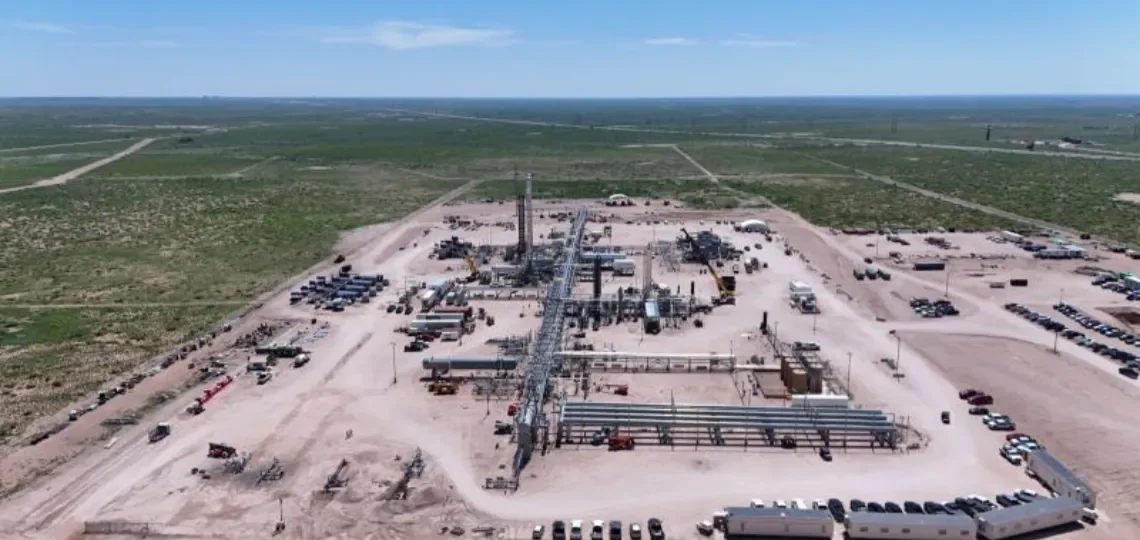
Halliburton’s revenue in North America decreased by 9.7% year-on-year, reaching USD2.3bn. This drop is directly linked to a reduction in activity in key regions, particularly in the Gulf of Mexico, where demand for oil services and equipment has significantly diminished. The company highlights this situation as a major factor behind the contraction in its results.
In the global context, the weakness of the North American market is compounded by increasing geopolitical uncertainty, notably due to the tariffs imposed by the Trump administration. This has led to a slowdown in demand in many regions, especially in Latin America and the Middle East.
International results and strategic outlook
Internationally, Halliburton’s revenue declined by 3.1% compared to the previous year, amounting to USD3.2bn. The company notes significant declines in Latin America and the Middle East. However, some regions, particularly Asia-Pacific, have continued to perform solidly.
Jeff Miller, Halliburton’s President and CEO, stated that short- and medium-term growth prospects are less optimistic than initially forecasted. He emphasized that the company’s strategy remains focused on its key growth drivers, despite reduced activity in some major markets. This approach is expected to allow the company to maintain its long-term objectives.
Financial market reaction
Investors reacted moderately to Halliburton’s financial results. In pre-market trading ahead of the New York Stock Exchange opening, the company’s stock fell by 0.35%. The combination of a weaker-than-expected performance and an uncertain environment is weighing on market confidence.
The second-quarter results highlight the challenges facing oilfield services companies in a globally unstable economic context. Nonetheless, Halliburton’s management remains confident in its strategy, emphasizing the strength of its growth drivers for the future.