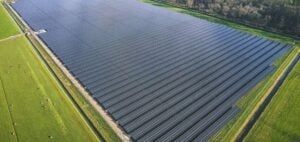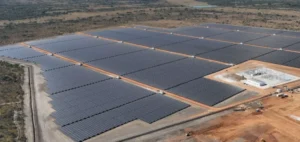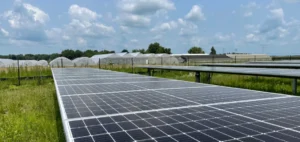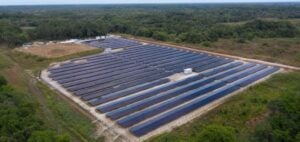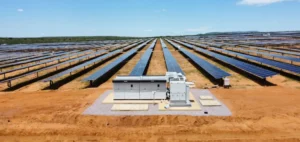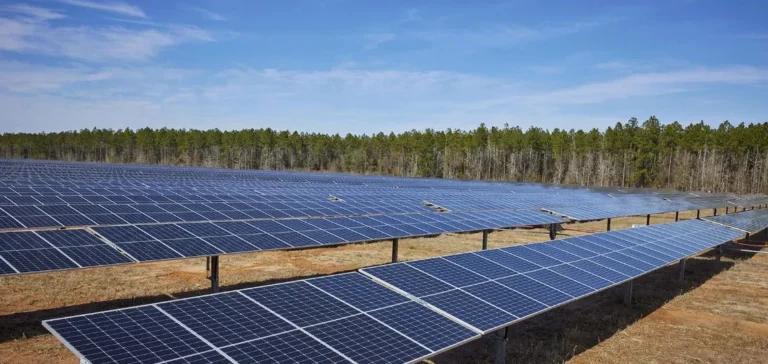

The Triticum project, located in Oberdorf am Lech in Bavaria, is currently the largest agrivoltaic power plant under development in Germany. Led by the company Greenbuddies on behalf of investor MaxSolar, the project has an installed capacity of 16.8 megawatt-peak (MWp). It combines solar electricity generation with wheat cultivation on the same agricultural plot.
Optimised infrastructure across 28 hectares
The installation spans 28 hectares and features solar tracking structures in a dual-row configuration. This technology allows the panels to follow the sun’s path, boosting energy output by nearly 30% compared to fixed installations. Agricultural activity continues beneath the modules, with wheat selected as the main crop for the site.
The construction, fully overseen by Greenbuddies, includes earthworks, structural assembly, solar module installation, electrical connections and full technical project management. The plant is expected to become commercially operational by the end of 2025.
Electricity generation equivalent to 6,000 households
The plant is projected to generate 22 gigawatt-hours (GWh) per year, equivalent to the electricity consumption of around 6,000 households. The tracker system was selected to balance energy yield with continued agricultural use. The mobile structures also ensure even light distribution to crops growing beneath the solar modules.
Greenbuddies has previously implemented a similar project in Sweden near the town of Hova, with a capacity of 5.6 MWp. That facility integrates wheat and rapeseed cultivation and saw its first harvest in 2025.
Agrivoltaic investments expand across Europe
Agrivoltaics—combining farming and power generation on a single site—is experiencing notable growth across Europe, supported by increasing private sector investments. Germany, France and the Netherlands are actively scaling this model as a way to diversify farm income and optimise land use.
In the Czech Republic, regulatory changes have allowed since 2024 the installation of solar panels above vineyards, orchards and selected crops. From November 2025, farmers will also be permitted to install photovoltaic panels over fields growing vegetables such as cabbage, broccoli or tomatoes, according to a decree issued by the Ministry of Agriculture.