Global wind industry suffers historic downturn in 2025 despite Chinese resilience

Policy reversals, reduced performance and corporate disengagement marked an unprecedented slowdown in wind power in 2025, although China continued its expansion at a steady pace.
Share:

Comprehensive energy news coverage, updated nonstop

Annual subscription

8.25$/month*

*billed annually at 99$/year for the first year then 149,00$/year ​

Unlimited access • Archives included • Professional invoice

OTHER ACCESS OPTIONS

Monthly subscription

Unlimited access • Archives included

5.2$/month*
then 14.90$ per month thereafter

FREE ACCOUNT

3 articles offered per month

FREE

*Prices are excluding VAT, which may vary depending on your location or professional status

Since 2021: 35,000 articles • 150+ analyses per week

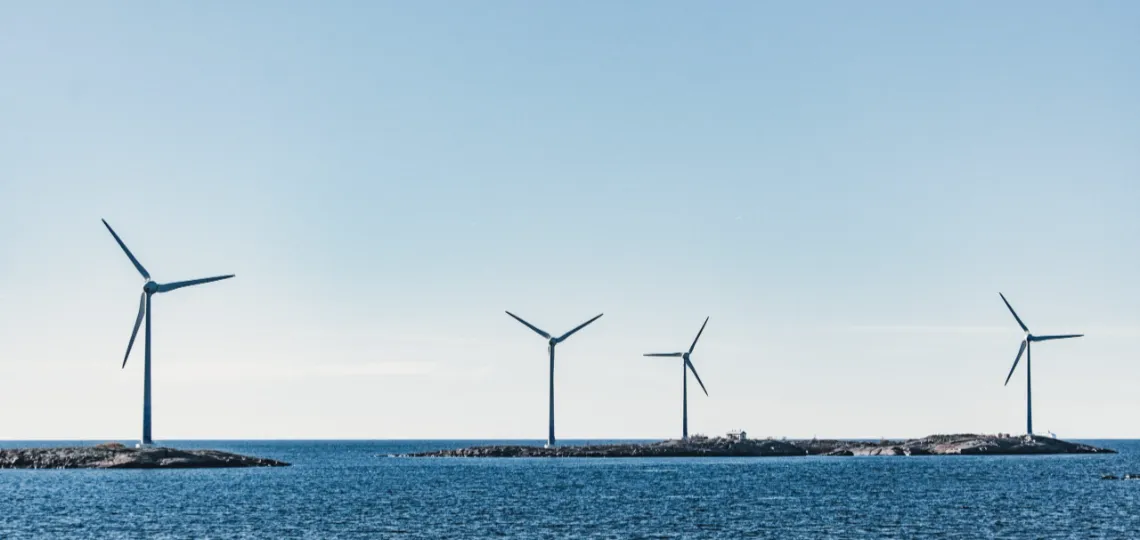
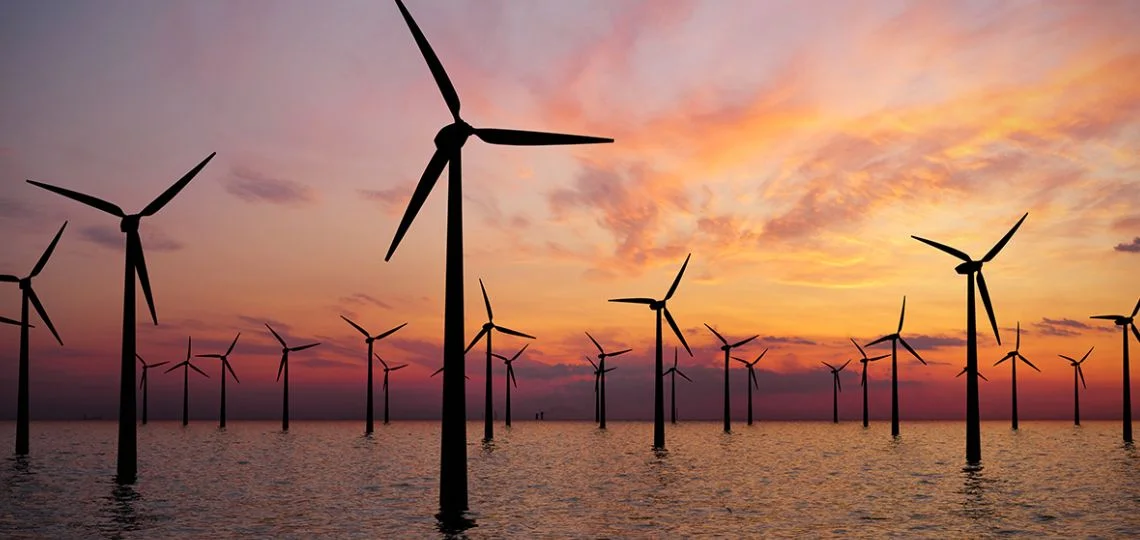
The year 2025 ends with a bleak assessment for the global wind power industry, faced with a combination of regulatory, technical and financial challenges that slowed its growth to the weakest pace in more than two decades. According to ten-month data, global wind-powered electricity production reached 2,158 terawatt hours (TWh), only 7% higher than in 2024, compared with an average of 14% between 2015 and 2024.
Marked slowdown in Europe and North America

The slowdown is particularly pronounced in Europe, the world’s second-largest wind power producing region. Four consecutive months of year-on-year production decline impacted sector performance as early as the first quarter. North America exacerbated the trend with five months of declines recorded between April and September. Even Asia, which accounts for about 45% of global wind power production, registered a rare decrease in output in September and October.

In this context, several European companies reconsidered their involvement in new projects. Disappointing tender results in Germany and Denmark, some receiving no bids at all, increased investor uncertainty. Numerous companies, including major players, proceeded with job cuts or project withdrawals, further amplifying instability in the sector.

Policy shift in the United States and withdrawal in Japan

The policy reversal by President Donald Trump significantly impacted offshore wind development along the Atlantic coast. The abrupt end of federal support led to an accelerated phase-out of tax credits, restrictions on foreign components and tighter construction rules. These changes are expected to hinder both onshore and offshore wind project growth in the short to medium term.

In Japan, soaring cost estimates for several offshore projects led Mitsubishi Corporation to pull out of three major developments initially scheduled to start operations before 2030. In response, Japanese authorities revised their wind power support policies, easing eligibility requirements and expanding the geographical scope for future installations.

Continued expansion in China and rising exports

China remains the clear outlier in this environment. It is expected to record its twenty-fifth consecutive year of wind power growth above 10% in 2025. Its share of global wind electricity production will reach a record level of more than 41%, up from 40% in 2024. At the same time, Chinese wind component exports increased by over 20%, surpassing $4bn during the year.

These exports, mainly destined for Europe and Asia, highlight the growing role of China’s manufacturing industry in global supply chains. The increasing availability of these components may help revive project development from 2026 onwards, particularly in regions currently implementing regulatory adjustments.

The Québec government has approved three wind projects totalling 792 MW to meet growing energy demand and support regional economies in Bas-Saint-Laurent and Capitale-Nationale.
French group ENGIE has officially commissioned the Serra do Assuruá complex in the State of Bahia, making it its largest onshore wind project worldwide.
RWE signed a 15-year power purchase agreement with Indiana Michigan Power for the Prairie Creek project, aimed at supporting Indiana’s growing electricity demand starting in 2028.
EDP has signed a long-term electricity supply agreement with Energa for a 322 MW hybrid portfolio combining wind and solar, marking one of the largest contracts of its kind in Poland.
Ocean Winds has deployed a LiDAR buoy off Gippsland to collect accurate data on wind and currents, a key step in its 1.3 GW offshore wind project in Australia.
TerraWind Renewables acquires five projects totalling 255MW in northern Japan, bringing its onshore wind development capacity to 327MW and targeting first commercial operation in 2028.
A consortium led by EDF power solutions has signed a 20-year agreement with Nama PWP to develop a 120 MW wind farm in southeastern Oman, with commissioning scheduled for Q3 2027.
Microsoft expands its partnership with Iberdrola through two new power purchase agreements in Spain, reinforcing its European energy strategy while deepening the use of cloud and artificial intelligence solutions from the US group.
Casa dos Ventos awards Vestas the supply, construction and maintenance of a 184-turbine complex in the state of Piauí, with an investment exceeding $1.01bn.
Warsaw tests long-term support for offshore wind with a structured tender to maximise competition, reduce financial risk and reassure a supply chain under pressure across Europe.
TotalEnergies has sold 50% of a portfolio of wind and solar projects in Greece to Asterion Industrial Partners, valued at €508mn ($554mn), while retaining operational control and the main share of electricity marketing.
Italy’s offshore wind rollout remains at a standstill, freezing over 18 GW of pending projects and weakening national renewable energy targets.
German manufacturer Nordex has secured an order for 34 turbines for a 200 MW project in the Canadian province of New Brunswick, marking its first entry into this region.
OX2 has started construction on three new onshore wind farms in Finland, bringing its total installed capacity in the country to 750 MW, a record level for a private energy sector player.
Italian group Enel has acquired two onshore wind farms in Germany for an enterprise value of €80mn ($86.5mn), strengthening its presence in a stable and strategic market as part of a targeted asset transfer.
EDF power solutions announces commercial operation of the San Kraal wind farm, the first unit of the 420MW Koruson 1 project, with full commissioning expected in early 2026.
Q ENERGY has announced the entry of three local and citizen-based partners into the capital of the Ventajou wind farm, marking its first strategic equity opening to institutional and community investors.
The Norwegian government has allocated two areas of the Utsira Nord project to the Equinor–Vårgrønn and EDF–Deep Wind Offshore consortia, launching a preparatory phase before a competitive state aid auction.
German group RWE has replaced 27 old turbines with three new high-performance units at its Muel wind farm, doubling energy output and earning ZeroWaste certification.
Synera Renewable Energy Group has signed a long-term power purchase agreement with Taiwan Smart Electricity & Energy, securing a portion of generation from the Formosa 4 wind farm.

All the latest energy news, all the time

Annual subscription

8.25$/month*

*billed annually at 99$/year for the first year then 149,00$/year ​

Unlimited access - Archives included - Pro invoice

Monthly subscription

Unlimited access • Archives included

5.2$/month*
then 14.90$ per month thereafter

*Prices shown are exclusive of VAT, which may vary according to your location or professional status.

Since 2021: 30,000 articles - +150 analyses/week.