Germany boosts public investment in five LNG terminals by 2026
The German state is multiplying LNG infrastructure projects in the North Sea and the Baltic Sea to secure supplies, with five floating terminals under public supervision under development.
| Sectors | Gas, LNG |
|---|---|
| Themes | Investments & Transactions, Public Investment |
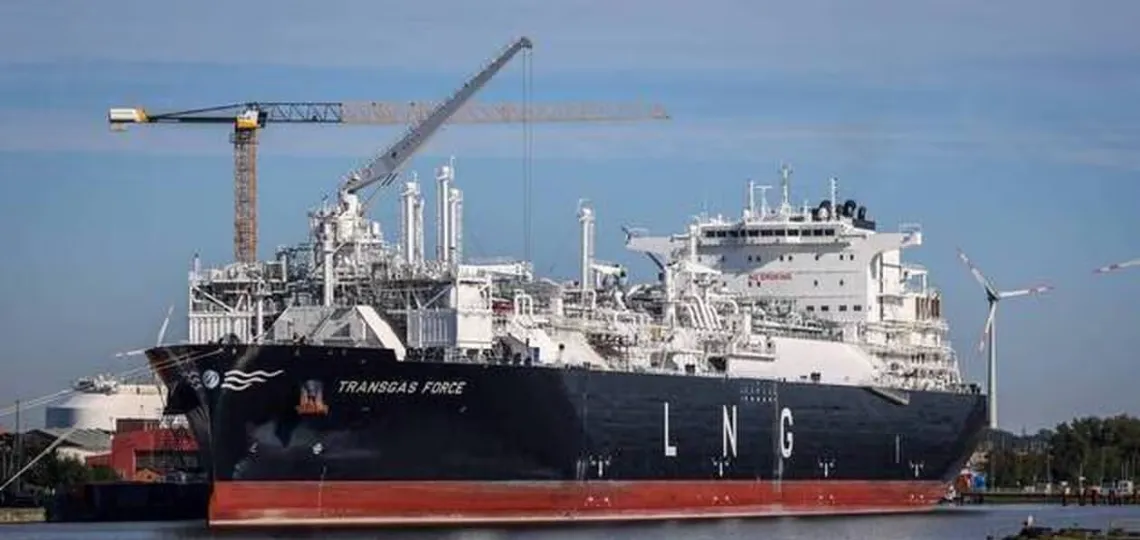
Germany continues the accelerated deployment of its liquefied natural gas (LNG) infrastructure with public investment support through the state-owned company Deutsche Energy Terminal GmbH (DET). The country plans to have five floating storage and regasification units (FSRUs) in operation by 2026, in direct response to reduced Russian deliveries since 2022.
Stade adds a fifth terminal under public leadership
DET confirmed on November 14 that it had taken over the management of the Stade terminal project on the Elbe River in cooperation with private company Hanseatic Energy Hub (HEH). After the temporary cancellation of contracts due to disagreements over construction deadlines, DET has launched the inspection and planning phase. However, the terminal will not be operational before the second quarter of 2026. The designated floating unit, Energos Force, is expected to return to the site to serve Uniper and EnBW as main users.
HEH also plans to build a land-based terminal for LNG, bio-LNG and synthetic gas, with a target launch in 2027. These developments complement the state’s efforts to anchor gas logistics permanently into the national energy framework.
Wilhelmshaven strengthens capacity with a second public terminal
In Wilhelmshaven, Germany’s first floating terminal has been operational since 2022 under the direction of Uniper. In August 2025, DET officially started commercial operations of the second terminal, operated by Excelerate Energy via the FSRU Excelsior, after several months of testing and maintenance. All regasification slots for 2025 and 2026 were allocated as early as July, confirming market demand.
Uniper is also planning to build a land-based ammonia terminal combined with a 200-megawatt electrolyser powered by local wind farms, showing a diversification of use for the existing infrastructure.
Extended investments in Mukran and Brunsbüttel
The Mukran terminal, located on the island of Rügen, is operated by Deutsche ReGas in cooperation with Höegh LNG. The current installation, supported by the Gascade pipeline, aims to reach an annual capacity of 13.5 billion cubic metres by 2027. ReGas has launched a call for tenders to allocate an additional 5 billion cubic metres per year over a sixteen-year period starting in 2027.
Brunsbüttel, on the North Sea coast, is home to the FSRU Hoegh Gannet, which was temporarily withdrawn for maintenance in September. Initially chartered by RWE, it is now operated by DET. The site is scheduled to evolve into a land-based facility, supported by EUR40mn ($43.6mn) in public funding. An adjacent ammonia terminal is also under development, with commissioning expected by the end of 2026.
Lubmin redirected towards green ammonia and hydrogen
The Lubmin site, a former LNG import platform operated by Deutsche ReGas and Höegh LNG, is now subject to a redevelopment project into a green ammonia and hydrogen terminal. Connection to the grid will be ensured by Gascade once infrastructure is launched. This reallocation is part of a strategy to optimise existing public investments.
Altogether, the initiatives led by DET reflect a strong public intervention strategy to secure and diversify Germany’s energy supply. The budgetary mobilisation around these terminals confirms the federal government’s commitment to supporting energy resilience through long-term infrastructure tools.