Fukushima wind power milestone as Kagurayama begins operations

The Kagurayama onshore wind farm (61.1 MW) begins operations under a secured 2017 FIT tariff, despite grid injection limits and a multi-stakeholder local governance model.
Share:

Comprehensive energy news coverage, updated nonstop

Annual subscription

8.25$/month*

*billed annually at 99$/year for the first year then 149,00$/year ​

Unlimited access • Archives included • Professional invoice

OTHER ACCESS OPTIONS

Monthly subscription

Unlimited access • Archives included

5.2$/month*
then 14.90$ per month thereafter

FREE ACCOUNT

3 articles offered per month

FREE

*Prices are excluding VAT, which may vary depending on your location or professional status

Since 2021: 35,000 articles • 150+ analyses per week

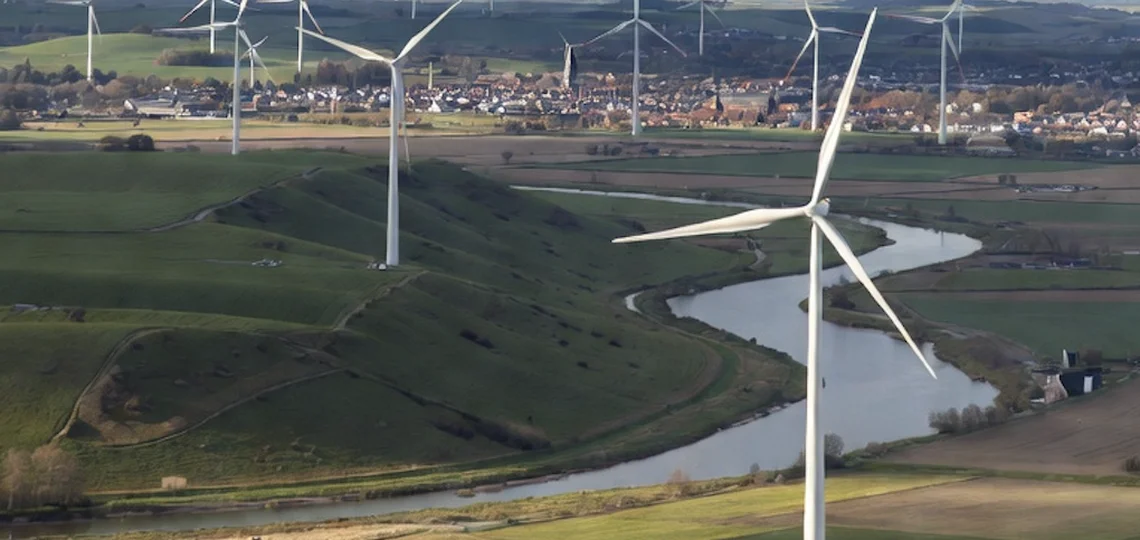
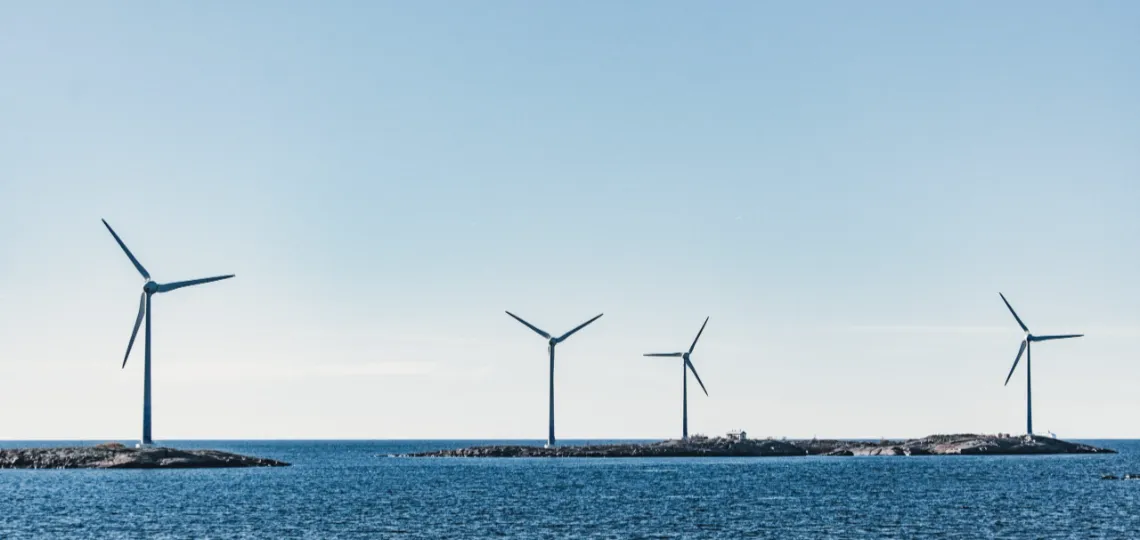
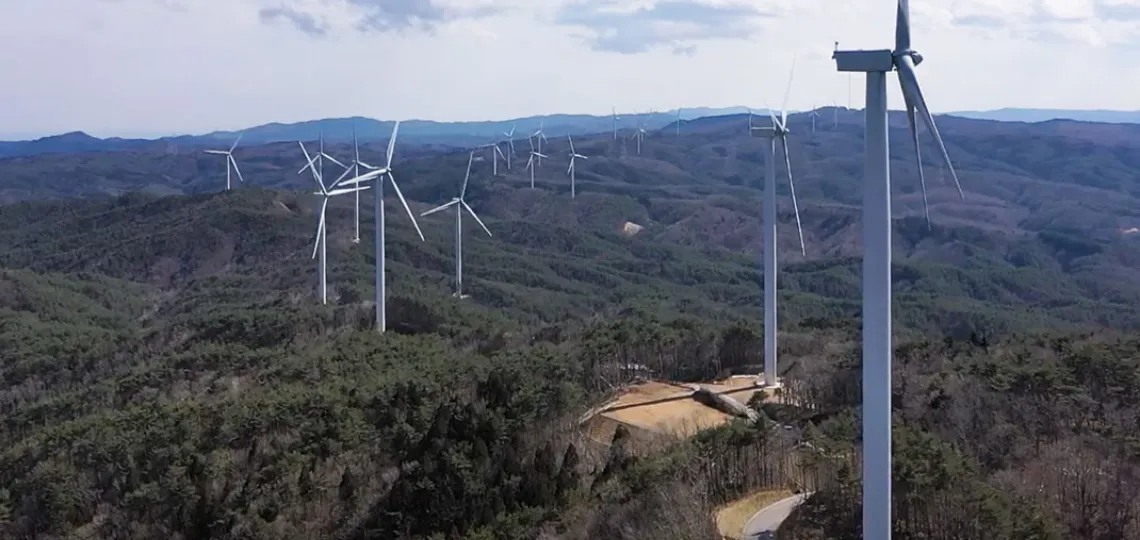
The Kagurayama onshore wind farm, located in Japan’s Fukushima prefecture, has officially commenced commercial operations with a grid injection capacity of 61.1 MW. The project benefits from a guaranteed purchase tariff of JPY22 per kWh, certified in 2017 under the Feed-in Tariff (FIT) scheme, ensuring a stable 20-year revenue stream. This revenue structure protects the project from market fluctuations, with estimated annual revenue of around JPY3.6bn ($25mn) based on a projected output of 165 GWh.
Project constrained by grid limitations

Although equipped with 16 turbines rated at 4.3 MW each, totalling 68.8 MW of installed capacity, the project’s grid injection is capped at 61.1 MW. This limitation reflects the structural constraints of Japan’s eastern electricity grid, where congestion continues to hinder large-scale renewable energy integration. The economic cost of lost output during high wind periods represents a recurring technical and financial loss.

The total capital expenditure (Capex) is estimated at JPY34.7bn ($241mn), or roughly JPY0.57bn ($4mn) per installed MW — a level consistent with Japan’s topography and regulatory context. The site’s implied capacity factor is approximately 31 %, based on the injected capacity. Regulatory approval processes began in 2016 and concluded in 2021, highlighting the significant permitting timelines typical in Japan.

Local structure and regional leadership

The project is managed by Iwaki Kagurayama Fukko Energy LLC, a standard project finance Special Purpose Company (SPC). JR-EAST Energy Development acts as operator and representative of the consortium. Shareholders include Fukushima Electric Power and several regional industrial firms such as Banei Unso, Kamata Sangyo, and Joban Kosan, reflecting a governance model aligned with post-2011 reconstruction objectives and local economic integration.

The municipalities of Iwaki and Kawauchi are involved in planning and permitting, while national authorities — notably the Ministry of Economy, Trade and Industry (METI) — oversaw the FIT certification and environmental assessment. The injection limit suggests a centralised grid operator’s role in managing regional capacity constraints.

Technical risks and exposed supply chain

Key short-term risks include turbine availability and evolving curtailment regulations. Local operations and maintenance (O&M) needs are expected to increase demand for spare parts and specialised labour. Critical component costs may rise if geopolitical or commercial factors disrupt supply chains for metals and electronics.

O&M costs must be monitored closely amid inflationary pressures and a technician shortage. While the project is protected by a grandfathered FIT, additional restrictions may arise if regional grid congestion worsens.

Strategic value for JR-EAST Energy Development

For JR-EAST Energy Development, Kagurayama represents a significant milestone in regional portfolio building. The asset generates stable cash flows comparable to a bond-like investment, supporting financing for upcoming projects. This execution strengthens the company’s credibility for future wind farms in Fukushima, including Iwaki Miwa and Abukuma.

However, multi-stakeholder governance entails slower decision-making due to varied interests, ESG compliance, and local return expectations. The project also remains exposed to reputational risks related to noise, biodiversity, and landscape — common concerns for onshore wind projects in Japan.

Energy symbolism and market signals

At the national level, Kagurayama’s contribution to energy supply is limited, but it supports reduced fossil fuel imports and generation diversification. The project also reinforces Fukushima’s post-disaster trajectory, where renewables serve as instruments for economic recovery and territorial legitimacy. Local authorities view the project as a symbol of resilience, although its operational performance will depend on the grid’s adaptability.

Japanese authorities will need to monitor actual curtailment levels and regional dispatch policies to refine market signals. Kagurayama may serve as a model for future developments in Fukushima, provided that permitting delays and interconnection issues can be mitigated.

Policy reversals, reduced performance and corporate disengagement marked an unprecedented slowdown in wind power in 2025, although China continued its expansion at a steady pace.
The Québec government has approved three wind projects totalling 792 MW to meet growing energy demand and support regional economies in Bas-Saint-Laurent and Capitale-Nationale.
French group ENGIE has officially commissioned the Serra do Assuruá complex in the State of Bahia, making it its largest onshore wind project worldwide.
RWE signed a 15-year power purchase agreement with Indiana Michigan Power for the Prairie Creek project, aimed at supporting Indiana’s growing electricity demand starting in 2028.
EDP has signed a long-term electricity supply agreement with Energa for a 322 MW hybrid portfolio combining wind and solar, marking one of the largest contracts of its kind in Poland.
Ocean Winds has deployed a LiDAR buoy off Gippsland to collect accurate data on wind and currents, a key step in its 1.3 GW offshore wind project in Australia.
TerraWind Renewables acquires five projects totalling 255MW in northern Japan, bringing its onshore wind development capacity to 327MW and targeting first commercial operation in 2028.
A consortium led by EDF power solutions has signed a 20-year agreement with Nama PWP to develop a 120 MW wind farm in southeastern Oman, with commissioning scheduled for Q3 2027.
Casa dos Ventos awards Vestas the supply, construction and maintenance of a 184-turbine complex in the state of Piauí, with an investment exceeding $1.01bn.
Warsaw tests long-term support for offshore wind with a structured tender to maximise competition, reduce financial risk and reassure a supply chain under pressure across Europe.
TotalEnergies has sold 50% of a portfolio of wind and solar projects in Greece to Asterion Industrial Partners, valued at €508mn ($554mn), while retaining operational control and the main share of electricity marketing.
Italy’s offshore wind rollout remains at a standstill, freezing over 18 GW of pending projects and weakening national renewable energy targets.
German manufacturer Nordex has secured an order for 34 turbines for a 200 MW project in the Canadian province of New Brunswick, marking its first entry into this region.
OX2 has started construction on three new onshore wind farms in Finland, bringing its total installed capacity in the country to 750 MW, a record level for a private energy sector player.
Italian group Enel has acquired two onshore wind farms in Germany for an enterprise value of €80mn ($86.5mn), strengthening its presence in a stable and strategic market as part of a targeted asset transfer.
EDF power solutions announces commercial operation of the San Kraal wind farm, the first unit of the 420MW Koruson 1 project, with full commissioning expected in early 2026.
Q ENERGY has announced the entry of three local and citizen-based partners into the capital of the Ventajou wind farm, marking its first strategic equity opening to institutional and community investors.
The Norwegian government has allocated two areas of the Utsira Nord project to the Equinor–Vårgrønn and EDF–Deep Wind Offshore consortia, launching a preparatory phase before a competitive state aid auction.
German group RWE has replaced 27 old turbines with three new high-performance units at its Muel wind farm, doubling energy output and earning ZeroWaste certification.
Synera Renewable Energy Group has signed a long-term power purchase agreement with Taiwan Smart Electricity & Energy, securing a portion of generation from the Formosa 4 wind farm.

All the latest energy news, all the time

Annual subscription

8.25$/month*

*billed annually at 99$/year for the first year then 149,00$/year ​

Unlimited access - Archives included - Pro invoice

Monthly subscription

Unlimited access • Archives included

5.2$/month*
then 14.90$ per month thereafter

*Prices shown are exclusive of VAT, which may vary according to your location or professional status.

Since 2021: 30,000 articles - +150 analyses/week.