FRV Australia completes financing for 100MW/200MWh Terang BESS

FRV Australia secures financing for Terang's 100MW/200MWh battery project, marking a turning point in renewable energy in Australia.
Share:

Comprehensive energy news coverage, updated nonstop

Annual subscription

8.25$/month*

*billed annually at 99$/year for the first year then 149,00$/year ​

Unlimited access • Archives included • Professional invoice

OTHER ACCESS OPTIONS

Monthly subscription

Unlimited access • Archives included

5.2$/month*
then 14.90$ per month thereafter

FREE ACCOUNT

3 articles offered per month

FREE

*Prices are excluding VAT, which may vary depending on your location or professional status

Since 2021: 35,000 articles • 150+ analyses per week

Fotowatio Renewable Ventures (FRV) Australia, a subsidiary of Jameel Energy and Canadian infrastructure fund OMERS, announces the financial close and start of construction of the Terang Battery Energy Storage System (BESS) project.
This project marks a key milestone in FRV Australia’s commitment to promoting renewable energy infrastructure technologies.
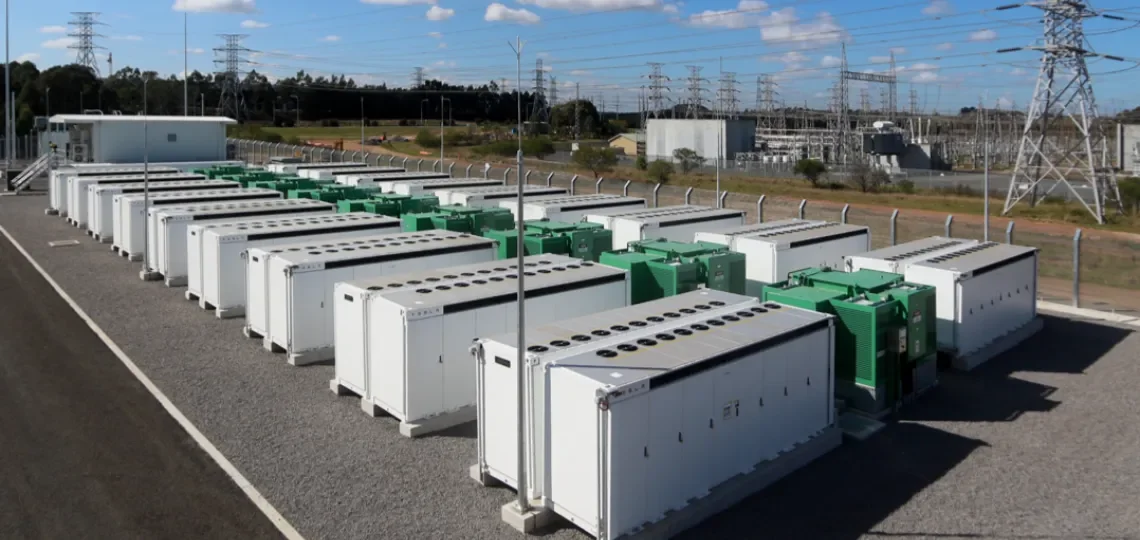
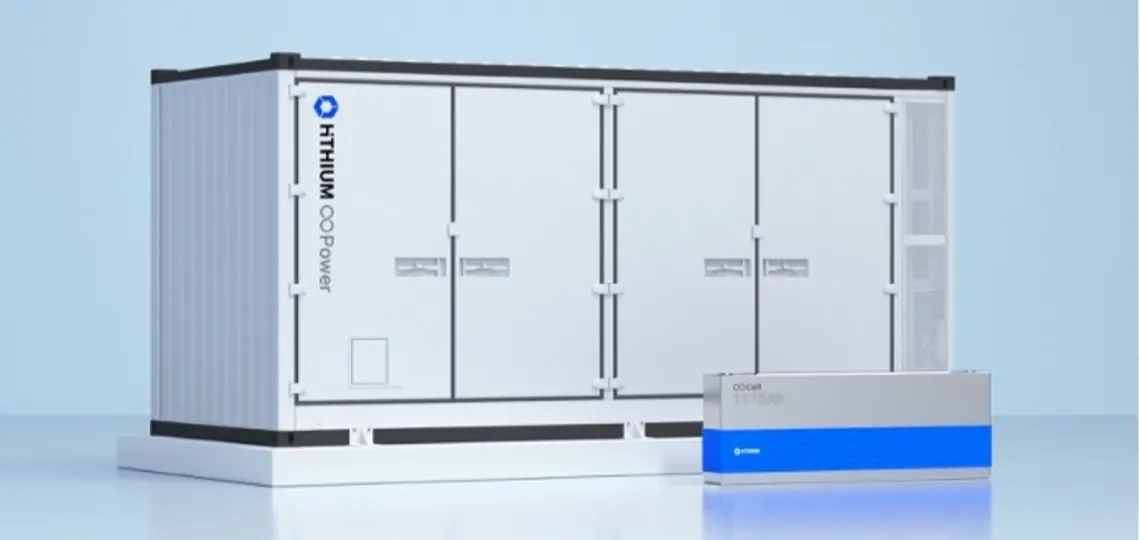
Terang BESS, a large-scale 100MW/200MWh battery located in Victoria, is financed under FRV Australia’s recent AUD 1.2 billion portfolio refinancing facility.
This refinancing provides solid financial backing for the construction of Terang BESS and other future projects, reinforcing FRV Australia’s ability to position itself as a leader in Australia’s renewable energy sector.

Financial Partnerships and Support

The refinancing process involved 11 financial institutions, including ING Bank, Westpac Banking Corporation, MUFG Bank, Société Générale, Norddeutsche Landesbank Girozentrale, Mizuho Bank, Intesa Sanpaolo, United Overseas Bank, Clean Energy Finance Corporation, China Construction Bank and Agricultural Bank of China.
These institutions are now supporting the financing of Terang BESS.
The project also receives AUD 7 million in funding for the installation of new grid-forming inverters, granted as part of the second round of the Victoria Government’s Energy Innovation Fund (EIF) to meet the target of 50% renewable energy by 2030.

Local Impact and Community Involvement

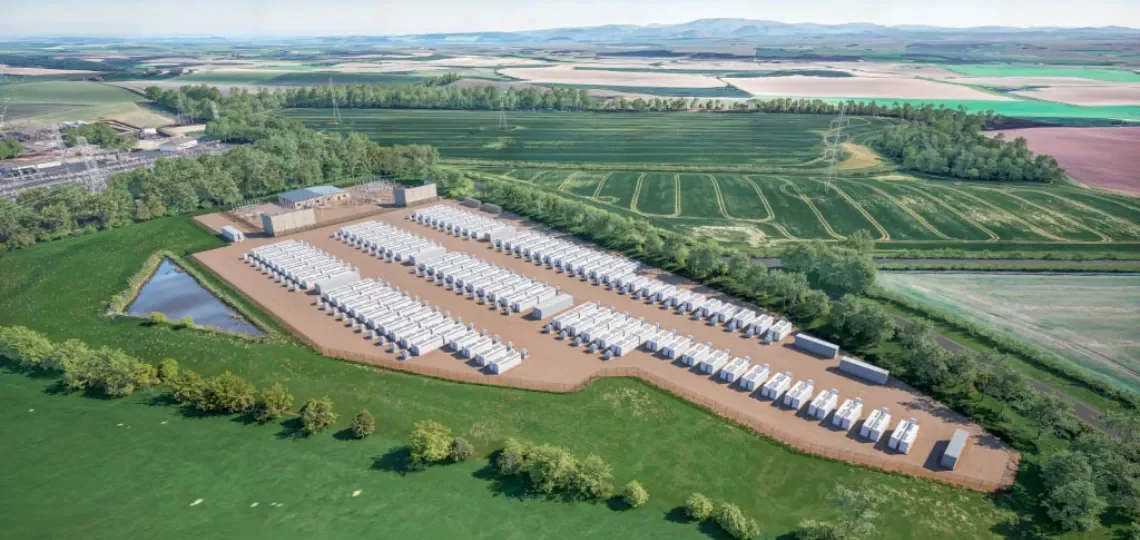
Located two kilometers northeast of the center of Terang and around 40 kilometers north of Warrnambool, the BESS will have a capacity of 100MW/200MWh.
It will connect to the national grid and will be built on the traditional lands of the Eastern Maar people.
The Terang BESS project makes a significant contribution to the economic development of Victoria’s South West region. FRV Australia expects to create up to 150 jobs during the construction phase, and to employ three to four permanent staff for operations.
FRV Australia will also award site maintenance contracts to local companies.

Technology and Future Development

FRV Australia appointed Canadian Solar’s e-STORAGE for construction, drawing on their expertise in providing high-quality battery storage solutions.
The project signed connection agreements with AusNet in 2024 and is located in a strategic part of the power grid.
Meanwhile, another potential FRV Australia battery project, the 250MW/500MWh Gnarwarre BESS, located in the south-western region of Victoria, has received conditional funding under ARENA’s Large Scale Battery Storage Round and is also due to start construction soon.

Future prospects

The financial close of our first large-scale battery is a major achievement for FRV Australia.
This project demonstrates our commitment to a range of renewable energy technologies and strengthens our position in the sector.
It paves the way for future innovation and portfolio growth.
Port Inc. reports positive results from its battery storage pilot in Gunma, leveraging a regulatory window ahead of adjustment market reforms scheduled for fiscal year 2026.
Canadian company Vision Lithium has completed a private placement of 14 mn flow-through shares totalling $209,000 to support its mineral exploration projects in Québec.
Matrix Renewables has signed a turnkey agreement with Tesla to develop a 1 GWh battery energy storage system in Scotland, marking its first standalone project of this kind in the UK.
China's electricity market overhaul improves the profitability of energy storage, supporting a rapid increase in battery exports as global demand rises with data centres and power grids.
South Korea’s Tilda accelerates its entry into Vietnam with an artificial intelligence-based energy optimisation solution for solar and energy storage systems in the manufacturing sector.
Aegis Critical Energy Defence Corp. and Seetel New Energy have created Cordelia BESS to respond to Ontario’s LT2 call for proposals, aimed at strengthening energy capacity through battery storage.
esVolta finalises investment tax credit transfer for its Black Walnut storage project to Computacenter, marking a first-of-its-kind operation within its California energy portfolio.
Peregrine Energy Solutions has begun construction on a 500 MWh storage project in Texas, relying on Wärtsilä's technology and WHC's engineering expertise to enhance ERCOT grid flexibility.
The world's largest battery energy storage system enters service in Saudi Arabia, with an annual capacity of 2.2 billion kWh spread across three strategic sites in the southwest of the country.
Masdar begins commercial operations at a Stockport battery storage unit and announces two more UK projects, part of a £1bn ($1.25bn) plan for 3GWh of BESS capacity.
Australia-based storage platform Akaysha Energy has launched its first operational project, a 155 MW battery in Queensland, while confirming its expansion to over 1 GWh.
LehmanSoft Japan connected a 2MW/8.1MWh energy storage facility to the grid in Chichibu City, marking its entry into the Japanese stationary storage market.
Akuo launches a large-scale electricity storage project in Boulouparis, with a 200 MWh capacity, to support New Caledonia’s grid stability and reinforce the integration of renewable energies.
Spie and Tesla have signed a framework agreement to install battery electricity storage systems in Europe, focusing on France, Poland and Germany.
The group has won a strategic project with operator Amprion to deploy five 50 MW batteries to ease pressure on the German power grid and optimise electricity transmission.
Vena Energy has begun construction of a 408 MWh battery energy storage system in Tailem Bend, marking a new phase in the deployment of its infrastructure in Australia.
The explosion of battery storage applications in Germany is causing grid congestion and pushing Berlin to revise its regulatory framework to prevent market saturation.
The collapse in storage costs positions batteries as a key lever for dispatchable solar, but dependence on Chinese suppliers creates growing tension between competitiveness and supply chain security.
JA Solar has launched a microgrid combining 5.2 MW of solar and 2.61 MWh of storage at an industrial site in Sicily, marking its first application of the "PV+Storage+X" model in Italy.
Sinexcel has installed a 2MW/8MWh energy storage system in Matsusaka, marking a breakthrough in a regulated market after five years of technical partnerships and gradual deployment in Japan.

All the latest energy news, all the time

Annual subscription

8.25$/month*

*billed annually at 99$/year for the first year then 149,00$/year ​

Unlimited access - Archives included - Pro invoice

Monthly subscription

Unlimited access • Archives included

5.2$/month*
then 14.90$ per month thereafter

*Prices shown are exclusive of VAT, which may vary according to your location or professional status.

Since 2021: 30,000 articles - +150 analyses/week.