France: Toul inaugurates 8.5 MW biomass heating plant with ENGIE Solutions

The city of Toul has officially inaugurated a biomass heating plant operated by ENGIE Solutions, intended to supply heating from wood-energy to over 2,400 local homes starting from the next winter season.

Share:

Comprehensive energy news coverage, updated nonstop

Annual subscription

8.25€/month*

*billed annually at 99€/year for the first year then 149,00€/year ​

Unlimited access • Archives included • Professional invoice

OTHER ACCESS OPTIONS

Monthly subscription

Unlimited access • Archives included

5.2€/month*
then 14.90€ per month thereafter

FREE ACCOUNT

3 articles offered per month

FREE

*Prices are excluding VAT, which may vary depending on your location or professional status

Since 2021: 35,000 articles • 150+ analyses per week

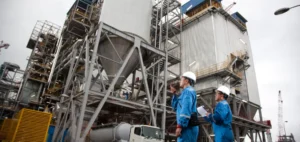
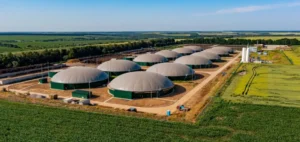
The city of Toul, in partnership with ENGIE Solutions, has officially inaugurated a new biomass heating plant that now supplies an urban heat network measuring 12.5 kilometres. With an installed capacity of 8.5 megawatts (MW), this plant will produce heating and domestic hot water equivalent to the needs of 2,400 homes.

A heat network serving public and private buildings

This thermal network feeds 53 substations distributed throughout the municipality, covering several public buildings such as the local hospital, detention centre, and educational institutions like the Majorelle and Cugnot secondary schools. Administrative buildings, including the tax office and La Poste, as well as private establishments such as the St Evre residence and MATHIEU company, are also among the beneficiaries.

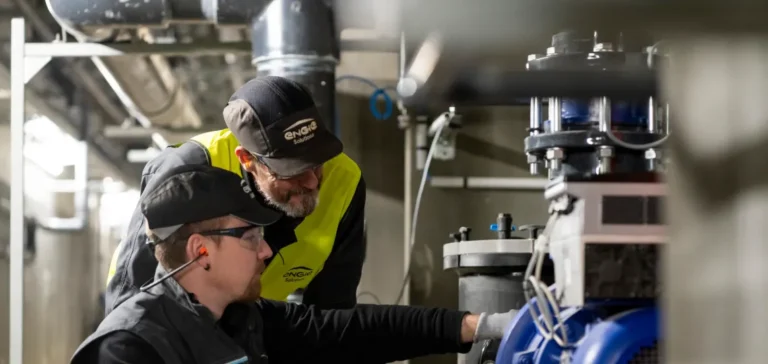
Complete management of this network—including its design, construction, and operation for a 25-year period—is handled by TOUL Energie, a company created specifically by ENGIE Solutions for this project. With most installation and connection works now completed, the network will start operating fully from the next heating season.

Local supply of wood-energy

Located on Chemin de la Croisette, the biomass plant will annually require approximately 10,250 tonnes of wood-energy, sourced from within a radius of less than 120 kilometres around Toul. According to data provided by the city, the use of this local source would help avoid emissions of approximately 133,400 tonnes of carbon dioxide (CO₂) over the 25-year contract period, equivalent to the average annual production of 16,000 French citizens.

This energy production mode particularly aims at stabilizing subscribers’ energy costs independently from fluctuations in fossil fuel market prices. Local biomass sourcing also represents enhanced autonomy for the municipality and its infrastructure in terms of energy security.

Commitments reaffirmed by city hall and ENGIE Solutions

During the official inauguration, Alde Harmand, mayor of Toul, highlighted the local impact of the project, mentioning “a real energy transition project benefiting the inhabitants of Toul”. For his part, Vincent Uricher, regional networks director Alsace-Lorraine-Bourgogne-Franche-Comté for the North-East territory of ENGIE Solutions, emphasized that the project exemplified “the expertise and constant commitment of ENGIE Solutions to offer local and competitive solutions.”

This achievement comes after an intense construction period and marks the effective operational start of major energy infrastructure for the region.


The GPCU PB network, powered 95% by low-carbon sources, spans 13 km and serves 55 buildings, with total public and private funding of €22mn ($23.8mn).
Waga Energy has secured $180mn in senior debt over four years to develop its biomethane project portfolio at landfill sites in the United States.
Veolia launches a major project in Pozna aiming to fully replace coal with low-carbon local energy sources in district heating, with a first phase already operational showing 92% efficiency.
Veolia connects its Lapouyade site to RTE's secondary reserve using instant modulation technology, paving the way for rollout across 25 sites.
Erex will end the environmental assessment of a 300MW biomass project developed with ENEOS in Niigata due to rising costs and a weaker yen.
California-based start-up Erg Bio has closed a $6.5mn seed round to industrialise its Aspire™ technology, backed by Azolla Ventures, Chevron Technology Ventures, and Freeflow.
Haffner Energy presents the H6 generation, a biomass‑hydrogen system positioned as competitive against electrolysis, as the company seeks new investors amid financial pressure and a regulatory landscape focused on RFNBO.
Haffner Energy signs its first contract in the United States with OroCarbo to supply two SYNOCA® modules for an integrated biomethanol project scheduled for 2028 in California's Central Valley.
Argentina increased regulated prices for ethanol and biodiesel used in mandatory blending, directly impacting the local industry and domestic fuel market.
80 Mile PLC has completed the full acquisition of Ferrandina in Italy and signed three memorandums of understanding with major energy groups, securing the supply and processing of 120,000 tonnes of biofuels per year.
Fonds Bioénergie acquires a stake in Keridis BioEnergy to accelerate renewable natural gas production from agricultural and food residues across Québec.
The United States recorded a limited 3% increase in its annual biofuels production capacity in 2024, hindered by declining margins and the closure of several facilities.
Enilive aligns conversions in Italy, hubs in Asia and U.S. diversification, with rising HVO margins, integrated pretreatment and HVO/SAF offtakes tied to European requirements, supporting volumes, site utilization and operational guidance.
The Ille-et-Vilaine Departmental Energy Syndicate awarded ENGIE Solutions a €9.5mn ($10.01mn) contract to operate a 4.9 km heating network, scheduled for commissioning in 2027.
Vermont’s energy regulator authorises final review of a 2.2 MW project led by Clean Energy Technologies to convert agricultural waste into renewable electricity.
The increase in Brazil’s biodiesel blend mandate to 15% has reignited calls for stronger regulatory supervision as prices climb and budget constraints limit enforcement.
Waga Energy strengthens its presence in Brazil, betting on a rapidly structuring market where biomethane benefits from an incentive-based regulatory framework and strong industrial investment prospects.
John Cockerill and Axens launch NesaBTF, an industrial torrefaction technology designed to optimise biomass supply, with targeted ambitions in the growing sustainable aviation fuel market.
A R550mn grant enables Johannesburg to launch a waste-to-energy project with a 28 MW capacity under a 25-year public-private partnership model.
ENGIE signs a 15-year agreement with CVE Biogaz for the purchase of biomethane produced in Ludres, under the Biogas Production Certificates mechanism, marking a structuring step for the sector's development in France.

All the latest energy news, all the time

Annual subscription

8.25€/month*

*billed annually at 99€/year for the first year then 149,00€/year ​

Unlimited access - Archives included - Pro invoice

Monthly subscription

Unlimited access • Archives included

5.2€/month*
then 14.90€ per month thereafter

*Prices shown are exclusive of VAT, which may vary according to your location or professional status.

Since 2021: 30,000 articles - +150 analyses/week.