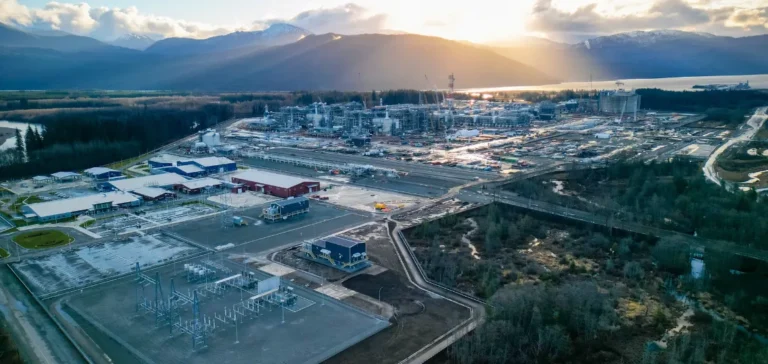

The joint venture formed by Fluor Corporation and JGC Corporation has completed the official handover of the second liquefaction unit of the LNG Canada project, located in Kitimat, British Columbia. This milestone marks the end of the first phase of the project, which is Canada’s first large-scale liquefied natural gas (LNG) export terminal.
A strategic infrastructure for Canadian LNG
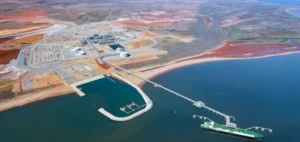
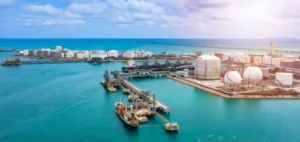
The site includes a natural gas receiving and liquefaction facility, a marine terminal, a tugboat dock, LNG loading pipelines, processing units, storage tanks, a rail yard, a water treatment facility and flare stacks. It is designed to export up to 14 million tonnes of LNG per year, with a geographic position that facilitates access to Asian markets.
The delivery of the second production unit strengthens Canada’s capacity to meet global LNG demand. The delivery is in line with the expected schedule, following several years of construction in an ice-free port environment suited for continuous gas exports.
A multinational industrial alliance
LNG Canada is operated by LNG Canada Development Inc. and is backed by a multinational shareholder structure. Shell plc holds 40% of the project, followed by PETRONAS with 25%, PetroChina Company Limited with 15%, Mitsubishi Corporation at 15% and Korea Gas Corporation with 5%. This industrial partnership brings together major energy players around a common export platform.
Fluor, in charge of engineering, procurement, fabrication and construction activities, stated that safety, quality and schedule objectives have been met. Present in Canada for over 75 years, the company has delivered several large-scale projects in hydrocarbons, infrastructure and the mining sector.
Targeted local economic impact
The joint venture awarded more than CAD3.3bn ($2.45bn) in contracts to Indigenous businesses and related joint ventures. Additionally, CAD550mn ($408mn) was spent with companies in the Kitimat area. These figures reflect a development strategy rooted in the regional economic fabric.
The completion of this first phase brings LNG Canada closer to commercial operations, with capacity designed to supply importing markets over the long term. The gradual development of units is expected to support the industrial partners’ ambitions while strengthening Canada’s presence in the global LNG market.