Bulgaria finalizes 138,200 m³ radioactive waste repository near Kozloduy plant
Bulgaria's national construction authority has confirmed completion of the Radiana radioactive waste repository, with a capacity of 138,200 m³. SE RAW now awaits an operating permit from the country's Nuclear Regulatory Agency.
| Sectors | Nuclear Energy, Waste |
|---|---|
| Themes | Project Development, Commissioning |
| Countries | Bulgaria |
Bulgaria is reaching a decisive milestone in the management of its nuclear waste. The Directorate for National Construction Control has confirmed that the low- and intermediate-level radioactive waste repository at the Radiana site, near the Kozloduy nuclear power plant, meets all regulatory requirements. State Enterprise Radioactive Waste (SE RAW) is now awaiting an operating permit from the country's Nuclear Regulatory Agency. In line with other key nuclear projects worldwide, the global nuclear industry awaits decisive milestones in 2026 at comparable facilities in several countries.
A 138,200 m³ facility designed for six decades of operation
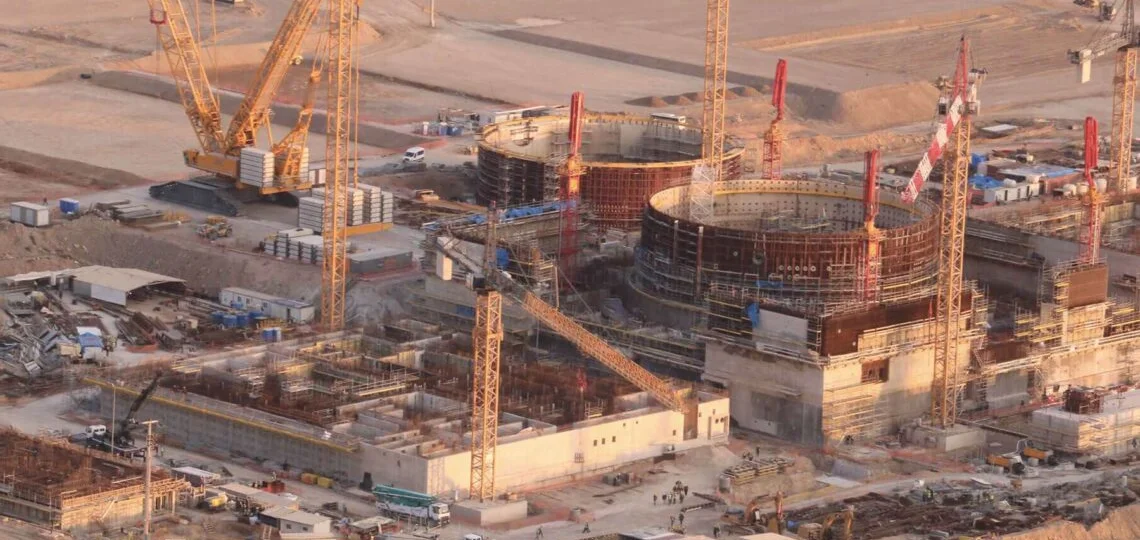
The Radiana repository is a near-surface trench-type facility featuring multi-barrier protection using reinforced concrete packages. With a capacity of 138,200 cubic metres, it is designed to store low- and intermediate-level waste from industry, medicine and households. It will also receive waste generated from the decommissioning of Kozloduy units 1 to 4 and from future nuclear power plants in the country. The facility will not be used to store high-level waste or spent nuclear fuel.
The expected operating period is around 60 years. After that, the site will be closed and monitored for a further 300 years. Dilyan Petrov, Executive Director of SE RAW, stated that Bulgaria now "ranks among the small number of countries with a completed radioactive waste management cycle". He stressed that the availability of such a repository "is of key importance for the construction of new nuclear capacities" in Bulgaria.
A project rooted in EU accession commitments
The project was assigned to SE RAW by a government decision in 2005. Following extensive geological, geophysical, geochemical, engineering-geological and hydrogeological studies, the Radiana site was selected as the preferred location. Construction began in August 2017. The completion of this repository was among the commitments made by Bulgaria as part of its accession to the European Union, which took effect on 1 January 2007.
Under those terms, Sofia had committed to closing Kozloduy units 1 and 2 by the end of 2002, and units 3 and 4 by the end of 2006. All four were V-230 model VVER-440 reactors, which the European Commission had classified as non-upgradable. The Kozloduy International Fund financed the project on a grant basis through the European Bank for Reconstruction and Development (EBRD).
Two reactors in service and expansion plans at Kozloduy
Bulgaria currently operates two reactors at the Kozloduy nuclear power plant, with a combined capacity of 2 GWe. Plans are in place to build two Westinghouse AP1000 units at the same site, alongside various proposals for small modular reactors (SMRs) in the country. Against a backdrop of nuclear expansion affecting other regions, as illustrated by developments in Northeast Asia, Sofia now has the waste management infrastructure needed to support the growth of its nuclear sector.