European Union prepares quotas to mandate locally produced low-carbon steel in public procurement

The European Commission is developing a scheme mandating a minimum share of EU-made low-carbon steel in public procurement, alongside a post-safeguard trade regime and targeted energy support to sustain the continental steel industry.

Share:

Comprehensive energy news coverage, updated nonstop

Annual subscription

8.25$/month*

*billed annually at 99$/year for the first year then 149,00$/year ​

Unlimited access • Archives included • Professional invoice

OTHER ACCESS OPTIONS

Monthly subscription

Unlimited access • Archives included

5.2$/month*
then 14.90$ per month thereafter

FREE ACCOUNT

3 articles offered per month

FREE

*Prices are excluding VAT, which may vary depending on your location or professional status

Since 2021: 35,000 articles • 150+ analyses per week

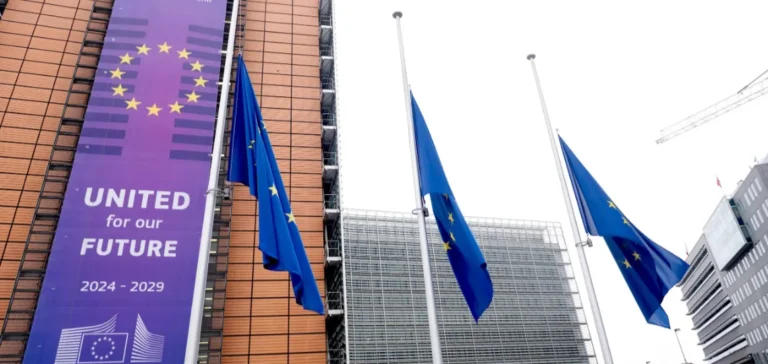
The European Commission is finalising a legislative proposal titled Industrial Decarbonisation Accelerator Act aimed at supporting European low-carbon steelmaking by establishing captive demand. The text notably plans to impose a quota of low-carbon steel produced within the European Union in public tenders related to infrastructure and construction, as well as in subsidised vehicles.

Trade reform and end of safeguards

In parallel, Brussels plans to replace the current safeguard regime with an annual tariff-rate quota (TRQ) system totalling 18.3 Mt, with a 50% tariff on volumes exceeding the quota, up from the current 25%. This new mechanism would be based on import flows recorded between 2022 and 2024 and applied quarterly. The reform is being prepared ahead of the scheduled expiry of transitional measures in June 2026.

An energy pillar complements the package, with the electricity market reform entering into force in early 2025 and support from the European Investment Bank (EIB) to facilitate Power Purchase Agreements (PPAs), helping electro-intensive steelmakers secure stable power costs when using electric arc furnaces or hydrogen-based Direct Reduced Iron (DRI) technologies.

Legal compatibility and international framework

The initiative raises legal concerns under the World Trade Organization (WTO) Government Procurement Agreement (GPA) due to the preference given to EU-origin products. To reduce the risk of dispute, Brussels could adopt performance-based criteria such as emissions thresholds or the Low Emission Steel Standard (LESS), rather than requiring explicit geographic origin.

State aid constraints also apply. Temporary electricity discounts for electro-intensive producers are considered but subject to strict conditions on green investment and capping. Additionally, the measure must align with the Carbon Border Adjustment Mechanism (CBAM), whose definitive phase starts on January 1, 2026, requiring steel importers to purchase certificates proportional to their carbon footprint.

Impact on pricing, contracts and investment

Low-carbon steel prices are expected to incorporate a sustained green premium due to the induced public demand. Current reference prices for Hot Rolled Coil (HRC) in Europe are around €610/t in the Ruhr region, while DRI and electric arc furnace-based products already carry a premium due to their lower emissions. Industrial players investing in decarbonisation may secure long-term supply contracts of up to 15 years, notably through carbon contracts for difference.

The conversion of production sites — electrification, installation of EAF furnaces, DRI with hydrogen and CO₂ capture — requires high utilisation rates. Public “green” procurement becomes a key lever to stabilise demand and avoid stranded assets.

Geopolitical and trade consequences

The introduction of quotas and additional tariffs may provoke tensions with major trading partners such as China, Turkey, India and the United Kingdom, whose access to the European market would be limited. Russia remains excluded from EU markets due to the ongoing steel import ban under economic sanctions.

Internally, the absence of a harmonised standard across the European Union exposes the system to regulatory fragmentation, with each Member State potentially applying different eligibility criteria. A single EU-wide norm is required to prevent imbalanced competition within the bloc.
Bourbon enters a new strategic phase following the arrival of Davidson Kempner and Fortress, who have become majority shareholders after a financial restructuring approved by the French courts.
US-based Armada has signed a memorandum of understanding with the Department of Energy to participate in the Genesis Mission, aimed at accelerating scientific research and reinforcing national energy and technology sovereignty.
Solar Energy Corporation of India signed a strategic agreement with Global Energy Alliance to strengthen grid resilience and support the expansion of storage and smart management technologies.
Le fonds souverain omanais a validé 141 projets en 2025 pour un engagement total de $1.2bn, visant à renforcer l’indépendance énergétique et l’industrialisation nationale à travers un programme d’investissement de $5.2bn.
The Norwegian energy group rejects the sanction imposed for illegal gas discharges at Mongstad, citing disagreement over maintenance obligations and the alleged financial benefit.
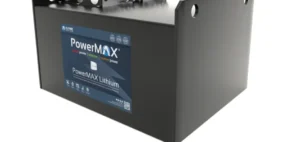
Alpine Power Systems announces the acquisition of Chicago Industrial Battery to expand its regional presence and support the growth of its PowerMAX line of used and rental batteries and chargers.
HASI and KKR strengthen their strategic partnership with an additional $1bn allocation to CarbonCount Holdings 1, bringing the vehicle’s total investment capacity to nearly $5bn.
EDF is considering selling some of its subsidiaries, including Edison and its renewables activities in the United States, to strengthen its financial capacity as a €5bn ($5.43bn) savings plan is underway.
French group Qair secures a structured €240 million loan to consolidate debt and strengthen liquidity, with participation from ten leading financial institutions.
Xcel Energy initiates three public tender offers totalling $345mn on mortgage bonds issued by Northern States Power Company to optimise its long-term debt structure.
EDF power solutions' Umoyilanga energy project has entered provisional operation with the Dassiesridge wind plant, marking a key milestone in delivering dispatchable electricity to South Africa’s national grid.
Indian group JSW Energy launches a combined promoter injection and institutional raise totalling $1.19bn, while appointing a new Chief Financial Officer to support its expansion plan through 2030.
Singapore’s Sembcorp Industries has entered the Australian energy market with the acquisition of Alinta Energy in a deal valued at AU$6.5bn ($4.3bn), including debt.
Potentia Energy has secured $553mn in financing to optimise its operational renewable assets and support the delivery of six new projects totalling over 600 MW of capacity across Australia.
Drax plans to convert its 1,000-acre site in Yorkshire into a data centre by 2027, repurposing former coal infrastructure and existing grid connections.
EDF has inaugurated a synchronous compensator in Guadeloupe to enhance the stability of an isolated power grid, an unprecedented initiative aiming to reduce dependence on thermal plants and the risk of prolonged outages.
NGE and the Agence Régionale Énergie Climat Occitanie form a partnership to develop a heating and cooling network designed to support economic activity in the Magna Porta zone, with locally integrated production solutions.
GEODIS and EDF have signed a strategic partnership to cut emissions from logistics and energy flows, with projects planned in France and abroad.
The American oil group now plans to invest $20 billion in low-emission technologies by 2030, down from the $30 billion initially announced one year earlier.
BHP sells a minority stake in its Western Australia Iron Ore power network to Global Infrastructure Partners for $2 billion, retaining strategic control while securing long-term funding for its mining expansion.

All the latest energy news, all the time

Annual subscription

8.25$/month*

*billed annually at 99$/year for the first year then 149,00$/year ​

Unlimited access - Archives included - Pro invoice

Monthly subscription

Unlimited access • Archives included

5.2$/month*
then 14.90$ per month thereafter

*Prices shown are exclusive of VAT, which may vary according to your location or professional status.

Since 2021: 30,000 articles - +150 analyses/week.