
The European Union has adopted a regulation making legally binding the progressive elimination of all Russian gas imports—both via pipeline and liquefied natural gas (LNG)—with deadlines staggered between 2026 and autumn 2027. This decision turns a political objective into a structured legal framework, introducing a permit system, financial sanctions and expanded contractual oversight.
A sectoral legal basis to bypass political vetoes
By choosing a regulation under energy and trade law, the Union avoided the unanimity requirement of traditional foreign policy sanctions. Adopted by qualified majority, the text bypassed the vetoes of Hungary and Slovakia. It complements the EU’s 19th sanctions package by including pipeline gas, which comes on top of the already scheduled ban on Russian LNG from 1 January 2027.
This instrument forms part of the REPowerEU roadmap and the broader strategy to eliminate dependence on Russian energy imports. Despite a more than 70% drop since 2021, about 52 bcm of Russian gas was still imported in 2024, representing nearly 19% of the EU total.
Permit regime, reinforced traceability and sanctions framework
The regulation introduces a prior authorisation regime for all gas imports. Importers must prove the origin of volumes, with differentiated procedures based on whether they are Russian or non-Russian and on their entry points. Customs authorities become the key enforcement mechanism of the EU’s energy policy.
Administrative sanctions include fines reaching several million euros or a percentage of global turnover. This framework brings gas in line with the existing sanction regimes for oil, coal and financial services. A suspension clause allows temporary derogations in supply crises, but only for short-term contracts.
Residual exposure to Russian gas and internal market fragmentation
By 2025, Russian gas is expected to still account for around 13% of EU imports, primarily as LNG delivered to terminals in France, Spain and Belgium. Ten member states were still importing Russian gas in 2024, while fourteen had either voluntarily cut flows or imposed national bans.
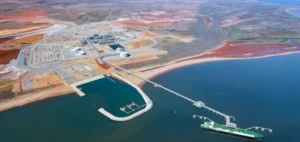
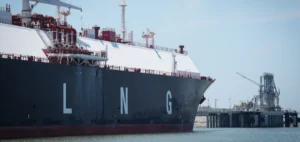
Long-term contracts remain in place with several Central and Eastern European countries (Austria, Hungary, Slovakia, Bulgaria) and Gazprom. On the LNG side, volumes remain tied to Novatek through Yamal LNG and Arctic LNG 2, with FOB or DES contracts often operated by European traders.
Framed contractual exit and arbitration risks
The new regulation allows EU utilities to invoke regulatory force majeure to lawfully terminate legacy contracts with Gazprom and Novatek. While this provision reduces legal exposure, it does not eliminate potential disputes, particularly over pricing, indexation or volume clauses.
Companies will need to account for losses on related assets (joint ventures, transit rights, terminals) that are now rendered unusable. Portfolio restructuring includes negotiations with alternative suppliers and increasing reliance on flexible LNG contracts indexed to TTF, Henry Hub or Brent.
Logistical reshuffling and LNG terminal saturation
The end of Russian imports brings a full overhaul of supply routes. Pipeline flows from Russia via Nord Stream and Ukraine have stopped. Norway, Algeria, Azerbaijan and the United States are partially compensating, but LNG now represents a much larger share.
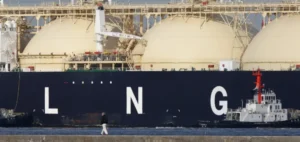
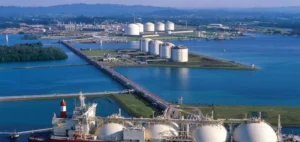
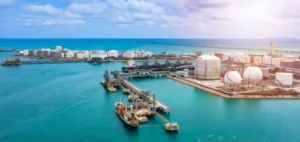
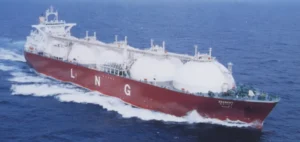
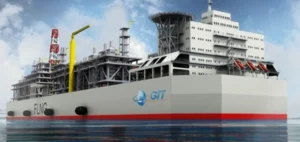
European LNG terminals, particularly on the Atlantic and Mediterranean coasts, are absorbing a growing share of volumes. Floating storage and regasification units (FSRUs) have become critical, though limited in capacity. The system remains vulnerable to increased Asian demand or a cold winter.
Transport networks redirected and intra-EU rebalancing
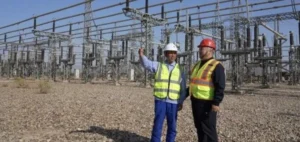
Transmission system operators (TSOs) must adapt interconnections to move LNG from entry ports to regions previously supplied by Russia. This physical shift requires infrastructure investment, tariff recalibration and increased reverse flows within the EU.
The Commission now has unprecedented visibility over ongoing contracts and national diversification plans, enabling macroprudential monitoring of supply risk. The gas landscape is shifting from linear flows to a multi-source configuration under technical and political constraints.
Consequences for exposed companies
Large utilities such as Engie, E.ON, Enel and Eni must swiftly adapt their business models. Legacy contracts are being renegotiated or terminated. Traders are overhauling pricing models, reinforcing cargo traceability and avoiding swaps involving rebranded Russian gas.
TSOs (GRTgaz, Fluxys, Snam) must adjust regasification capacities, strengthen interconnections and anticipate stranded assets in the medium term. Corporate governance now integrates geopolitical and sanctions risks into board-level oversight structures.
Russian response and geo-energy implications
Russia, facing the near-total loss of its European gas market, is pivoting its strategy toward China, Turkey and India. The Kremlin, Gazprom and Novatek are accelerating export projects to Asia, albeit under deteriorated financial terms.
The EU is using gas as a strategic security tool, just as it has done with oil and coal. Coordination with the United States and the United Kingdom creates a transatlantic regulatory front that limits circumvention.
Political assumptions and underlying objectives
The decision legally and politically locks in the break with Russia, making future normalisation difficult without repealing the regulation. It also addresses criticism from the United States and Ukraine regarding ongoing Russian LNG purchases.
Additionally, it acts as an indirect industrial policy instrument by supporting investments in interconnections, renewables and flexible infrastructure—not by banning gas itself, but by targeting its geopolitical origin.
Key risks for the sector to monitor
Companies must track national implementation of the regulation, arbitration rulings, potential Russian countermeasures, and global LNG market dynamics. Transatlantic regulatory coordination, intra-EU tensions over exemptions and project delays will shape the strategic landscape ahead.