Envision Energy launches Gen 8 platform with modules up to 12 MWh

Envision Energy launches the Gen 8 platform, a modular storage range from 6 to 12 MWh, aiming to optimise energy density, logistical flexibility, and profitability for large-scale projects.

Share:

Comprehensive energy news coverage, updated nonstop

Annual subscription

8.25$/month*

*billed annually at 99$/year for the first year then 149,00$/year ​

Unlimited access • Archives included • Professional invoice

OTHER ACCESS OPTIONS

Monthly subscription

Unlimited access • Archives included

5.2$/month*
then 14.90$ per month thereafter

FREE ACCOUNT

3 articles offered per month

FREE

*Prices are excluding VAT, which may vary depending on your location or professional status

Since 2021: 35,000 articles • 150+ analyses per week

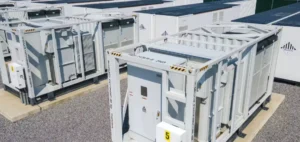
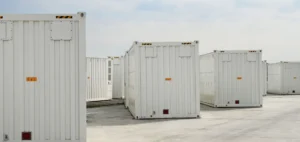
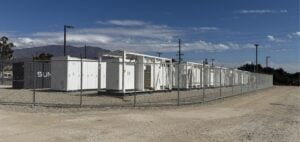
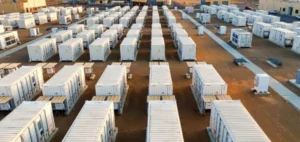
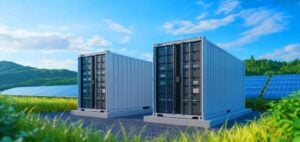
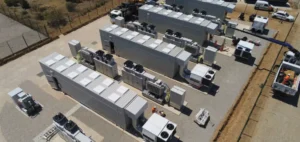
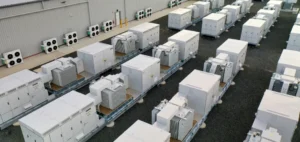
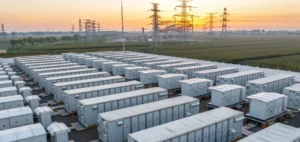
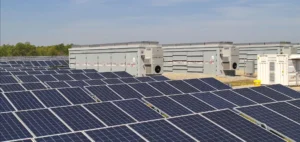
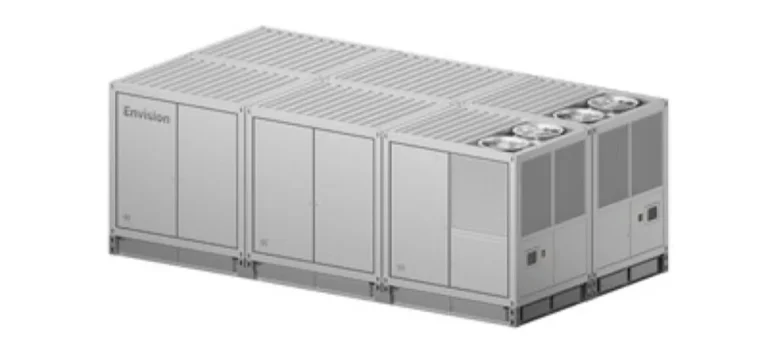
Envision Energy has announced the global launch of its Gen 8 Scalable Platform during its Tech Day event in Beijing. This new generation of storage solutions is based on a 10-foot modular design capable of reaching up to 12 MWh per unit. Designed to meet the growing demands of utility-scale storage projects, Gen 8 adapts to a wide range of site constraints while maximising energy density and operational profitability.

10-foot modular unit and lighter transport

Building on the developments of previous generations, Gen 8 incorporates 750+ ampere-hour cells introduced with the Gen 7’s 5 MWh containers. The new format allows configurations ranging from 6 to 12 MWh per module while reducing land footprint by 26% for four-hour systems. Weighing under 29 tonnes per module, the units are designed for standard road transport, including regions with strict tonnage regulations.

The system also enables a 30% reduction in overall installation time through the use of stationary cranes for consecutive module deployment. The modular architecture allows clients to better tailor their projects according to land availability, mechanical constraints on site, and operational costs.

Energy optimisation and reduced operating costs

Each unit features 12% lower auxiliary power consumption compared to previous solutions. Optimised algorithms for State of Charge (SoC) management and continuous dynamic balancing aim to maximise the real usable capacity of each battery. For a standard 100 MW, four-hour project, improved performance would result in an estimated 1% increase in internal rate of return (IRR) compared with a 5 MWh system.

Integration with the EnOS digital ecosystem—Envision Energy’s operational technology–information technology platform—provides centralised control including Supervisory Control and Data Acquisition (SCADA), Energy Management System (EMS), and predictive control. Embedded analytics enable early detection of thermal or electrical anomalies, predictive maintenance, and optimised energy dispatching.

Environmental durability and tolerance to extreme conditions

The platform includes a new 10 megavolt-ampere (MVA) configuration, made up of four 2.5 MW power conversion systems (PCS) connected in parallel, enhancing system resilience and reducing noise levels. This modular design improves service continuity while meeting acoustic standards for sensitive areas, with a noise level equal to or below 55 decibels.

The system is built to operate in extreme environments, from -30°C to +55°C, and complies with IP55 and C5 standards for protection against salt corrosion and humidity. Thanks to optimised aerodynamics and smart control systems, the units can be deployed on outdoor sites subject to severe weather conditions without performance loss.

Canadian company Vision Lithium has completed a private placement of 14 mn flow-through shares totalling $209,000 to support its mineral exploration projects in Québec.
Matrix Renewables has signed a turnkey agreement with Tesla to develop a 1 GWh battery energy storage system in Scotland, marking its first standalone project of this kind in the UK.
China's electricity market overhaul improves the profitability of energy storage, supporting a rapid increase in battery exports as global demand rises with data centres and power grids.
South Korea’s Tilda accelerates its entry into Vietnam with an artificial intelligence-based energy optimisation solution for solar and energy storage systems in the manufacturing sector.
Aegis Critical Energy Defence Corp. and Seetel New Energy have created Cordelia BESS to respond to Ontario’s LT2 call for proposals, aimed at strengthening energy capacity through battery storage.
esVolta finalises investment tax credit transfer for its Black Walnut storage project to Computacenter, marking a first-of-its-kind operation within its California energy portfolio.
Peregrine Energy Solutions has begun construction on a 500 MWh storage project in Texas, relying on Wärtsilä's technology and WHC's engineering expertise to enhance ERCOT grid flexibility.
The world's largest battery energy storage system enters service in Saudi Arabia, with an annual capacity of 2.2 billion kWh spread across three strategic sites in the southwest of the country.
Masdar begins commercial operations at a Stockport battery storage unit and announces two more UK projects, part of a £1bn ($1.25bn) plan for 3GWh of BESS capacity.
Australia-based storage platform Akaysha Energy has launched its first operational project, a 155 MW battery in Queensland, while confirming its expansion to over 1 GWh.
LehmanSoft Japan connected a 2MW/8.1MWh energy storage facility to the grid in Chichibu City, marking its entry into the Japanese stationary storage market.
Akuo launches a large-scale electricity storage project in Boulouparis, with a 200 MWh capacity, to support New Caledonia’s grid stability and reinforce the integration of renewable energies.
Spie and Tesla have signed a framework agreement to install battery electricity storage systems in Europe, focusing on France, Poland and Germany.
The group has won a strategic project with operator Amprion to deploy five 50 MW batteries to ease pressure on the German power grid and optimise electricity transmission.
Vena Energy has begun construction of a 408 MWh battery energy storage system in Tailem Bend, marking a new phase in the deployment of its infrastructure in Australia.
The explosion of battery storage applications in Germany is causing grid congestion and pushing Berlin to revise its regulatory framework to prevent market saturation.
The collapse in storage costs positions batteries as a key lever for dispatchable solar, but dependence on Chinese suppliers creates growing tension between competitiveness and supply chain security.
JA Solar has launched a microgrid combining 5.2 MW of solar and 2.61 MWh of storage at an industrial site in Sicily, marking its first application of the "PV+Storage+X" model in Italy.
Sinexcel has installed a 2MW/8MWh energy storage system in Matsusaka, marking a breakthrough in a regulated market after five years of technical partnerships and gradual deployment in Japan.
Inlyte Energy has successfully completed factory validation testing of its first full-scale iron-sodium battery, witnessed by Southern Company, paving the way for a pilot installation in the United States in early 2026.

All the latest energy news, all the time

Annual subscription

8.25$/month*

*billed annually at 99$/year for the first year then 149,00$/year ​

Unlimited access - Archives included - Pro invoice

Monthly subscription

Unlimited access • Archives included

5.2$/month*
then 14.90$ per month thereafter

*Prices shown are exclusive of VAT, which may vary according to your location or professional status.

Since 2021: 30,000 articles - +150 analyses/week.