Energy transition disrupts the financial balance of utilities in Asia-Pacific in 2026

With electricity demand accelerating, Asia-Pacific utilities must manage massive investment needs, volatile revenues and geopolitical tensions as the energy transition advances in a rapid but disorderly manner.
Share:

Comprehensive energy news coverage, updated nonstop

Annual subscription

8.25$/month*

*billed annually at 99$/year for the first year then 149,00$/year ​

Unlimited access • Archives included • Professional invoice

OTHER ACCESS OPTIONS

Monthly subscription

Unlimited access • Archives included

5.2$/month*
then 14.90$ per month thereafter

FREE ACCOUNT

3 articles offered per month

FREE

*Prices are excluding VAT, which may vary depending on your location or professional status

Since 2021: 35,000 articles • 150+ analyses per week

The utilities and electricity sector in Asia-Pacific (APAC) enters 2026 in a phase of deep transformation. Structural growth in consumption, driven by industrial electrification, data centres and rising residential needs, contrasts with pressured profitability and growing exposure to liberalised energy markets. This dynamic forces operators to redefine their business models in a climate of regulatory and geopolitical uncertainty.
Demand growth and tariff pressure

Electricity demand is increasing at an average annual pace of 4.6% over 2024-2026 in the APAC region, with China accounting for nearly 70% of that growth. In India, rapid urbanisation and the expansion of air conditioning boost internal consumption, while Malaysia emerges as a regional hub for digital hosting. In Johor, data centre consumption could exceed 68 TWh by 2030, already putting pressure on power capacity in 2026.

However, this trend collides with the rapid evolution of market mechanisms. A growing number of operators are exposed to price volatility on spot markets, challenging the stable revenues once guaranteed by long-term Power Purchase Agreements (PPA). This shift, underway in China and Australia, affects the cash flow of Independent Power Producers (IPP) and State-Owned Enterprises (SOE), making their revenue streams more sensitive to price cycles and supply-demand imbalances.

Margin pressure despite renewable expansion

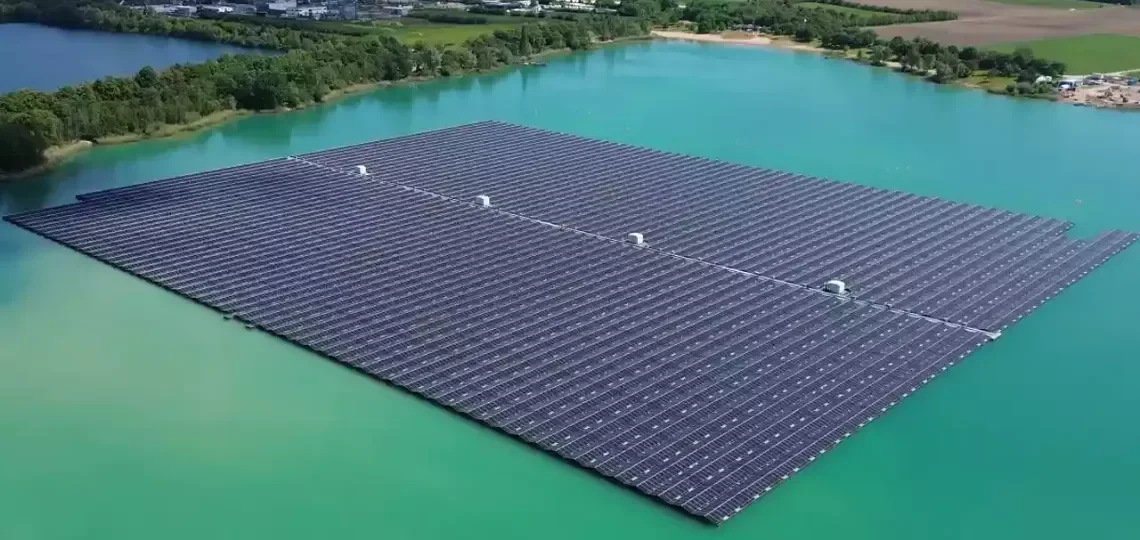
The accelerated shift towards renewable energy is transforming the composition of utilities’ aggregated EBITDA. In 2026, renewable assets represent the majority of operating income in the region. While this change improves the perceived quality of earnings among institutional investors, it also increases variability due to solar and wind intermittency.

The continued decline in the Levelised Cost of Energy (LCOE), particularly in China and India, fuels intense tariff competition. This price pressure, combined with rising grid integration costs (notably storage), weighs heavily on return on invested capital. In some Chinese provinces with high solar penetration, spot prices can turn negative at midday, forcing operators to rely on batteries to arbitrage energy on the market.

Financial sustainability and sovereign credit dependence

Sector stability continues to rely on implicit or explicit government support. Most entities rated by credit agencies in Asia-Pacific are Government-Related Entities (GRE), with credit profiles aligned to their respective sovereigns. In South Korea, Korea Electric Power Corporation faces a wall of debt, worsened by retail tariff freezes despite rising production costs.

In India, NTPC raises capital through the listing of its green subsidiary, NTPC Green Energy, enabling the financing of a 60 GW renewable target by 2032. The use of Restricted Group structures has become a key tool to secure access to international bond markets while isolating operational risks.

Geopolitical shocks and supply chain vulnerability

In 2026, the technological decoupling between China and Western economies reshapes supply chains for critical equipment. China produces 92% of global solar modules and 82% of wind turbines, concentrating a dominant share of added value. This forces developers to choose between cost competitiveness and regulatory compliance.

The United States and the European Union adopt new trade barriers, extending tariff exemptions while opening investigations into potential dumping or subsidisation. In response, Chinese manufacturers relocate production capacity to Southeast Asia, increasing compliance risks and equipment traceability challenges for utilities.

Critical minerals and energy security risks

Dependence on strategic minerals becomes a key vulnerability. China restricts exports of gallium, graphite and rare earth materials, affecting supply chains for electronic and energy components. Meanwhile, Indonesia maintains its ban on raw nickel exports to build local industrial capacity.

This resource protectionism fragments supply chains and introduces major variability in equipment costs, particularly for lithium-ion batteries, transformers and high-voltage direct current (HVDC) systems.

Infrastructure investment pressures: networks and storage

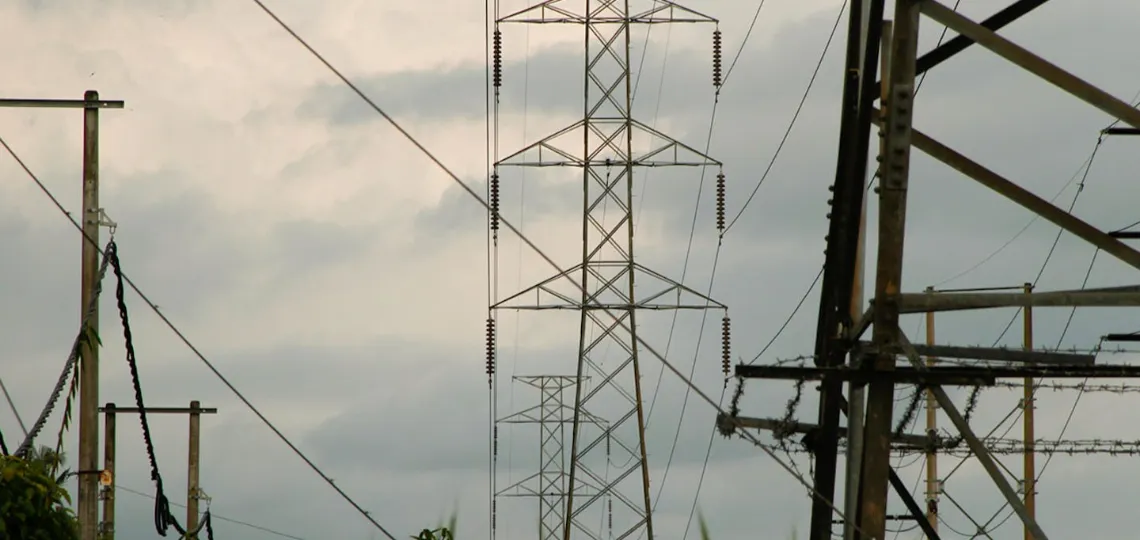
Transmission infrastructure represents the main technical bottleneck of the transition. In China, State Grid Corporation invests more than 650bn RMB annually in ultra-high-voltage (UHV) lines to link western renewable generation to eastern consumption hubs. However, global shortages of cables and transformers delay projects by 12 to 24 months.

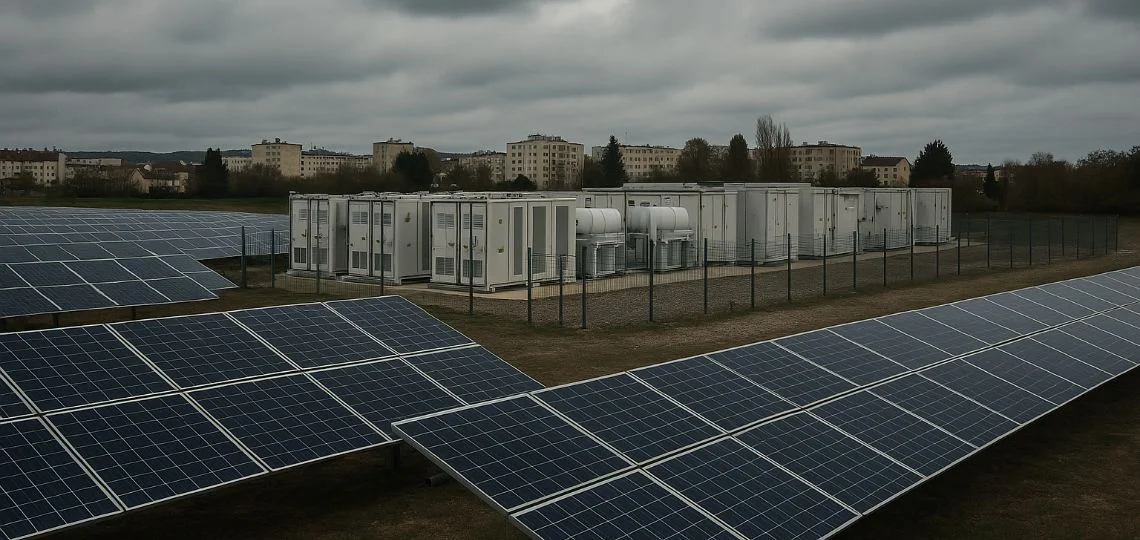
Battery Energy Storage Systems (BESS) expand rapidly due to a 50% drop in lithium-ion cell prices between 2023 and 2026. In Australia, these installations replace peaking capacity and participate in market arbitrage.

Regulatory risk and legal uncertainty

The legal framework remains fragile in several countries. In Vietnam, payment delays at Electricity of Vietnam, lack of sovereign guarantees for PPA and retroactive tariff adjustments have undermined investor confidence. This situation raises the prospect of international arbitration.

In India, despite large-scale ambitions, slow land acquisition and financially weak distribution companies (Discoms) hinder project execution. Developers increasingly turn to commercial direct sales through Open Access contracts to reduce counterparty risk.

Data centres and artificial intelligence reshape power demand

Energy needs from data centres grow at an exponential pace. In 2026, hyperscalers require continuous and low-carbon energy, but variable renewables cannot fully supply constant loads. This leads South Korea and Japan to reconsider the role of nuclear energy in their generation mix.

To meet demand, companies sign virtual PPA to hedge exposure and offset emissions while securing long-term supply.

Octopus sells a minority stake in Kraken for $1 billion in a deal valuing the tech platform at $8.65 billion, initiating its spin-off and strengthening its position among international energy suppliers.
India’s public sector SECI seeks to outsource the design and management of an energy trading software platform, including technical support and human resources for five years at its New Delhi headquarters.
BayWa r.e. continues its strategic transformation with the sale of 2.2 GW of projects, a withdrawal from Asian markets, internal reorganisation, and a rebranding planned for 2026.
French group Nexans initiates the sale of its Autoelectric subsidiary to India’s Motherson for €207mn ($227mn), marking its full exit from non-electrification activities.
Bourbon enters a new strategic phase following the arrival of Davidson Kempner and Fortress, who have become majority shareholders after a financial restructuring approved by the French courts.
US-based Armada has signed a memorandum of understanding with the Department of Energy to participate in the Genesis Mission, aimed at accelerating scientific research and reinforcing national energy and technology sovereignty.
Solar Energy Corporation of India signed a strategic agreement with Global Energy Alliance to strengthen grid resilience and support the expansion of storage and smart management technologies.
Le fonds souverain omanais a validé 141 projets en 2025 pour un engagement total de $1.2bn, visant à renforcer l’indépendance énergétique et l’industrialisation nationale à travers un programme d’investissement de $5.2bn.
The Norwegian energy group rejects the sanction imposed for illegal gas discharges at Mongstad, citing disagreement over maintenance obligations and the alleged financial benefit.
Alpine Power Systems announces the acquisition of Chicago Industrial Battery to expand its regional presence and support the growth of its PowerMAX line of used and rental batteries and chargers.
HASI and KKR strengthen their strategic partnership with an additional $1bn allocation to CarbonCount Holdings 1, bringing the vehicle’s total investment capacity to nearly $5bn.
EDF is considering selling some of its subsidiaries, including Edison and its renewables activities in the United States, to strengthen its financial capacity as a €5bn ($5.43bn) savings plan is underway.
French group Qair secures a structured €240 million loan to consolidate debt and strengthen liquidity, with participation from ten leading financial institutions.
Xcel Energy initiates three public tender offers totalling $345mn on mortgage bonds issued by Northern States Power Company to optimise its long-term debt structure.
EDF power solutions' Umoyilanga energy project has entered provisional operation with the Dassiesridge wind plant, marking a key milestone in delivering dispatchable electricity to South Africa’s national grid.
Indian group JSW Energy launches a combined promoter injection and institutional raise totalling $1.19bn, while appointing a new Chief Financial Officer to support its expansion plan through 2030.
Singapore’s Sembcorp Industries has entered the Australian energy market with the acquisition of Alinta Energy in a deal valued at AU$6.5bn ($4.3bn), including debt.
Potentia Energy has secured $553mn in financing to optimise its operational renewable assets and support the delivery of six new projects totalling over 600 MW of capacity across Australia.
Drax plans to convert its 1,000-acre site in Yorkshire into a data centre by 2027, repurposing former coal infrastructure and existing grid connections.
EDF has inaugurated a synchronous compensator in Guadeloupe to enhance the stability of an isolated power grid, an unprecedented initiative aiming to reduce dependence on thermal plants and the risk of prolonged outages.

All the latest energy news, all the time

Annual subscription

8.25$/month*

*billed annually at 99$/year for the first year then 149,00$/year ​

Unlimited access - Archives included - Pro invoice

Monthly subscription

Unlimited access • Archives included

5.2$/month*
then 14.90$ per month thereafter

*Prices shown are exclusive of VAT, which may vary according to your location or professional status.

Since 2021: 30,000 articles - +150 analyses/week.