EDF Restructures Governance to Accelerate Nuclear and Hydroelectric Projects
EDF announces a new internal organization with key executive appointments to enhance decision-making efficiency and expedite the revival of nuclear and hydroelectric projects central to its industrial strategy.
| Sectors | Nuclear Energy, Marine & Hydraulic Energy, Hydroelectricity, Fission |
|---|---|
| Themes | Industry & Execution, Innovation & Transformation, Corporate Strategy |
| Companies | Framatome, SNCF |
| Countries | France |
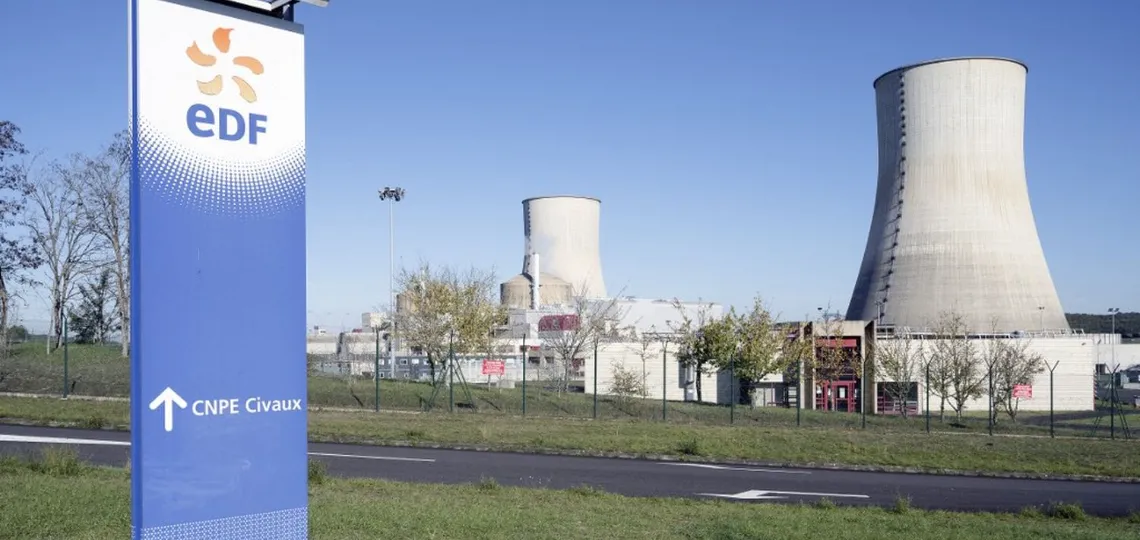
Électricité de France (EDF) is undergoing a strategic restructuring of its governance to speed up decision-making processes related to major nuclear and hydroelectric projects. This structural change comes as the company prepares to intensify its industrial activities in alignment with the French government’s new energy strategy. Bernard Fontana, CEO of the group, indicated that this change aims to clarify internal responsibilities and shorten implementation timelines for operational decisions critical to nuclear and hydroelectric activities.
Creation of a Central Directorate Dedicated to Safety
Among the significant changes announced, EDF has established a new directorate encompassing nuclear safety, hydroelectric safety, as well as workplace security and health. The stated goal is to improve coordination and management of industrial risks, particularly within the context of upcoming second-generation European Pressurized Reactor (EPR2) nuclear projects. This consolidation of safety functions aims to enhance the group’s operational consistency in the face of increasingly stringent regulatory and technical requirements. EDF thus expects to minimize potential delays associated with complex administrative and technical processes.
This new governance structure also includes the integration of several operational executives into EDF’s executive committee. Xavier Gruz, previously a senior executive at SNCF, becomes Director of Nuclear Programs, specifically responsible for overseeing the management of future nuclear reactor projects. Emmanuelle Verger, Director of EDF Hydro, also joins this executive body, highlighting the increased strategic importance of hydroelectric assets within national energy policy.
Alignment with Governmental Strategic Directions
EDF’s internal reorganization aligns precisely with the recent nuclear industry agreement for 2025-2028 signed between the French government and the national nuclear sector. This agreement notably formalizes the official launch of the construction program for six EPR2 reactors, with a timetable already extended. Commissioning of the first reactor, initially scheduled for 2035, has now been delayed until 2038, prompting EDF to bolster its industrial governance to better control project costs and timelines.
This structural evolution also directly responds to the guidelines defined in the upcoming Multiannual Energy Program (Programmation Pluriannuelle de l’Énergie – PPE). This marks a clear departure from the previous strategy, which envisaged the gradual closure of part of the existing nuclear fleet. EDF is thus adjusting its internal processes to effectively meet the ambitions of the French government, which now strongly emphasizes nuclear power as a core element of its long-term energy strategy.
Major Financial and Operational Challenges
The announcement of this reorganization comes amid ongoing tensions surrounding financial aspects of nuclear investments. EDF is currently involved in delicate negotiations with the French government, its main shareholder, regarding the ARENH mechanism (Accès Régulé à l’Électricité Nucléaire Historique – Regulated Access to Historic Nuclear Electricity), as well as the overall financing of new reactors. A detailed financial plan for nuclear funding must be finalized by the end of 2025, involving solutions such as preferential loans or tariff guarantees to stabilize the group’s future revenues.
Moreover, EDF is actively seeking to strengthen its internal capabilities by recruiting experienced profiles from other major industrial sectors to optimize the operational management of its complex projects. The appointment of Xavier Gruz, leveraging his extensive experience in managing large infrastructure projects in the railway sector, exemplifies this targeted recruitment strategy aimed at enhancing the overall industrial control within the group.
Expected Impact on the French Energy Sector
Establishing more agile and centralized governance is expected to facilitate achieving the objectives set by France’s industrial and energy strategy. The French energy sector, closely observing these changes, will monitor the concrete operational outcomes resulting from EDF’s new internal structure. This could notably influence future decisions by the government and industry stakeholders concerning financing and management of significant energy projects.
The announced restructuring thus reflects EDF’s ambition to address the complex challenges involved in the nuclear revival and optimized management of hydroelectric infrastructure, both viewed as essential to national energy security.