France Revises Cigéo Nuclear Waste Repository Cost to €37 Billion
A ministerial order sets the total cost of France's Cigéo deep geological radioactive waste repository at €37 billion in 2025, up 15% from the 2016 estimate.
| Sectors | Nuclear Energy, Waste |
|---|---|
| Themes | Regulation & Governance, Regulation |
| Companies | EDF, Orano |
| Countries | France |
A ministerial order published by France's energy ministry sets the industrial reference cost of the Cigéo project at €33.4 billion at 2025 economic conditions (Md€2025), excluding taxes, of which €9.7 billion covers the initial construction phase through commissioning. Including applicable taxes, maintained provisionally at €3.7 Md€2025, the total cost reaches €37.0 Md€2025, equivalent to €28.8 billion in 2012 values. This figure marks an increase of approximately 15% compared to the previous evaluation, set at €25 billion in 2011 values by a ministerial order of January 15, 2016. Long-term nuclear waste management stands as a structural challenge for countries developing the technology, including Poland, which recently filed its first construction permit application for a nuclear power plant.
A storage project spanning more than 150 years
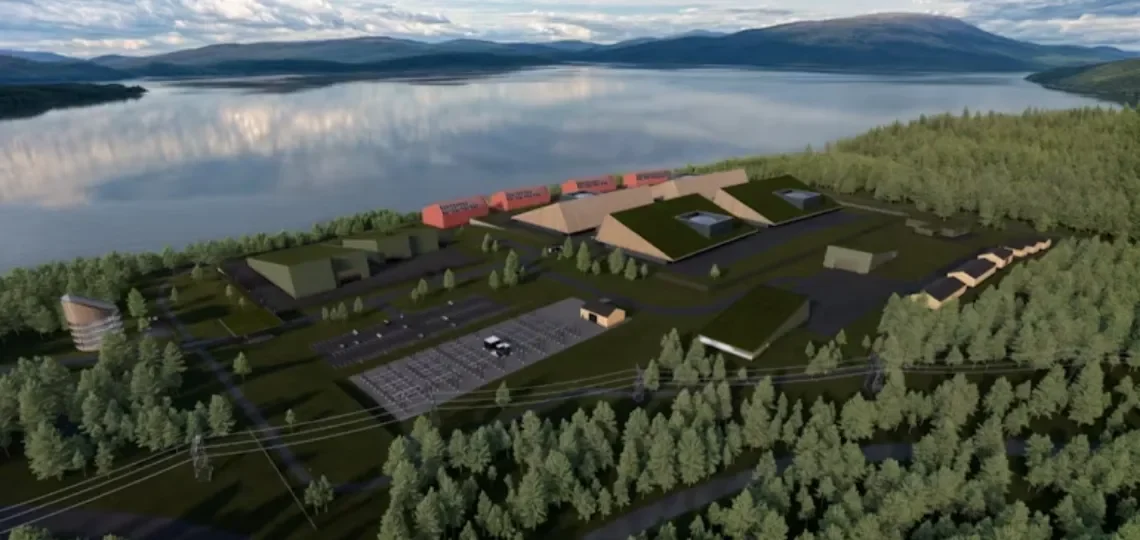
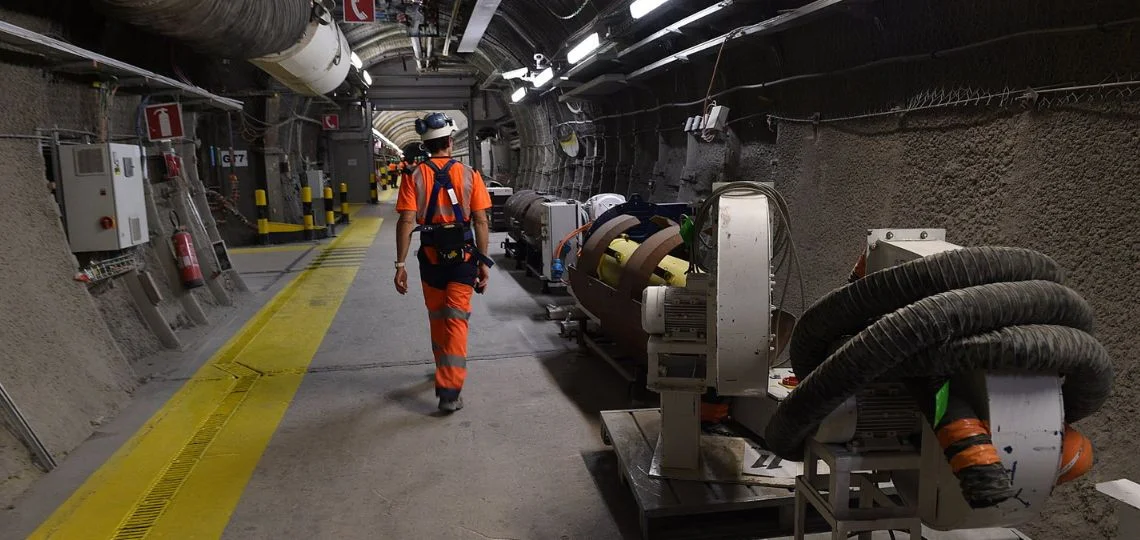
The Cigéo project, led by Andra (Agence nationale de gestion des déchets radioactifs), France's radioactive waste management agency, aims to store long-lived radioactive waste approximately 500 meters underground in a stable clay layer, isolating it for hundreds of thousands of years. The waste comes primarily from the reprocessing of nuclear fuel used in electricity generation. The cost evaluation covers the full project duration — from initial construction through closure — spanning more than 150 years. Amid broader energy policy debates, Germany's energy minister recently described the nuclear phase-out as a major strategic mistake, highlighting the long-term implications of decisions in this sector.
Andra submitted on May 12, 2025 a costing report proposing a range of €33.6 to €46.0 Md€2025 (€26.1 to €37.5 billion in 2012 values), based on different technical hypotheses and configurations. The energy minister collected observations from the main radioactive waste producers — EDF, Orano and the Commissariat à l'énergie atomique et aux énergies alternatives (CEA), France's atomic energy commission — as well as the opinion of the Autorité de sûreté nucléaire et de radioprotection (ASNR), the nuclear safety authority. Under the environmental code, the established evaluation serves as the reference for calculating the financial provisions that producers are required to set aside under the polluter-pays principle.
Remaining uncertainties and excluded costs
The industrial reference cost excludes expenditures related to post-closure monitoring of the facility, planned for around 2170, as well as contingency reserves for risks and uncertainties. Provisions for risks linked to additional optimizations identified but not yet integrated — due to associated uncertainties — also fall outside the scope. Applicable taxes, intended to support development of the host territories, must still be determined prior to the facility's creation authorization.
The application for creation authorization, filed by Andra in January 2023, received ASNR's opinion in November 2025. A public inquiry is scheduled for 2026. The evaluation incorporates techno-economic optimizations deemed achievable by Andra and waste producers, alongside the continuation of an ambitious research and development (R&D) program to support implementation of the project.