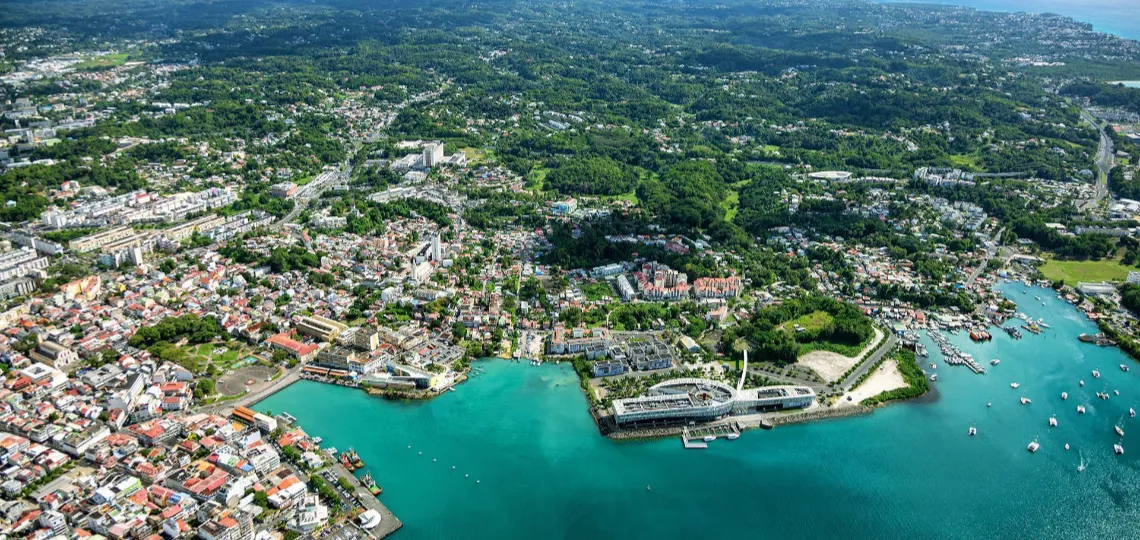
EDF has unveiled a 180-tonne synchronous compensator in Guadeloupe designed to reinforce power supply stability across the archipelago. Installed at the industrial site of Jarry near Pointe-à-Pitre, the equipment will become operational in the coming weeks. The machine operates as a no-load alternator, replicating the mechanical inertia typically provided by turbines in thermal or nuclear plants.
An island grid facing structural challenges
In a non-interconnected territory, frequency and voltage parameters are particularly sensitive to production fluctuations. The synchronous compensator can absorb or inject reactive energy in milliseconds, thus stabilising the grid without burning fossil fuels. EDF stated that the investment, initiated in 2019, amounts to over EUR20mn ($21.6mn) and is expected to save EUR5mn ($5.4mn) annually for the local community.
Guadeloupe has experienced a series of grid-related incidents, including a total blackout lasting over 36 hours in 2024 following a labour strike. These events have highlighted the structural vulnerabilities of the archipelago, where the electricity system still partially relies on ageing thermal plants and intermittent renewable energy production.
A technical response to growing renewable integration
According to EDF Guadeloupe, the share of renewable energy in the electricity mix reached 35% in 2023 but declined in 2024 for the first time since 2016, falling below the 30% mark. The Regional Energy and Climate Observatory (OREC) attributes this decrease to a drop in renewable output combined with increased electricity consumption, which reached 1,479 GWh in 2024, a rise of 43 GWh compared to 2023.
The Multiannual Energy Programming (PPE) for Guadeloupe targets a 100% renewable electricity mix by 2028. However, the intermittent nature of sources like wind and solar requires support technologies such as synchronous compensators to ensure continuous service.
Towards wider deployment in non-interconnected territories
EDF plans to deploy this technology in other French overseas territories facing similar technical constraints. Calls for tenders have been launched for similar installations, aiming to anticipate the evolution of regional energy mixes while strengthening grid security.
Line losses in Guadeloupe remain high, accounting for nearly 13% of the delivered production in 2024, although slightly down from the previous year. This level highlights the logistical challenges of distributing electricity across a fragmented island territory.