Duke Energy files permit request for nuclear project in North Carolina

Duke Energy has filed a permit application to assess the feasibility of a nuclear reactor in Stokes County on an existing power generation site, without committing to immediate construction.
Share:

Comprehensive energy news coverage, updated nonstop

Annual subscription

8.25$/month*

*billed annually at 99$/year for the first year then 149,00$/year ​

Unlimited access • Archives included • Professional invoice

OTHER ACCESS OPTIONS

Monthly subscription

Unlimited access • Archives included

5.2$/month*
then 14.90$ per month thereafter

FREE ACCOUNT

3 articles offered per month

FREE

*Prices are excluding VAT, which may vary depending on your location or professional status

Since 2021: 35,000 articles • 150+ analyses per week

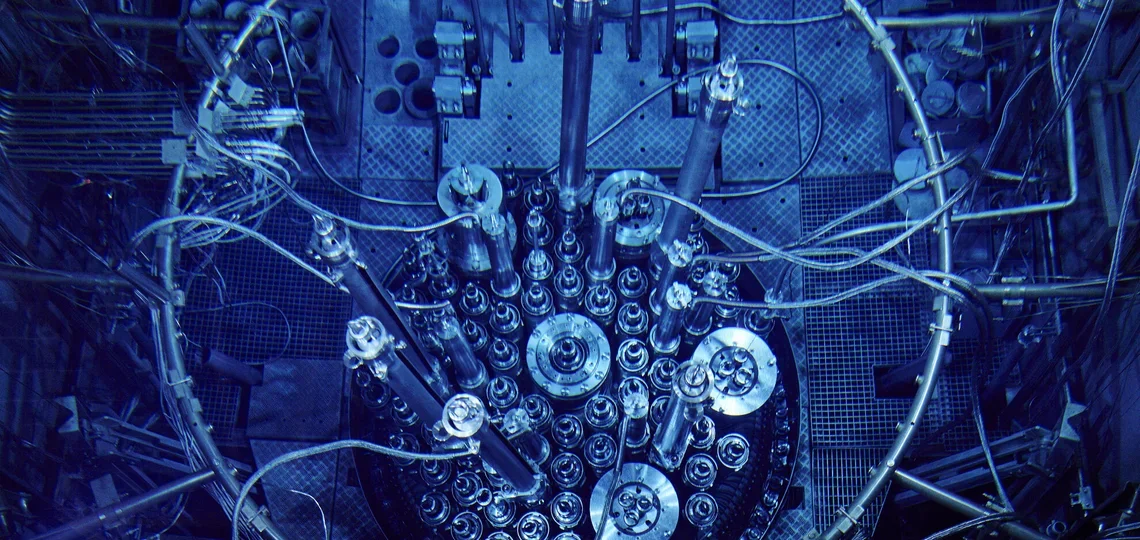
American energy company Duke Energy has officially submitted a permit application to the United States Nuclear Regulatory Commission, aimed at assessing the feasibility of establishing a nuclear reactor at its Belews Creek plant in North Carolina. This early site permit process could take 18 months and is intended to reduce the risk of delays if the company decides to pursue nuclear construction in the future.
A strategy without immediate construction commitment

Duke Energy clarified that no final decision has been made regarding the construction of a new reactor. The goal of the application is to secure regulatory and environmental steps in advance. The permit covers a 1,000-acre area near the existing coal and natural gas power plant, commissioned in 1974. The site currently has an installed capacity of 2,200 megawatts, with existing units scheduled for closure in the 2030s.

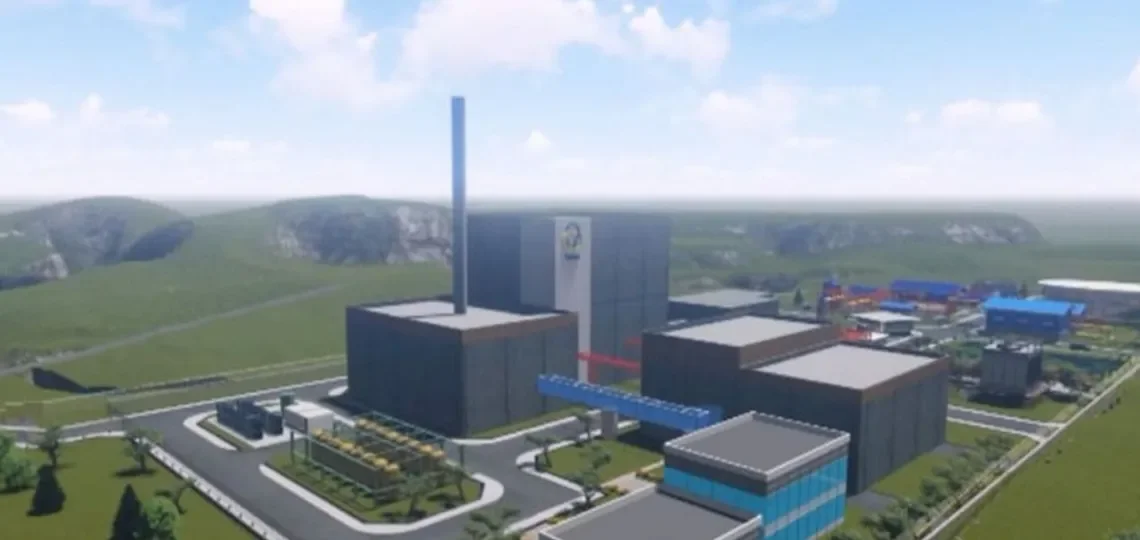
The filing is part of a broader diversification strategy. The company describes the move as a “risk management” measure to retain technological flexibility. Six nuclear technologies are included in the application: four small modular reactor (SMR) designs and two non-light-water reactor designs.

Optimising existing sites and reducing costs

Using a site already equipped with power transmission and production infrastructure would, according to Duke, result in significant time and cost savings. The Belews Creek station underwent partial conversion to natural gas in 2020 and 2021, facilitating integration of new energy sources.

According to published data, Duke is considering the addition of approximately 600 megawatts of advanced nuclear capacity by 2037, with a potential first unit operational by 2036. If approved, the permit would be valid for 20 years, with a one-time renewal for another 20 years.

Preparing the grid for rising demand

Duke Energy’s transition strategy includes the closure or conversion of all coal-fired plants in North Carolina over the next 15 years. This structural change in the energy mix requires stable replacement options capable of meeting increasing demand. The company’s latest filings indicate that productivity expected from new nuclear capacity would significantly exceed that of new solar installations, despite a higher volume of the latter.

The use of nuclear power is also framed within North Carolina’s Carbon Plan legislation, which mandates a gradual reduction in carbon dioxide emissions.

Ankara confirmed new Russian funding for the Akkuyu project, Turkey’s first nuclear site, strengthening its energy ties with Moscow and advancing its domestic nuclear ambitions.
Niger’s military regime disputes theft allegations by French prosecutors after uranium stock vanished from a nationalised site previously operated by Orano.
Rosatom successfully completed a series of tests on its high-temperature gas-cooled reactor fuel, validating its performance at up to 1,700 °C under prolonged irradiation conditions.
Videberg Kraft AB becomes the first company to request government support to build two new reactors at the Ringhals site, under the national nuclear investment framework adopted in 2025.
The European Commission opens an in-depth investigation into Prague's public funding of a major nuclear project, which could reach €30bn ($32.88bn), with guaranteed revenues over forty years.
Niigata's assembly officially backs the restart of the Kashiwazaki-Kariwa site, marking a key step in Japan’s return to nuclear energy following the 2011 Fukushima disaster.
The Japanese government plans to fund up to 30% of loans required for nuclear projects, aiming to accelerate reactor restarts and double the share of nuclear energy in its energy mix by 2040.
French nuclear reactor developer Newcleo has submitted its lead-cooled small modular reactor design to Euratom, initiating the first regulatory phase to integrate nuclear non-proliferation safeguards at the European level.
French state utility EDF has increased the maximum estimated cost for building six new nuclear reactors to €72.8 billion ($85.29 billion), representing a 40% rise over the original figure.
US-based Holtec has signed a memorandum of understanding with Hungary’s energy group MVM to assess the deployment of its SMR-300 technology, strengthening bilateral nuclear cooperation and opening prospects for a new market in Central Europe.
California-based startup Radiant has secured $300mn to build its first factory in Tennessee and prepare for the mass production of miniature nuclear reactors for off-grid applications.
Terra Innovatum has increased its interactions with the Nuclear Regulatory Commission to advance licensing of its SOLO™ micro-modular reactor, despite the partial shutdown of the US federal government.
The US nuclear regulator has extended the operating licences of three Illinois reactors by 20 years, strengthening Constellation's long-term industrial outlook for the Clinton and Dresden sites.
The SATURNE Industrial Chair aims to develop innovative uranium extraction methods, with joint funding from Orano and the National Research Agency over a four-year period.
US-based X-energy has signed a reservation agreement with South Korea's Doosan Enerbility to secure key components for its small modular nuclear reactors.
Niger expands its mining alliances with Uranium One to develop new sites, while the Dasa project continues seeking financing despite clear political backing.
Samsung Heavy Industries has received Approval in Principle for a floating nuclear plant featuring two SMART100 reactors, marking a step toward the commercialisation of offshore small modular reactors.
The Indian government proposes a unified legal framework for nuclear energy, aiming to boost private investment and increase installed capacity to 100 GW by 2047.
Samsung C&T strengthens its presence in modular nuclear energy in Europe by signing an agreement with Synthos Green Energy to develop up to 24 SMRs in Poland and several Central European countries.
Israeli firm nT-Tao and Ben-Gurion University have developed a nonlinear control system that improves energy stability in fusion plasmas, strengthening the technical foundation of their future compact reactors.

All the latest energy news, all the time

Annual subscription

8.25$/month*

*billed annually at 99$/year for the first year then 149,00$/year ​

Unlimited access - Archives included - Pro invoice

Monthly subscription

Unlimited access • Archives included

5.2$/month*
then 14.90$ per month thereafter

*Prices shown are exclusive of VAT, which may vary according to your location or professional status.

Since 2021: 30,000 articles - +150 analyses/week.