Diesel margins hit yearly high amid geopolitical tensions

European sanctions on Russia and refinery outages in the Middle East have sharply reduced global diesel supply, driving up refining margins in key markets.

Share:

Comprehensive energy news coverage, updated nonstop

Annual subscription

8.25$/month*

*billed annually at 99$/year for the first year then 149,00$/year ​

Unlimited access • Archives included • Professional invoice

OTHER ACCESS OPTIONS

Monthly subscription

Unlimited access • Archives included

5.2$/month*
then 14.90$ per month thereafter

FREE ACCOUNT

3 articles offered per month

FREE

*Prices are excluding VAT, which may vary depending on your location or professional status

Since 2021: 35,000 articles • 150+ analyses per week

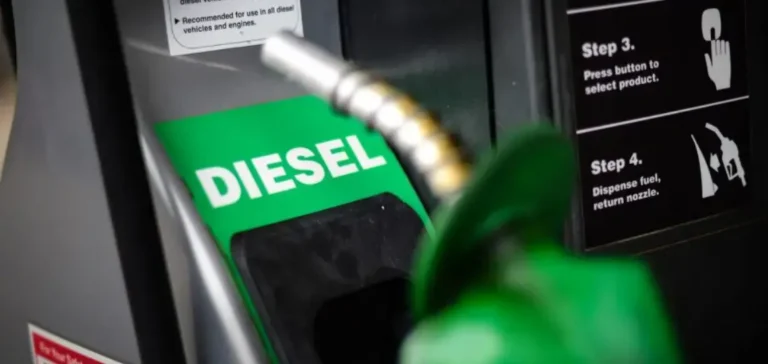
Diesel refining margins have reached their highest levels of the year since late October, reflecting a significant contraction in global supply due to outages in Russia and the Middle East. This pressure has led to price increases across key Atlantic Basin markets, notably at Amsterdam-Rotterdam-Antwerp (ARA), New York Harbor and the U.S. Gulf Coast.

Rising pressure on diesel supply

Crack spreads, which indicate the profitability of refining crude oil into finished products, surged in these regions, exceeding $1 per gallon for the first time in over a year between mid-October and mid-November. These spreads reflect the difference between the price of crude oil, in this case Dated Brent, and the price of the refined product, diesel.

The latest European Union sanctions against Russia, implemented in October, target Russian oil majors Rosneft, Lukoil and Gazprom Neft. These measures reinforce earlier bans from 2022 on Russian crude oil and refined products following the invasion of Ukraine. The sanctions now also extend to refineries in third countries such as Türkiye and India, which have been processing discounted Russian crude and exporting refined diesel to the European market.

Offline refineries and market tension

At the same time, Ukrainian strikes on Russian petroleum infrastructure have curbed Russian diesel exports. This directly impacts countries still importing Russian fuel, which must now compete for alternative volumes at higher prices.

Beyond Russia, the Al Zour refinery in Kuwait—commissioned in 2023—has been offline since late October. This facility had been a significant source of diesel for Europe following the enforcement of sanctions last year. Additional maintenance-related slowdowns at other Middle Eastern refineries have further tightened available supply.

U.S. exports on the rise

Amid sustained international demand, refiners that remain operational, especially on the U.S. Gulf Coast, have ramped up output. These facilities handle the bulk of U.S. petroleum product exports. U.S. gasoline shipments have reached their highest levels of the year, while exports of distillate fuel oil, including diesel, remained elevated in November compared to the 2020–2024 five-year average.

Subsea7 has secured a subsea installation contract from LLOG for the Buckskin South project, scheduled for execution between 2026 and 2027, strengthening its position in the Gulf of Mexico and boosting its order book visibility.
Global crude oil production is expected to rise by 0.8 million barrels per day in 2026, with Brazil, Guyana and Argentina contributing 50% of the projected increase.
Woodbridge Ventures II Inc. signs definitive agreement with Greenflame Resources for a transformative merger, alongside a concurrent financing of up to $10mn.
Interceptions of ships linked to Venezuelan oil are increasing, pushing shipowners to suspend operations as PDVSA struggles to recover from a cyberattack that disrupted its logistical systems.
Harbour Energy acquires US offshore operator LLOG for $3.2bn, adding 271 million barrels in reserves and establishing a fifth operational hub in the Gulf of Mexico.
The agreement signed with Afreximbank marks a strategic shift for Heirs Energies, aiming to scale up its exploration and production operations on Nigeria's OML 17 oil block.
Oritsemeyiwa Eyesan’s appointment as head of Nigeria’s oil regulator marks a strategic shift as the country targets $10bn in upstream investment through regulatory reform and transparent licensing.
Baghdad states that all international companies operating in Kurdistan’s oil fields must transfer their production to state marketer SOMO, under the agreement signed with Erbil in September.
Chinese oil group CNOOC continues its expansion strategy with a new production start-up in the Pearl River Basin, marking its ninth offshore launch in 2025.
A train carrying over 1,200 tonnes of gasoline produced in Azerbaijan entered Armenia on December 19, marking the first commercial operation since recent conflicts, with concrete implications for regional transit.
Subsea 7 has secured a new extension of its frame agreement with Equinor for subsea inspection, maintenance and repair services through 2027, deploying the Seven Viking vessel on the Norwegian Continental Shelf.
Caracas says Iran has offered reinforced cooperation after the interception of two ships carrying Venezuelan crude, amid escalating tensions with the United States.
US authorities intercepted a second oil tanker carrying Venezuelan crude, escalating pressure on Caracas amid accusations of trafficking and tensions over sanctioned oil exports.
California Resources Corporation completed an all-stock asset transfer with Berry Corporation, strengthening its oil portfolio in California and adding strategic exposure in the Uinta Basin.
The Ugandan government aims to authorise its national oil company to borrow $2 billion from Vitol to fund strategic projects, combining investments in oil infrastructure with support for national logistics needs.
British company BP appoints Meg O'Neill as CEO to lead its strategic refocus on fossil fuels, following the abandonment of its climate ambitions and the early departure of Murray Auchincloss.
The Venezuelan national oil company has confirmed the continuity of its crude exports, as the United States enforces a maritime blockade targeting sanctioned vessels operating around the country.
Baker Hughes will supply advanced artificial lift systems to Kuwait Oil Company to enhance production through integrated digital technologies.
The United States has implemented a full blockade on sanctioned tankers linked to Venezuela, escalating restrictions on the South American country's oil flows.
Deliveries of energy petroleum products fell by 4.5% in November, driven down by a sharp decline in diesel, while jet fuel continues its growth beyond pre-pandemic levels.

All the latest energy news, all the time

Annual subscription

8.25$/month*

*billed annually at 99$/year for the first year then 149,00$/year ​

Unlimited access - Archives included - Pro invoice

Monthly subscription

Unlimited access • Archives included

5.2$/month*
then 14.90$ per month thereafter

*Prices shown are exclusive of VAT, which may vary according to your location or professional status.

Since 2021: 30,000 articles - +150 analyses/week.