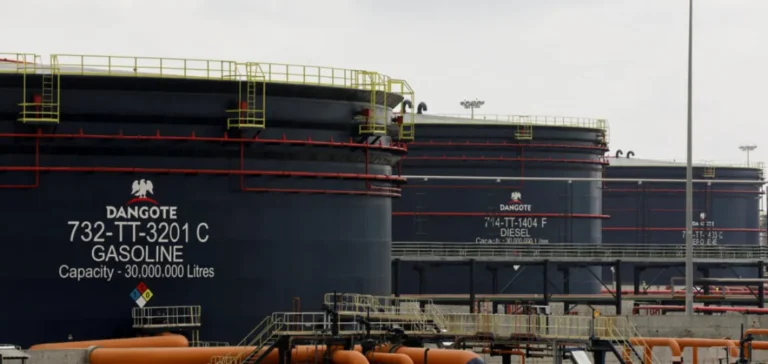

Dangote Group has announced it is ready to supply up to 57 million litres of petrol per day starting in December, equivalent to Nigeria’s total demand for automotive fuel. In a letter to the Nigerian Midstream and Downstream Petroleum Regulatory Authority (NMDPRA), the company is requesting immediate logistical, fiscal and administrative measures to secure its operations.
A production ramp-up reshaping market structure
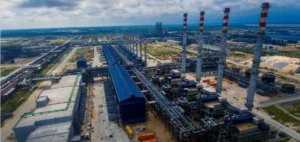
The Lekki refinery, designed to process 650,000 barrels of crude oil per day, is finalising its ramp-up with a projected capacity of 1.5 to 1.7 billion litres of petrol per month. These volumes align with the country’s current needs, estimated at around 56 to 57 million litres/day in October. To date, the refinery has delivered an average of just 18 million litres/day over the past 12 months, according to NMDPRA figures.
Targeted requests in exchange for supply
In its letter, Dangote ties its supply commitment to several conditions: the establishment of expedited customs procedures for crude and blending component shipments, permanent presence of the regulator on-site, and priority treatment in ports. The group is also requesting daily publication of its delivery volumes by NMDPRA, enabling immediate visibility of its performance.
Industrial concentration risk
Dangote’s capacity to meet Nigeria’s entire petrol demand could significantly reduce the role of importers and other local refineries, which still accounted for 63% of national consumption in October 2025. While this may enhance supply security, it also centralises risk on a single site, especially in the event of technical failure or social disruption.
A political tool in a shifting regional context
Faced with increasing competition from low-priced Russian fuel in African markets, Dangote appears to be prioritising domestic sales as a more stable outlet. Securing access to Nigerian crude becomes key to fulfilling the supply pledge, at a time when the government’s “Nigeria First” policy has already been weakened by the suspension of a 15% import tax on refined products.
Strengthened market power
Dangote’s dominant position enables it to directly negotiate logistical and financial terms with the government and distributors. Nigerian marketers may have to revise their contracts and supply chains around Lekki’s output, particularly through coastal shipments and distribution via port hubs. This setup could also raise governance concerns if the company controls both supply volume and market access.
Operational pressure to perform
If the pledged volumes are not delivered, Dangote’s strategy may backfire. Daily tracking of deliveries would require a high refinery uptime, amid challenges linked to crude supply and naira-dollar exchange rate volatility.