French group Nexans initiates the sale of its Autoelectric subsidiary to India’s Motherson for €207mn ($227mn), marking its full exit from non-electrification activities.
The Australian government will require up to 25% of gas extracted on the east coast to be reserved for the domestic market from 2027, in response to supply tensions and soaring prices.
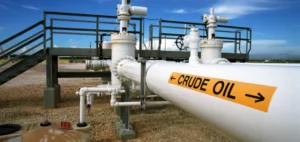
After two seizures in ten days, U.S. authorities are pursuing another tanker suspected of evading sanctions. Maritime tracking data and official statements point to intensified controls on crude cargoes linked to Venezuela.
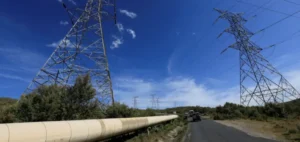
Facing a rapid increase in demand across industrial corridors, the Kenyan government is restructuring its power grid to accelerate connections, reduce technical losses and integrate new digital tools.
Solar Energy Corporation of India signed a strategic agreement with Global Energy Alliance to strengthen grid resilience and support the expansion of storage and smart management technologies.
Indian group AM Green has signed a memorandum of understanding with Japanese conglomerate Mitsui to co-finance a one million tonne per year integrated low-carbon aluminium production platform.
As the photovoltaic industry enters a phase of deep restructuring, the duel between TOPCon 4.0 and heterojunction technologies is redefining manufacturers’ margins. In 2026, reducing production costs becomes the primary strategic lever for global market leaders.
JA Solar and Trinasolar top Wood Mackenzie’s latest semiannual ranking despite a sector-wide net loss of $2.2 billion. Industrial leaders are strengthening their grip on global photovoltaic module supply through rigorous financial discipline.
Le fonds souverain omanais a validé 141 projets en 2025 pour un engagement total de $1.2bn, visant à renforcer l’indépendance énergétique et l’industrialisation nationale à travers un programme d’investissement de $5.2bn.
India boosts crude imports from Angola amid tightening U.S. sanctions on Russia, seeking low-risk legal diversification as scrutiny over cargo origins increases.
Tata Power is preparing a 10 GW ingot and wafer facility to consolidate its domestic solar chain, secure supplies, and capture PLI incentives ahead of 2026 local content mandates.
Adani Group launches a 1126 MW project in Khavda, marking its first entry into energy storage, with one of the largest BESS systems ever built at a single site.
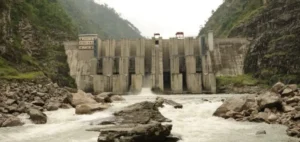
Indian Prime Minister Narendra Modi inaugurated the Punatsangchhu-II plant in Bhutan, strengthening India’s energy presence in the Himalayas and reinforcing a strategic partnership built around electricity exports.
Quino Energy secures $16mn in funding to scale global production of its organic electrolytes, with strategic support from investor Atri Energy Transition.
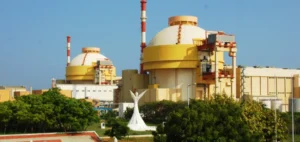
Russia and India are preparing an expanded agreement for the construction of VVER-1200 reactors and modular nuclear power plants, while accelerating work at the strategic Kudankulam site.
Nineteen countries, led by Brazil, Italy, Japan and India, aim to quadruple sustainable fuel production by 2035, marking a major industrial and regulatory challenge for global energy and transport supply chains.
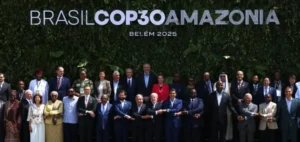
COP30 begins in Belém under uncertainty, as countries fail to agree on key discussion topics, highlighting deep divisions over climate finance and the global energy transition.
Global energy efficiency progress remains below the commitments made in Dubai, hindered by industrial demand and public policies that lag behind technological innovation.
The Peruvian government announces a 179 million tonne emissions target by 2035, integrating carbon market tools and international transfers to reach its climate goal.
After being intercepted by the French navy, the Boracay oil tanker, linked to Russia's shadow fleet, left Saint-Nazaire with its oil cargo, reigniting tensions over Moscow’s circumvention of European sanctions.
Russian seaborne crude shipments surged in September to their highest level since April 2024, despite G7 sanctions and repeated drone strikes on refinery infrastructure.
The ASEAN Power Grid enters a strategic phase with renewed support from regional and international institutions to structure electricity trade among member states and secure the necessary investments.
Exxon Mobil plans to reduce its Singapore workforce by 10% to 15% by 2027 and relocate its offices to the Jurong industrial site, as part of a strategic investment shift.
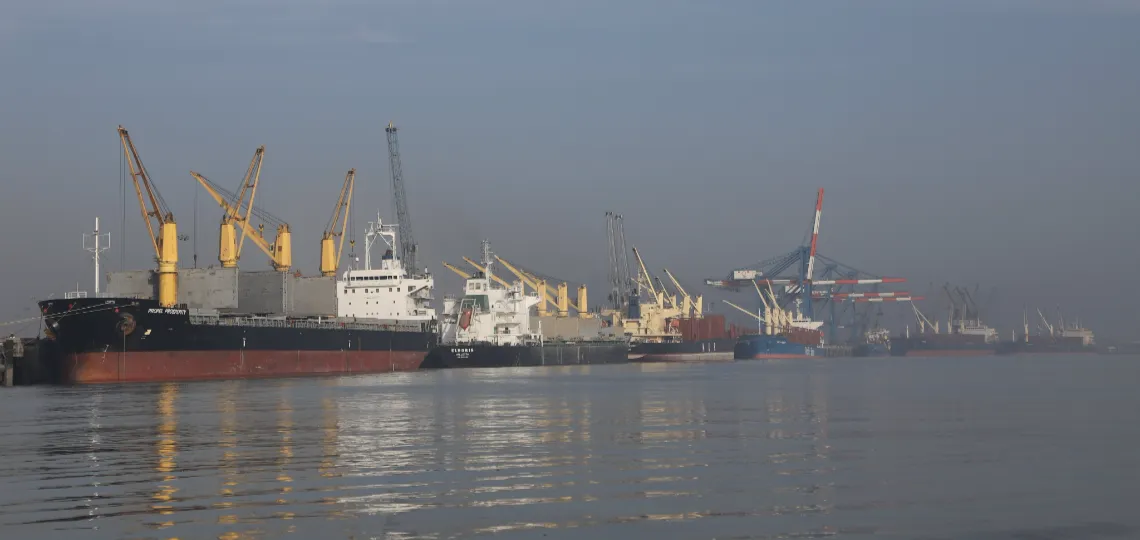
Kandla port plans a 150,000-ton-per-year integrated renewable methanol unit, targeting the growing fleet of compliant vessels on the Singapore-Rotterdam maritime route.
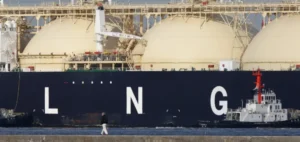
The European ban on Russian liquefied natural gas from 2027 is pushing Siberian producers to reorient their flows to Asia, despite logistical and regulatory constraints.
The global hydrogen production market is expected to more than double by 2035, supported by technological advances and growing demand from transport, heavy industry and decarbonised energy systems.
Driven by rising global energy consumption and exploration investments, the oilfield service equipment market is expected to grow at a 5.39% CAGR to reach $36.87bn by 2031.
Singapore-based developer Vena Energy has launched operations at its third wind power plant in Japan, located in Saikai, Nagasaki Prefecture, with a grid-connected capacity of 7.5 MW.
UK-based Gresham House will acquire Swiss investment manager SUSI Partners, strengthening its international footprint in energy transition infrastructure.
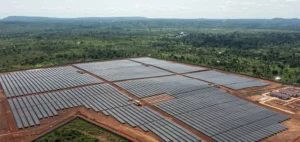
Africa's photovoltaic market is expected to grow rapidly with 23 GW of new installations projected by 2028, according to Global Solar Council forecasts.
The Indian government plans a legal fund dedicated to compensating major nuclear accidents to remove barriers to private and foreign investment in the sector.
TenneT Holding has reached an agreement with APG, GIC and NBIM to finance the expansion of the German high-voltage grid, securing its capital needs for the coming years.
The Sri Lankan government has frozen its plan to import liquefied natural gas from India due to a lack of operational storage, delaying the initial timeline by three years and affecting bilateral energy strategies.
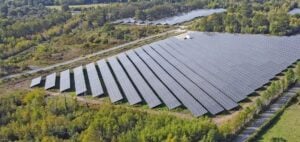
Indian developer Sunsure Energy has inaugurated a new solar plant in Jhansi, bringing its projects in Uttar Pradesh to ten, and targeting 500 MW capacity in the state by the end of fiscal year 2025-2026.
Framatome inaugurates a site in Navi Mumbai to support life-extension programmes and new builds, in coordination with Électricité de France and local partners, with a view to 100 GW of nuclear capacity in 2047.