China boosts global battery market after key power market reform

China's electricity market overhaul improves the profitability of energy storage, supporting a rapid increase in battery exports as global demand rises with data centres and power grids.
Share:

Comprehensive energy news coverage, updated nonstop

Annual subscription

8.25$/month*

*billed annually at 99$/year for the first year then 149,00$/year ​

Unlimited access • Archives included • Professional invoice

OTHER ACCESS OPTIONS

Monthly subscription

Unlimited access • Archives included

5.2$/month*
then 14.90$ per month thereafter

FREE ACCOUNT

3 articles offered per month

FREE

*Prices are excluding VAT, which may vary depending on your location or professional status

Since 2021: 35,000 articles • 150+ analyses per week

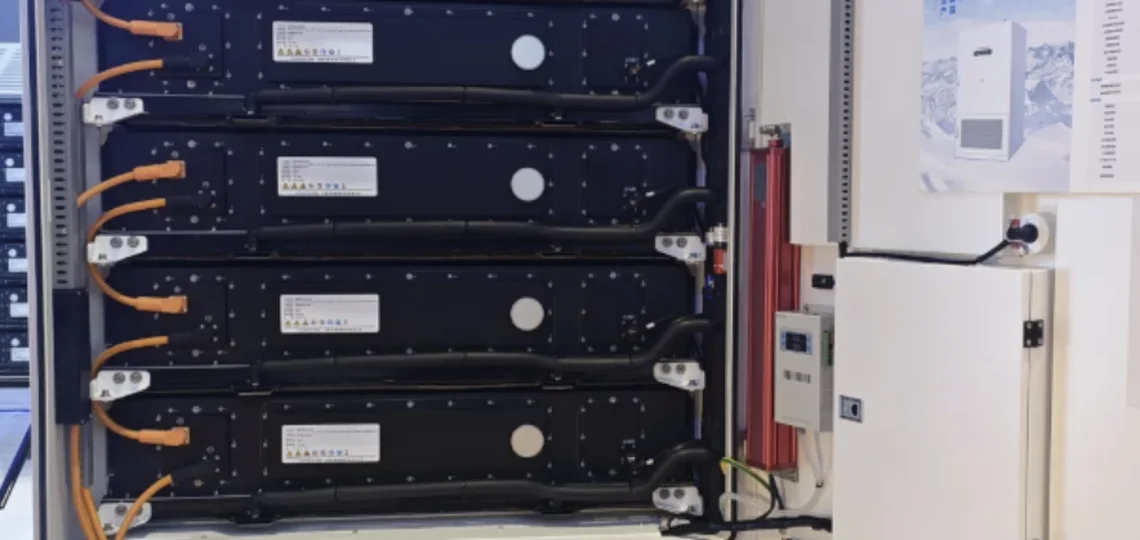
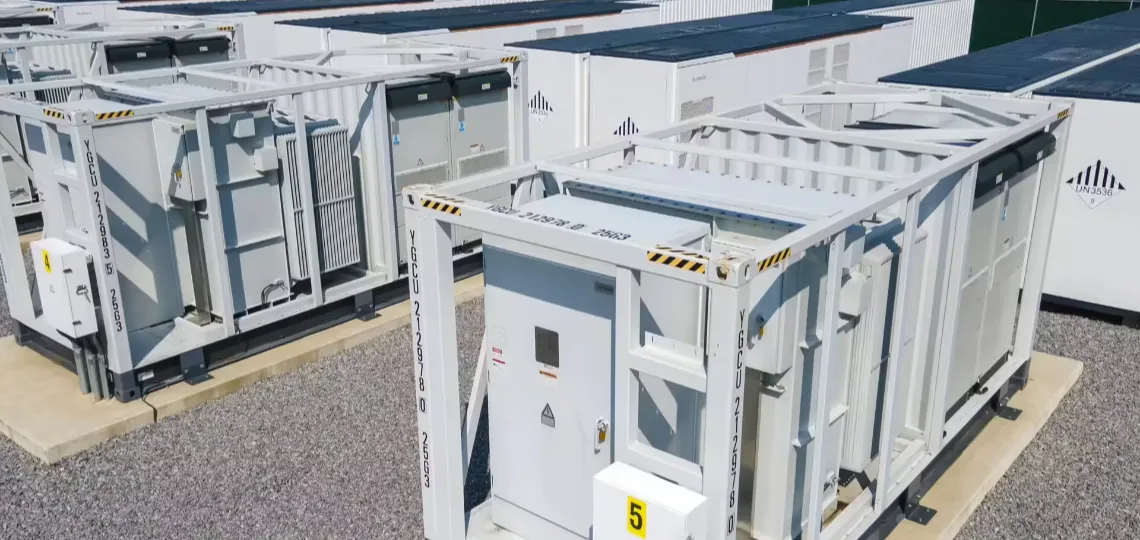
Chinese battery manufacturers are expected to see a 75% increase in global shipments of lithium-ion cells for energy storage this year, according to a sector estimate. This growth comes amid a regulatory transformation of China’s electricity market and sustained international demand for storage solutions.
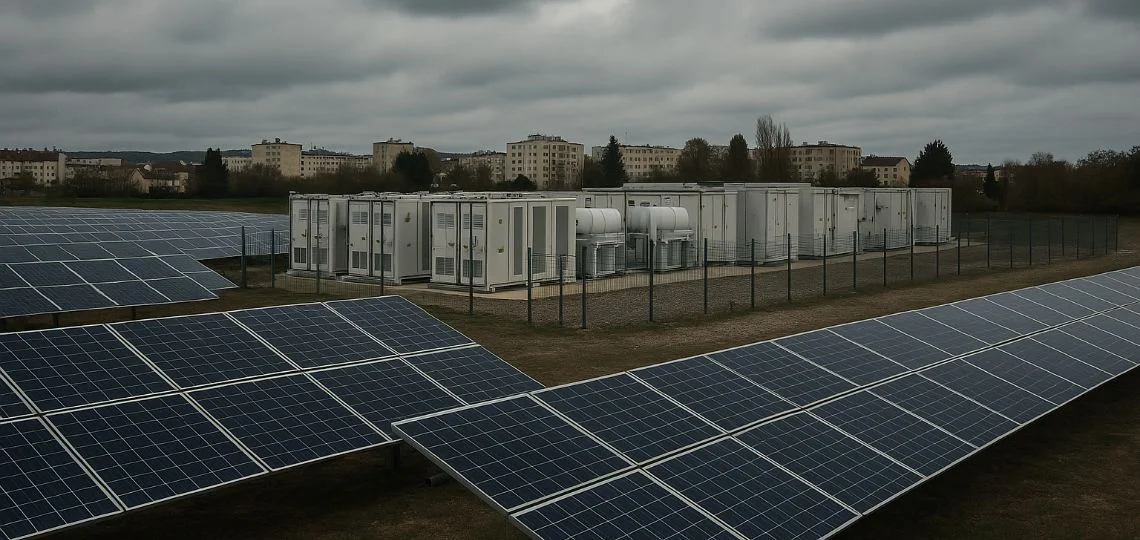
The power market reform introduced in China is altering the economics of energy storage. New projects are now required to sell output through market-based auctions rather than at administered tariffs. This change allows battery operators to capitalise on price differences by charging when rates are low and discharging when prices are higher.

A regulatory shift at the heart of storage growth

The regulatory adjustment has had a direct impact on the use of installed capacity. Battery storage facilities operated an average of 3.08 hours per day in the third quarter, up from a lower level a year earlier, according to data from the China Electricity Council. This reflects improved price signals and better integration of storage into the power system.

In parallel, several provinces have implemented capacity tariffs since late 2024. These mechanisms provide dedicated payments to facilities kept on standby to stabilise the grid, in addition to other support measures. These initiatives are part of a government plan to nearly double national battery storage capacity by 2027.

Industrial dominance supported by regulation

China holds the bulk of global production of energy storage battery cells. The six leading global suppliers are Contemporary Amperex Technology Ltd, HiTHIUM, EVE Energy, BYD, CALB and REPT BATTERO, all headquartered in China. EVE Energy recorded a 35.51% increase in energy storage sales volume over the first three quarters, while REPT BATTERO reached a quarterly shipping record.

Chinese battery exports, including for storage and electric vehicles, reached $66.761bn in the first ten months of the year. Batteries are now the country’s top clean-tech export in this segment. China also holds around 40% of the world’s battery storage capacity, recently overtaking pumped hydro storage.

Contrasting regulatory frameworks internationally

Globally, demand is driven by the expansion of data centres and the need to reinforce ageing electricity grids. Deployment prospects remain heavily dependent on local regulatory frameworks. In the United States, certain rules restrict access to investment tax credits for projects involving designated foreign entities, which include Chinese firms.

According to a sector analyst, Chinese battery cell manufacturers are currently operating at full capacity to meet global demand, highlighting the combined effect of domestic regulatory shifts and evolving energy rules in key international markets.

esVolta finalises investment tax credit transfer for its Black Walnut storage project to Computacenter, marking a first-of-its-kind operation within its California energy portfolio.
Peregrine Energy Solutions has begun construction on a 500 MWh storage project in Texas, relying on Wärtsilä's technology and WHC's engineering expertise to enhance ERCOT grid flexibility.
The world's largest battery energy storage system enters service in Saudi Arabia, with an annual capacity of 2.2 billion kWh spread across three strategic sites in the southwest of the country.
Masdar begins commercial operations at a Stockport battery storage unit and announces two more UK projects, part of a £1bn ($1.25bn) plan for 3GWh of BESS capacity.
Australia-based storage platform Akaysha Energy has launched its first operational project, a 155 MW battery in Queensland, while confirming its expansion to over 1 GWh.
LehmanSoft Japan connected a 2MW/8.1MWh energy storage facility to the grid in Chichibu City, marking its entry into the Japanese stationary storage market.
Akuo launches a large-scale electricity storage project in Boulouparis, with a 200 MWh capacity, to support New Caledonia’s grid stability and reinforce the integration of renewable energies.
Spie and Tesla have signed a framework agreement to install battery electricity storage systems in Europe, focusing on France, Poland and Germany.
The group has won a strategic project with operator Amprion to deploy five 50 MW batteries to ease pressure on the German power grid and optimise electricity transmission.
Vena Energy has begun construction of a 408 MWh battery energy storage system in Tailem Bend, marking a new phase in the deployment of its infrastructure in Australia.
The explosion of battery storage applications in Germany is causing grid congestion and pushing Berlin to revise its regulatory framework to prevent market saturation.
The collapse in storage costs positions batteries as a key lever for dispatchable solar, but dependence on Chinese suppliers creates growing tension between competitiveness and supply chain security.
JA Solar has launched a microgrid combining 5.2 MW of solar and 2.61 MWh of storage at an industrial site in Sicily, marking its first application of the "PV+Storage+X" model in Italy.
Sinexcel has installed a 2MW/8MWh energy storage system in Matsusaka, marking a breakthrough in a regulated market after five years of technical partnerships and gradual deployment in Japan.
Inlyte Energy has successfully completed factory validation testing of its first full-scale iron-sodium battery, witnessed by Southern Company, paving the way for a pilot installation in the United States in early 2026.
Neoen begins construction of a new 305 MW stage in Australia, raising its total battery storage capacity in the country to 2 GW, and signs two additional virtual battery contracts with ENGIE.
ENGIE has awarded NHOA Energy the contract for a 320 MWh battery energy storage system in Drogenbos, marking a new step in their industrial partnership in Belgium.
Stardust Power has completed an independent review of its lithium refinery project in Muskogee, confirming technical feasibility and compliance with industry standards for its initial production phase.
California-based battery manufacturer South 8 Technologies has secured $11mn to boost production of its LiGas cells, targeting military and space applications under extreme conditions.
Samsung SDI will supply LFP cells for energy storage systems in the United States starting in 2027, under a multi-year deal valued at $1.53bn.

All the latest energy news, all the time

Annual subscription

8.25$/month*

*billed annually at 99$/year for the first year then 149,00$/year ​

Unlimited access - Archives included - Pro invoice

Monthly subscription

Unlimited access • Archives included

5.2$/month*
then 14.90$ per month thereafter

*Prices shown are exclusive of VAT, which may vary according to your location or professional status.

Since 2021: 30,000 articles - +150 analyses/week.