Cameroon allocates USD533 million to revive Sonara refinery

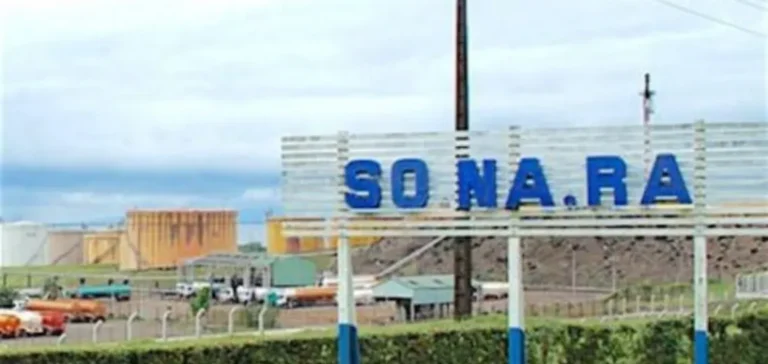
The rehabilitation cost of Sonara, Cameroon’s only refinery, has now reached XAF300bn (USD533mn), with several international banks showing growing interest in financing the project.

Share:

Comprehensive energy news coverage, updated nonstop

Annual subscription

8.25$/month*

*billed annually at 99$/year for the first year then 149,00$/year ​

Unlimited access • Archives included • Professional invoice

OTHER ACCESS OPTIONS

Monthly subscription

Unlimited access • Archives included

5.2$/month*
then 14.90$ per month thereafter

FREE ACCOUNT

3 articles offered per month

FREE

*Prices are excluding VAT, which may vary depending on your location or professional status

Since 2021: 35,000 articles • 150+ analyses per week

Cameroon has revised upward the rehabilitation cost of its Société nationale de raffinage (Sonara), which has been out of operation since a 2019 fire. The new budget is now estimated at XAF300bn (USD533mn), an increase of XAF50bn over the initial estimate. The announcement was made by Prime Minister Joseph Dion Nguté on November 26 during the presentation of the government’s 2026 economic programme before the National Assembly.

International lenders take the lead

This revision comes as several foreign financial institutions have stepped up efforts to support the revival of the Limbé-based industrial site. On June 17, a joint delegation from the Union de Banques Arabes et Françaises (UBAF), Dutch bank ING and Mauritius Commercial Bank (MCB) visited the site to explore financing options and project support. These discussions aim to accelerate the restart of the country’s only oil refinery.

The Bank of Central African States (BEAC) also reiterated its willingness to support the project via its B window, a refinancing mechanism for medium-term loans dedicated to productive investments. “This window can support the rehabilitation of Sonara,” said BEAC Governor Yvon Sana Bangui during a press conference on September 29 at the close of the Monetary Policy Committee session.

Regional currency reserves under pressure

Before the 2019 fire, Sonara helped cover a significant portion of Cameroon’s fuel needs. Since operations ceased, the country has imported 100% of its petroleum products, putting considerable pressure on its foreign exchange reserves. This strain is shared by other members of the Economic and Monetary Community of Central Africa (CEMAC), whose joint reserves are used to finance imports.

According to sources close to the central bank, BEAC had initially offered to cover up to 60% of the previously estimated XAF250bn cost via its B window. The upward revision of the budget may require an adjustment to that financial commitment, though institutional interest remains strong.

A strategic facility for the subregion

Sonara’s prolonged shutdown poses a strategic risk for regional energy balance. “Today, all the countries in the subregion import finished petroleum products. This weakens our external position,” Yvon Sana Bangui warned as early as June 2024 in Yaoundé, calling for the swift restoration of the refinery.

Subsea7 has secured a subsea installation contract from LLOG for the Buckskin South project, scheduled for execution between 2026 and 2027, strengthening its position in the Gulf of Mexico and boosting its order book visibility.
Global crude oil production is expected to rise by 0.8 million barrels per day in 2026, with Brazil, Guyana and Argentina contributing 50% of the projected increase.
Woodbridge Ventures II Inc. signs definitive agreement with Greenflame Resources for a transformative merger, alongside a concurrent financing of up to $10mn.
Interceptions of ships linked to Venezuelan oil are increasing, pushing shipowners to suspend operations as PDVSA struggles to recover from a cyberattack that disrupted its logistical systems.
Harbour Energy acquires US offshore operator LLOG for $3.2bn, adding 271 million barrels in reserves and establishing a fifth operational hub in the Gulf of Mexico.
The agreement signed with Afreximbank marks a strategic shift for Heirs Energies, aiming to scale up its exploration and production operations on Nigeria's OML 17 oil block.
Oritsemeyiwa Eyesan’s appointment as head of Nigeria’s oil regulator marks a strategic shift as the country targets $10bn in upstream investment through regulatory reform and transparent licensing.
Baghdad states that all international companies operating in Kurdistan’s oil fields must transfer their production to state marketer SOMO, under the agreement signed with Erbil in September.
Chinese oil group CNOOC continues its expansion strategy with a new production start-up in the Pearl River Basin, marking its ninth offshore launch in 2025.
A train carrying over 1,200 tonnes of gasoline produced in Azerbaijan entered Armenia on December 19, marking the first commercial operation since recent conflicts, with concrete implications for regional transit.
Subsea 7 has secured a new extension of its frame agreement with Equinor for subsea inspection, maintenance and repair services through 2027, deploying the Seven Viking vessel on the Norwegian Continental Shelf.
Caracas says Iran has offered reinforced cooperation after the interception of two ships carrying Venezuelan crude, amid escalating tensions with the United States.
US authorities intercepted a second oil tanker carrying Venezuelan crude, escalating pressure on Caracas amid accusations of trafficking and tensions over sanctioned oil exports.
California Resources Corporation completed an all-stock asset transfer with Berry Corporation, strengthening its oil portfolio in California and adding strategic exposure in the Uinta Basin.
The Ugandan government aims to authorise its national oil company to borrow $2 billion from Vitol to fund strategic projects, combining investments in oil infrastructure with support for national logistics needs.
British company BP appoints Meg O'Neill as CEO to lead its strategic refocus on fossil fuels, following the abandonment of its climate ambitions and the early departure of Murray Auchincloss.
The Venezuelan national oil company has confirmed the continuity of its crude exports, as the United States enforces a maritime blockade targeting sanctioned vessels operating around the country.
Baker Hughes will supply advanced artificial lift systems to Kuwait Oil Company to enhance production through integrated digital technologies.
The United States has implemented a full blockade on sanctioned tankers linked to Venezuela, escalating restrictions on the South American country's oil flows.
Deliveries of energy petroleum products fell by 4.5% in November, driven down by a sharp decline in diesel, while jet fuel continues its growth beyond pre-pandemic levels.

All the latest energy news, all the time

Annual subscription

8.25$/month*

*billed annually at 99$/year for the first year then 149,00$/year ​

Unlimited access - Archives included - Pro invoice

Monthly subscription

Unlimited access • Archives included

5.2$/month*
then 14.90$ per month thereafter

*Prices shown are exclusive of VAT, which may vary according to your location or professional status.

Since 2021: 30,000 articles - +150 analyses/week.