BP restarts Olympic pipeline after leak, increasing pressure on safety

BP reactivated the Olympic pipeline, critical to fuel supply in the U.S. Northwest, after a leak that led to a complete shutdown and emergency declarations in Oregon and Washington state.
Share:

Comprehensive energy news coverage, updated nonstop

Annual subscription

8.25$/month*

*billed annually at 99$/year for the first year then 149,00$/year ​

Unlimited access • Archives included • Professional invoice

OTHER ACCESS OPTIONS

Monthly subscription

Unlimited access • Archives included

5.2$/month*
then 14.90$ per month thereafter

FREE ACCOUNT

3 articles offered per month

FREE

*Prices are excluding VAT, which may vary depending on your location or professional status

Since 2021: 35,000 articles • 150+ analyses per week

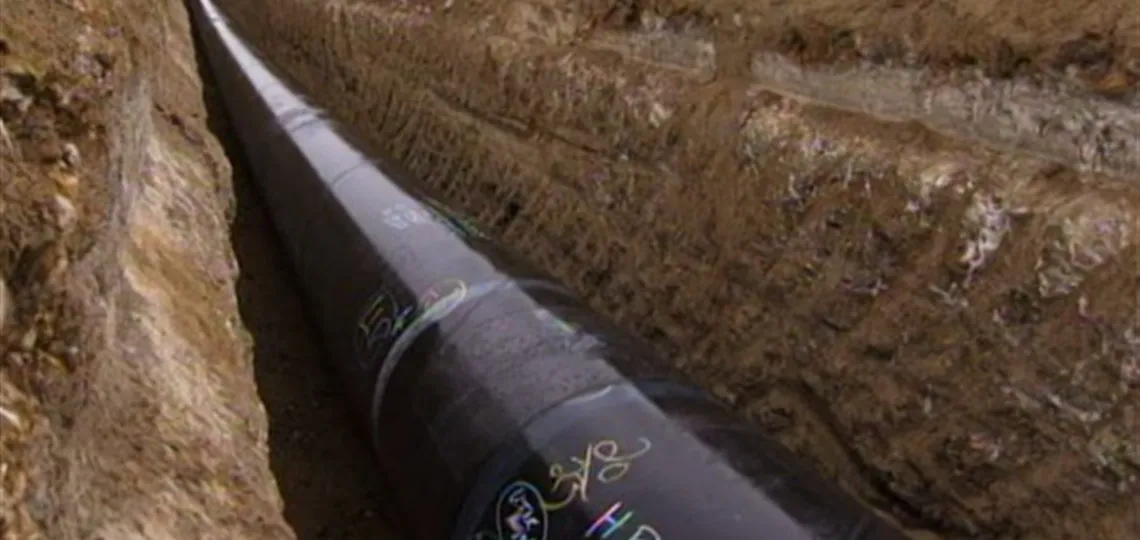
British energy group BP has resumed operations of the entire Olympic pipeline, a strategic infrastructure transporting refined fuels from Washington state refineries to the Seattle region and Oregon. The decision follows a leak discovered near Everett that resulted in a full system shutdown lasting nearly two weeks.

Immediate shutdown and regional logistics mobilisation

The leak, detected on November 11 by a farmer who noticed a sheen of hydrocarbons in a drainage ditch, led BP to suspend the pipeline’s activity. The entire 600-kilometre system was shut down to pinpoint the source of the release on a 20-inch segment. The incident prompted local authorities to declare states of emergency, with governors in Oregon and Washington invoking special powers to secure fuel supply, particularly for Seattle-Tacoma International Airport.

During the disruption, fuel distributors and terminals relied heavily on trucking and expanded rail transport to offset the supply gap. Airlines operating at Sea-Tac adjusted fuelling logistics by increasing onboard fuel storage and modifying flight plans.

Constrained restart and regulatory oversight

The pipeline restart was conducted progressively, beginning with the 16-inch line used for jet fuel transport, followed by full system restoration after repairs on the damaged segment. The return to service occurred under close scrutiny, following previous similar incidents on the same infrastructure. BP had recently been fined USD3.8mn for a 2023 leak, and Washington’s Department of Ecology indicated that further penalties are under review for the new incident.

The Pipeline and Hazardous Materials Safety Administration (PHMSA), the federal oversight body, may impose additional internal inspections, pressure restrictions, and tighter monitoring obligations. Although no Corrective Action Order has been issued yet, the pipeline’s incident history suggests increased safety requirements are likely.

Market impact and operational outlook

In the short term, the Olympic pipeline restart stabilises regional fuel flows and mitigates price pressures. A similar shutdown in 2023 led to a USD0.16 per gallon increase in Oregon petrol prices. This time, emergency declarations and rapid logistics alternatives helped contain price spikes, though temporary price differentials between regions were observed.

The incident may accelerate investment in buffer storage infrastructure and encourage diversification of supply, including marine imports and development of alternatives to pipeline transport. Local operators are aiming to reduce dependence on a single infrastructure, now seen as a critical vulnerability.

Legal pressure and governance challenges for BP

For BP, this incident adds to a documented series of leaks since 1999, some of which have led to legal actions, notably the Bellingham explosion. The cumulative environmental liabilities, civil litigation risks, and weakened industrial safety governance are weighing on the group’s U.S. pipeline operations.

Recurring incidents could prompt a strategic repositioning around the Olympic pipeline, including increased preventive maintenance investment, stricter safety audits, and greater board-level oversight. The company may also face unfavourable renegotiations of contract terms with major shippers due to ongoing reliability concerns.

Changing logistics and regulatory paradigms

The episode highlights a structural dependency across an entire region on a single refined product pipeline. Local governments may now strengthen energy resilience policies, including public storage facilities or incentive programmes for logistical diversification. The repetition of incidents on Olympic also feeds regulatory debates over pipeline inspection transparency and frequency.

BP’s decision to restart operations quickly, although taken in coordination with authorities, reflects a balance between political pressure to restore flows and the need to manage residual technical risks. The growing sensitivity of economic systems to supply disruptions may lead to a reevaluation of logistical robustness criteria in Pacific Coast states.
Zenith Energy claims Tunisian authorities carried out the unauthorised sale of stored crude oil, escalating a longstanding commercial dispute over its Robbana and El Bibane concessions.
TotalEnergies restructures its stake in offshore licences PPL 2000 and PPL 2001 by bringing in Chevron at 40%, while retaining operatorship, as part of a broader refocus of its deepwater portfolio in Nigeria.
Aker Solutions has signed a six-year frame agreement with ConocoPhillips for maintenance and modification services on the Eldfisk and Ekofisk offshore fields, with an option to extend for another six years.
Iranian authorities intercepted a vessel carrying 350,000 litres of fuel in the Persian Gulf, tightening control over strategic maritime routes in the Strait of Hormuz.
North Atlantic France finalizes the acquisition of Esso S.A.F. at the agreed per-share price and formalizes the new name, North Atlantic Energies, marking a key step in the reorganization of its operations in France.
Greek shipowner Imperial Petroleum has secured $60mn via a private placement with institutional investors to strengthen liquidity for general corporate purposes.
Ecopetrol plans between $5.57bn and $6.84bn in investments for 2026, aiming to maintain production, optimise infrastructure and ensure profitability despite a moderate crude oil market.
Faced with oversupply risks and Russian sanctions, OPEC+ stabilises volumes while preparing a structural redistribution of quotas by 2027, intensifying tensions between producers with unequal capacities.
The United Kingdom is replacing its exceptional tax with a permanent price mechanism, maintaining one of the world’s highest fiscal pressures and reshaping the North Sea’s investment attractiveness for oil and gas operators.
Pakistan confirms its exit from domestic fuel oil with over 1.4 Mt exported in 2025, transforming its refineries into export platforms as Asia faces a structural surplus of high- and low-sulphur fuel oil.
Turkish company Aksa Enerji has signed a 20-year contract with Sonabel for the commissioning of a thermal power plant in Ouagadougou, aiming to strengthen Burkina Faso’s energy supply by the end of 2026.
The Caspian Pipeline Consortium resumed loadings in Novorossiisk after a Ukrainian attack, but geopolitical tensions persist over Kazakh oil flows through this strategic Black Sea corridor.
Hungary increases oil product exports to Serbia to offset the imminent shutdown of the NIS refinery, threatened by US sanctions over its Russian majority ownership.
Faced with falling oil production, Pemex is expanding local refining through Olmeca, aiming to reduce fuel imports and optimise its industrial capacity under fiscal pressure.
Brazil’s state oil company will reduce its capital spending by 2%, hit by falling crude prices, marking a strategic shift under Lula’s presidency.
TotalEnergies has finalised the sale of its 12.5% stake in Nigeria’s offshore Bonga oilfield for $510mn, boosting Shell and Eni’s positions in the strategic deepwater production site.
Serbia is preparing a budget law amendment to enable the takeover of NIS, a refinery under US sanctions and owned by Russian groups, to avoid an imminent energy shutdown.
Nigeria’s Dangote refinery selects US-based Honeywell to supply technology that will double its crude processing capacity and expand its petrochemical output.
Iraq secures production by bypassing US sanctions through local payments, energy-for-energy swaps, and targeted suspension of financial flows to Lukoil to protect West Qurna-2 exports.
Restarting Olympic Pipeline’s 16-inch line does not restore full supply to Oregon and Seattle-Tacoma airport, both still exposed to logistical risks and regional price tensions.

All the latest energy news, all the time

Annual subscription

8.25$/month*

*billed annually at 99$/year for the first year then 149,00$/year ​

Unlimited access - Archives included - Pro invoice

Monthly subscription

Unlimited access • Archives included

5.2$/month*
then 14.90$ per month thereafter

*Prices shown are exclusive of VAT, which may vary according to your location or professional status.

Since 2021: 30,000 articles - +150 analyses/week.