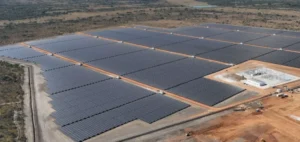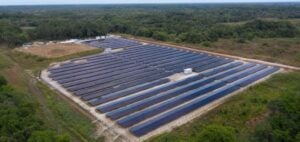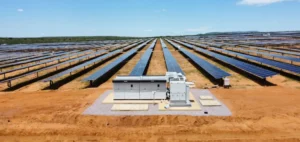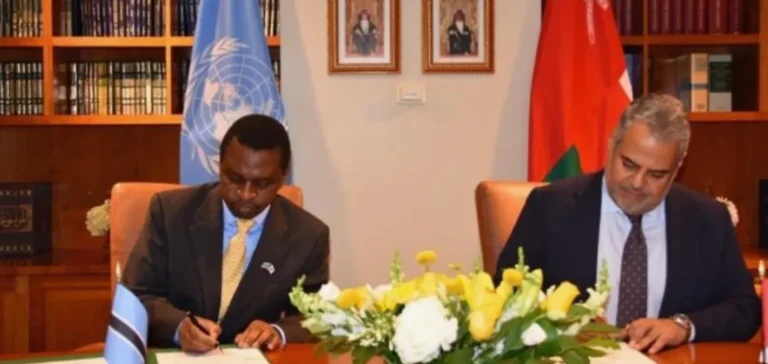

The government of Botswana has signed several strategic agreements with investment entities from the Sultanate of Oman, including an energy partnership centred on a 500 megawatt (MW) solar project. The agreements were formalised in Gaborone during a visit by the Omani delegation led by the president of the Oman Investment Authority, Abdulsalam bin Mohammed Al Murshidi.
These announcements follow a state visit by Botswana’s President Mokgweetsi Masisi to Muscat in October. They aim to strengthen bilateral cooperation in several key areas of energy and resources. No details were provided regarding the technical modalities, execution schedule or financing sources of the solar project.
A solar project at the heart of a multi-sector cooperation
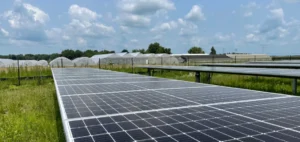
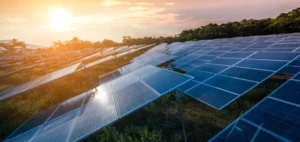
The Ministry of Minerals and Energy of Botswana specified that the agreements cover three main areas. In addition to the photovoltaic plant, the partnership includes the construction of fuel storage infrastructure and the supply and regional trading of petroleum products. The solar project is presented as the central element of this renewed energy cooperation.
The investments aim to support the objectives of Botswana’s “National Energy Compact”, a national plan targeting universal access to electricity by 2030. The current access rate of 76.6% is expected to reach 100% within five years, mainly through grid extensions and off-grid solutions for remote areas.
Towards a power mix dominated by solar and wind
Botswana also aims to increase the share of renewable energy in its power mix from 8% currently to 50% by 2030. The solar project announced with Oman is one of the largest in the country to date, but no details have yet been released regarding the implementing companies or construction timelines.
Alongside the energy announcements, an agreement was also signed between the Oman Investment Authority and the Botswana Geoscience Institute. This protocol aims to support geological exploration and mining development, a key sector for Botswana’s economy.
According to authorities, these initiatives are expected to strengthen the country’s energy security while creating new production and distribution capacities.