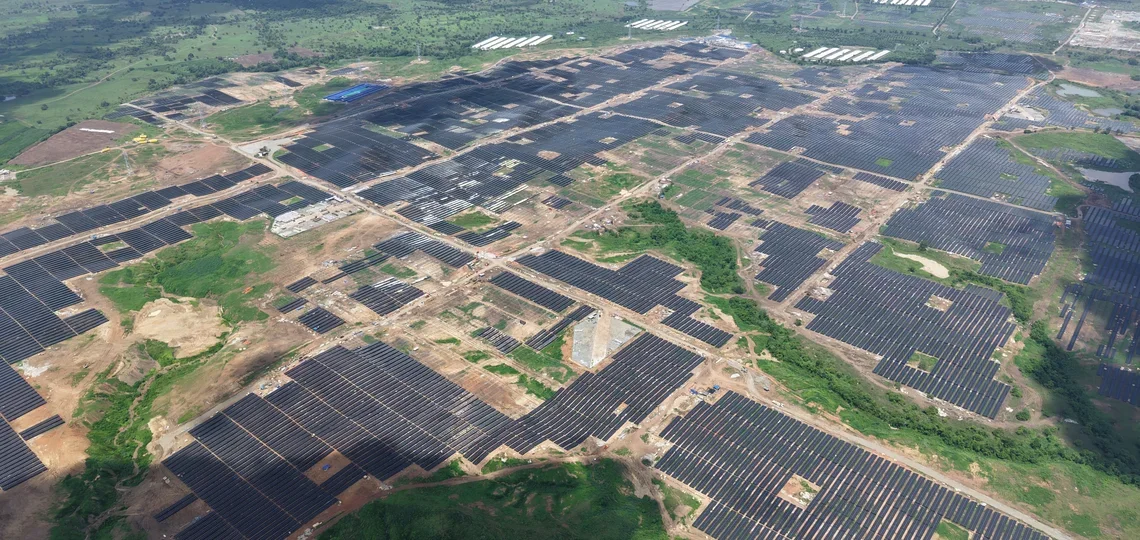
Awendio Solaris, a company based in the United Kingdom, has announced an investment project of CAD1bn ($726.7mn) to build a fully integrated solar cell and module manufacturing plant in Montreal. The site will also include an applied research centre, primarily serving the United States market while also supplying Canada.
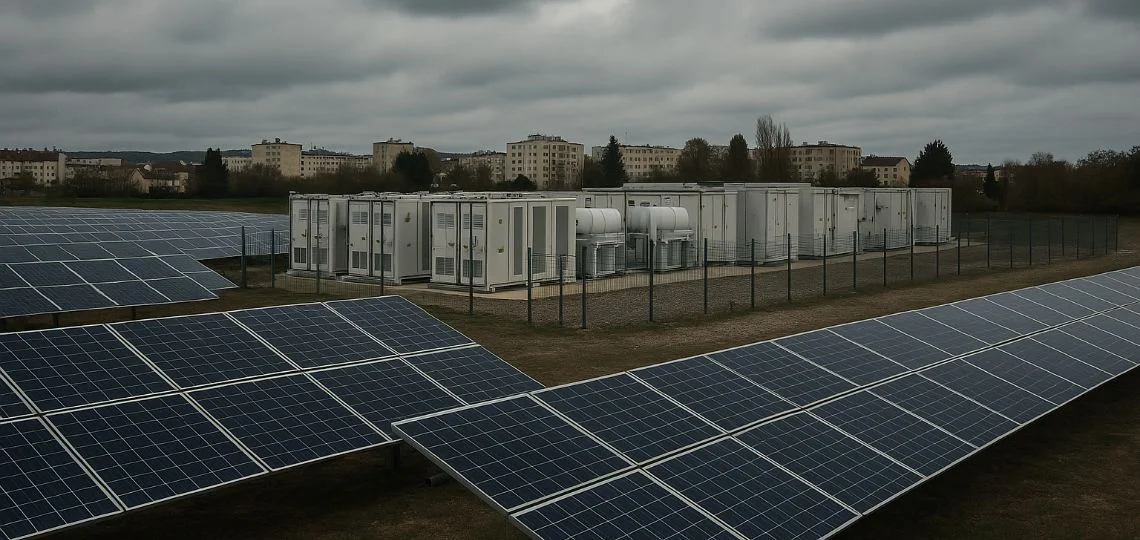
The company plans for the first phase of the facility to reach an annual production capacity of 2,500 MW of solar cells and modules. This capacity could be doubled to 5,000 MW in a second phase. The plant will use TOPCon (tunnel oxide passivated contact) technology, already widely deployed by solar developers across North America.
North American integration and local partnerships
Awendio Solaris stated that it is assessing multiple industrial sites in the Montreal area in collaboration with Canadian developer Broccolini. German group RCT Solutions and Canadian engineering firm AtkinsRéalis are partners in the project for industrial engineering and construction. The planned supply chain includes silicon production in North America, polysilicon and wafer processing in the state of Michigan, and final assembly in Quebec.
The plant’s energy needs will be mainly covered by Quebec’s hydroelectric grid, with additional generation from on-site solar panels. Awendio Solaris claims that the entire operation will be carried out within an exclusively North American framework.
Institutional support and industrial timeline
Three Indigenous communities – the Naskapi Nation of Kawawachikamach, the Huron-Wendat Nation and the Kanien’kehá:ka of Kahnawà:ke – are announced as investor partners in the project. Research partnerships have also been signed with Université de Montréal, Polytechnique Montréal, and Université de Sherbrooke. The company plans to set up a non-profit applied research centre dedicated to technical training in the photovoltaic sector.
According to an economic impact study by EY, the project could contribute CAD5.5bn ($3.99bn) to Canada’s gross domestic product over ten years. It would support approximately 2,500 full-time equivalent jobs annually at the national level. During the construction phase, the project is expected to contribute CAD442mn ($320.5mn) to Quebec’s GDP and generate over 1,400 full-time equivalent jobs.
A response to Quebec’s solar ambitions
Awendio Solaris reported working with federal and provincial authorities, including Investissement Québec, Montréal International, and Hydro-Québec. National Bank of Canada is acting as financial advisor. The company is targeting financial close by the end of the first quarter of 2026, construction in the second quarter of 2026, and full-scale production in 2028, subject to regulatory approvals.
The project comes as the province of Quebec accelerates the development of its solar sector to complement its hydroelectric network. Hydro-Québec is planning to deploy 3 GW of solar capacity by 2035, with a support scheme for residential and commercial self-generation set to launch in 2026.