Armada announced it has entered into a memorandum of understanding with the United States Department of Energy (DOE) to become an official collaborator on the Genesis Mission. This large-scale federal programme aims to connect national laboratories, supercomputers and scientific infrastructure to a unified, AI-based research platform.

Presented as the most significant scientific initiative since the Manhattan Project, the Genesis Mission focuses on three national priorities: accelerating scientific discovery, securing US energy dominance and strengthening national security. Armada will contribute its distributed artificial intelligence infrastructure, designed to rapidly deploy sovereign computing capacity where research demands are highest.
Technological support for national laboratories
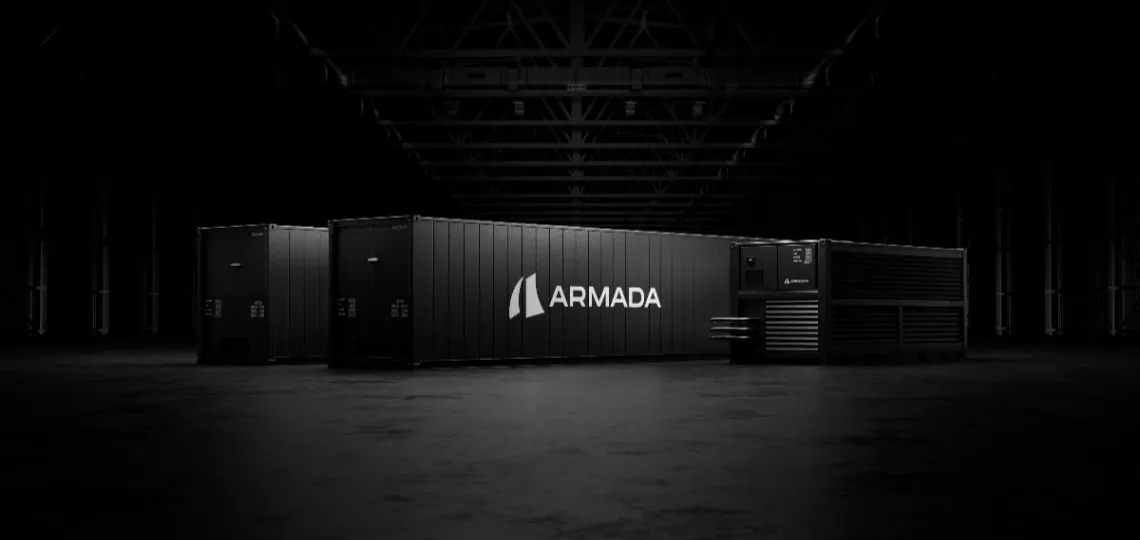
The partnership includes the integration of Armada’s modular solutions, including its Galleon data centres and Edge platform. These tools enable the deployment of several megawatts of high-performance computing near laboratories in just a few months, significantly reducing timelines compared to traditional infrastructure. The DOE aims to double the nation’s scientific impact over the next decade by relying on flexible, highly available compute platforms.
Armada also offers GPU-as-a-Service, compatible with both its own data centres and existing DOE facilities. This model ensures optimised use of resources without requiring large-scale investment in new infrastructure. The company intends to support the rapid modernisation of the federal computing network.
Public-private partnership for strategic advantage
The collaboration between Armada and the DOE is part of a broader network of partnerships between public institutions and technology firms. Other Genesis Mission partners include NVIDIA, OpenAI and Microsoft. The objective is to pool investments to accelerate deployment of critical capabilities in both science and energy.
Dan Wright, co-founder and Chief Executive Officer of Armada, stated at the official White House event that “America’s scientists need access to massive compute resources without waiting years for new facilities.” He added that Genesis “reflects a clear recognition that the next era of scientific leadership depends on distributed, AI-native infrastructure that can operate across locations, facilities and security boundaries.”