Arctic Shipping Route: Commercial Opportunities and Technological Challenges for the Naval Sector
The Northern Sea Route attracts businesses due to its logistical speed but presents significant technological challenges for the naval industry, especially in designing vessels adapted to extreme Arctic conditions.
| Sectors | Hydrogen Energy, Nuclear Energy, Gas, Green Hydrogen, Mobility, LNG, Fission |
|---|---|
| Themes | Sector Innovation, Innovation & Transformation |
| Companies | Rosatom |
| Countries | China, India, Norway, Russia |
The Northern Sea Route, connecting Europe to Asia via the Russian Arctic, is gaining increasing interest from international economic stakeholders due to a significant reduction in transit times. However, this new route introduces unprecedented technical requirements for naval industries, which must design ships capable of navigating extreme and unstable conditions. The fragile Arctic environment compels companies to quickly adapt to specific technical constraints associated with permanent and seasonal ice. Industrial stakeholders thus face a complex equation between high investment costs and potential commercial benefits.
Naval Technologies Specific to the Arctic
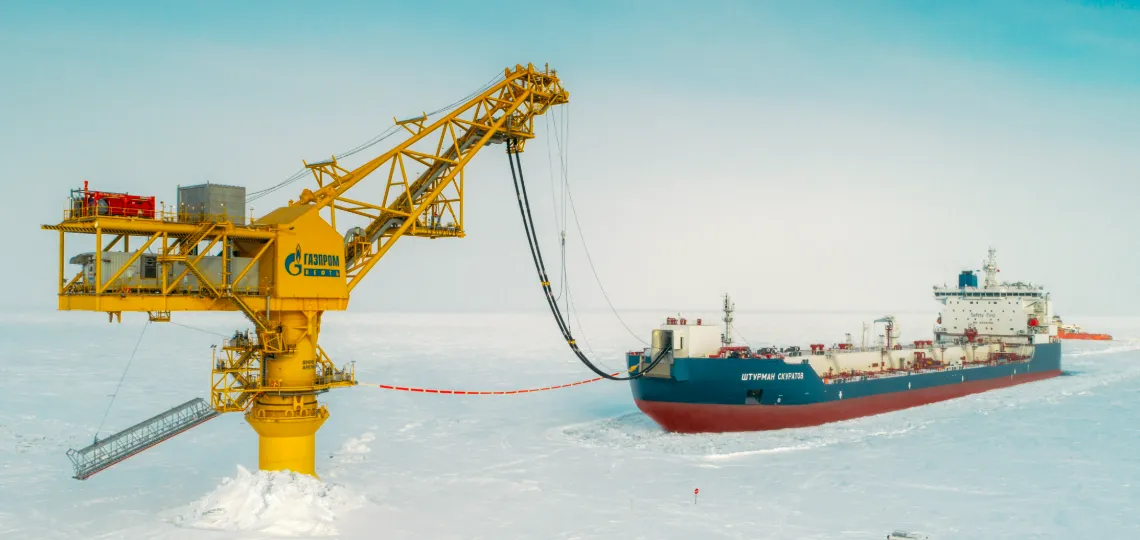
Among vessels specifically designed for this route are nuclear-powered icebreakers, currently predominantly operated by Russia. These vessels feature reinforced hulls capable of breaking thick layers of ice while maintaining efficient commercial speeds. In parallel, the international naval industry is exploring intermediate solutions such as dual-fuel propulsion vessels combining diesel and liquefied natural gas (LNG). These provide a significant reduction in polluting emissions and represent an economically attractive alternative to nuclear icebreakers.
Hybrid electric vessels, and even hydrogen-powered ones, are also under consideration by certain European and Asian shipbuilders. However, these technologies require specialized infrastructure that is still insufficiently developed in existing Arctic ports. Furthermore, polar navigation necessitates rigorous ballast water management, along with advanced anti-icing systems to ensure operational safety. Thus, technical adaptation represents a major challenge for both logistics operators and naval industrialists.
Operational and Economic Constraints
Utilizing this Arctic maritime route requires substantial investment in port infrastructure and specialized crew training for polar navigation techniques. Companies must also account for seasonal traffic variability, as the route remains partially inaccessible during the harshest winter months. Moreover, stringent regulations enforced by the International Maritime Organization (IMO) regarding emissions and fuels increase operational costs. Managing environmental risks, particularly accidental hydrocarbon discharges, is another crucial factor in the overall economic calculation.
These operational constraints translate into a complex profitability challenge. The high construction and operational costs for Arctic vessels must be offset by gains achieved from shorter distances and delivery times. Thus, the large-scale development of the Northern Sea Route will largely depend on fluctuations in raw material prices, investment policies of coastal countries, and the real effectiveness of technological innovations implemented by naval companies.